
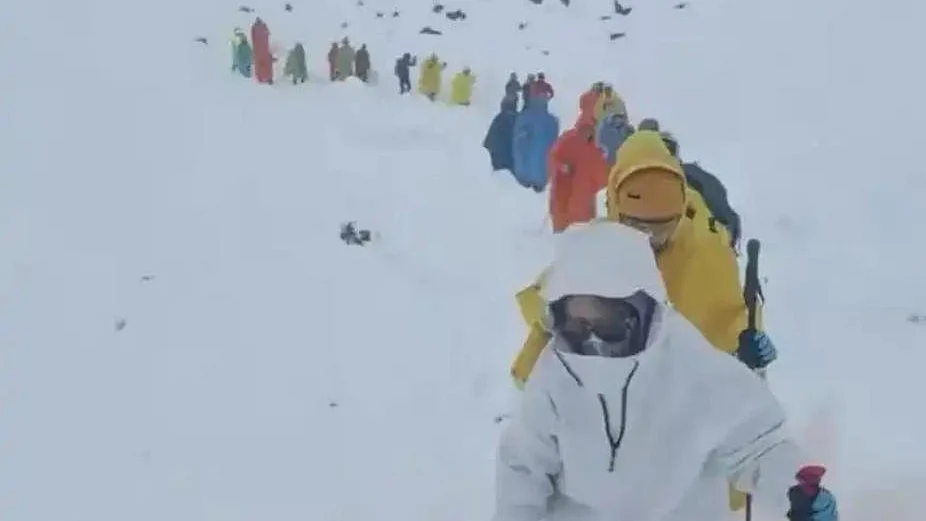
A sudden and intense blizzard struck the Karma Valley region on the Tibetan side of Mount Everest in early October, trapping hundreds of trekkers and climbers during the peak holiday season. Rescue teams have so far saved more than 350 people, while contact has been established with over 200 others still making their way to safety amid freezing temperatures and heavy snow.
According to local authorities, the snowstorm began late Friday and intensified overnight, cutting off major trekking routes and isolating several high-altitude camps. The storm, described as one of the most severe in recent years, dumped more than a meter of snow in parts of Karma Valley — a popular route toward the eastern Kangshung face of Mount Everest.
Rescue operations were launched immediately, involving local villagers, professional mountaineers, and government agencies. Teams are using snow vehicles, drones, and thermal imaging to locate stranded groups. Despite the harsh conditions, rescuers have managed to reach multiple campsites and guide trekkers to safer ground in Qudang township.
Chinese state media reported that 350 trekkers have already been rescued, while more than 200 remain stranded in scattered locations. Authorities have urged all climbers to stay put until rescue teams arrive, warning that visibility remains poor and temperatures continue to drop sharply at night.
Many of those rescued described terrifying conditions as tents collapsed under heavy snow and winds reached near-gale force. “It was so wet and cold, the snow just kept coming,” said Chen Geshuang, a trekker who was among the first to be rescued. “Our guide had never seen such weather in October. We thought we might not make it out.”
The incident occurred during China’s “Golden Week” holiday, a time when thousands of domestic tourists and trekking enthusiasts visit the Everest region. Officials estimate that more than 1,000 people were in the area when the blizzard struck. The sudden turn in weather has raised concerns about early winter patterns and the preparedness of tourism operators in high-altitude zones.
The blizzard has also affected Nepal’s side of the Himalayas, where the same weather system caused torrential rain, flash floods, and landslides, resulting in at least 47 fatalities and widespread property damage.
Rescue efforts in Tibet continue under challenging conditions, as snow-covered routes and communication blackouts hinder progress. Authorities have suspended entry into the Everest Scenic Area until further notice to prevent additional risks. Emergency shelters and medical teams have been set up in nearby townships to treat rescued trekkers suffering from frostbite and hypothermia.
Meteorologists say the storm was triggered by an early-season cold front colliding with moist air from the Bay of Bengal, creating an unstable system over the Himalayan range. Experts warn that such extreme weather events could become more frequent due to changing climate patterns.
As rescue operations progress, officials emphasize that the primary focus remains on locating all missing trekkers and ensuring their safe evacuation. The incident has sparked renewed debate about safety standards and emergency preparedness in one of the world’s most dangerous yet alluring trekking destinations.

