
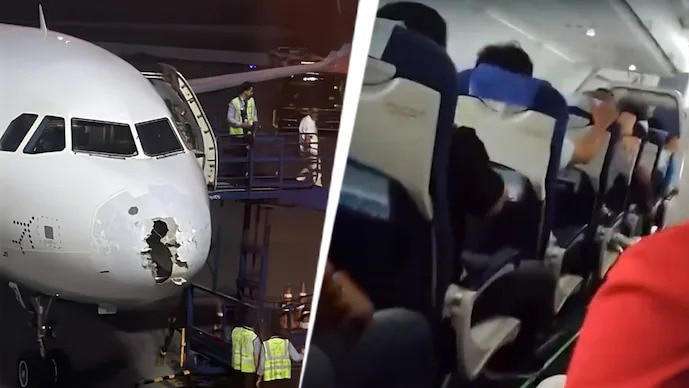
May 23, 2025 – A recent IndiGo Airlines flight from Sharjah to Amritsar encountered intense turbulence and was reportedly refused emergency access to Pakistani airspace, raising fresh concerns about aviation safety in the context of regional geopolitical tensions.
Flight 6E-1426, carrying more than 170 passengers, encountered adverse weather conditions while flying over northern India on May 21. In an attempt to avoid the turbulent system, the pilot contacted Pakistan’s air traffic control seeking temporary permission to reroute through Pakistani airspace. The request was turned down, according to sources familiar with the matter.
An official from India’s Directorate General of Civil Aviation (DGCA), speaking off the record, confirmed that the flight crew had cited severe turbulence and potential safety threats as the reason for the request. Despite these concerns, Pakistan’s Civil Aviation Authority reportedly upheld existing restrictions and denied the aircraft entry.
A Pakistani official commented anonymously, stating, “The flight was not granted clearance and was advised to stay on its designated route.”
Despite the turbulence, the IndiGo aircraft completed its journey without further incident and landed safely in Amritsar. No injuries or damage were reported.
Political Backdrop: Tense Relations Impacting Aviation
This event has reignited debate over the limited airspace cooperation between India and Pakistan. Following India’s revocation of Article 370 in Jammu & Kashmir in 2019, Pakistan imposed airspace limitations on Indian carriers. While some access has since resumed, restrictions remain in force for many routes.
Safety and Diplomacy at Odds
Aviation professionals have expressed concern that political tensions are interfering with emergency procedures that prioritize human safety.
“While a country has every right to regulate its airspace, global aviation practices stress collaboration during inflight emergencies,” said a senior analyst with the Asia-Pacific Aviation Council. “In critical moments, protecting lives should outweigh diplomatic standoffs.”
The International Civil Aviation Organization (ICAO) recommends that countries accommodate emergency flight diversions due to weather or other hazards. However, these guidelines are advisory and not mandatory.
Official Responses and Public Reaction
Indian government sources criticized the denial, urging a more humanitarian approach during emergency situations. “Passenger safety should be above all political considerations,” an Indian official remarked.
On the other hand, Pakistan’s Foreign Ministry maintained that the decision followed standard procedures. “No emergency status was officially declared by the pilot, and existing policies were applied,” the ministry said in a short statement.
IndiGo Airlines has not released a formal comment on the incident, but a spokesperson confirmed that the flight followed all safety procedures and arrived without incident.
A Call for Policy Review
This episode has highlighted the broader need for regional frameworks that prioritize aviation safety above political friction, especially as severe weather events become more common due to global climate shifts. Industry experts suggest that updated, crisis-responsive protocols may be necessary to protect passengers in an increasingly unpredictable environment.

