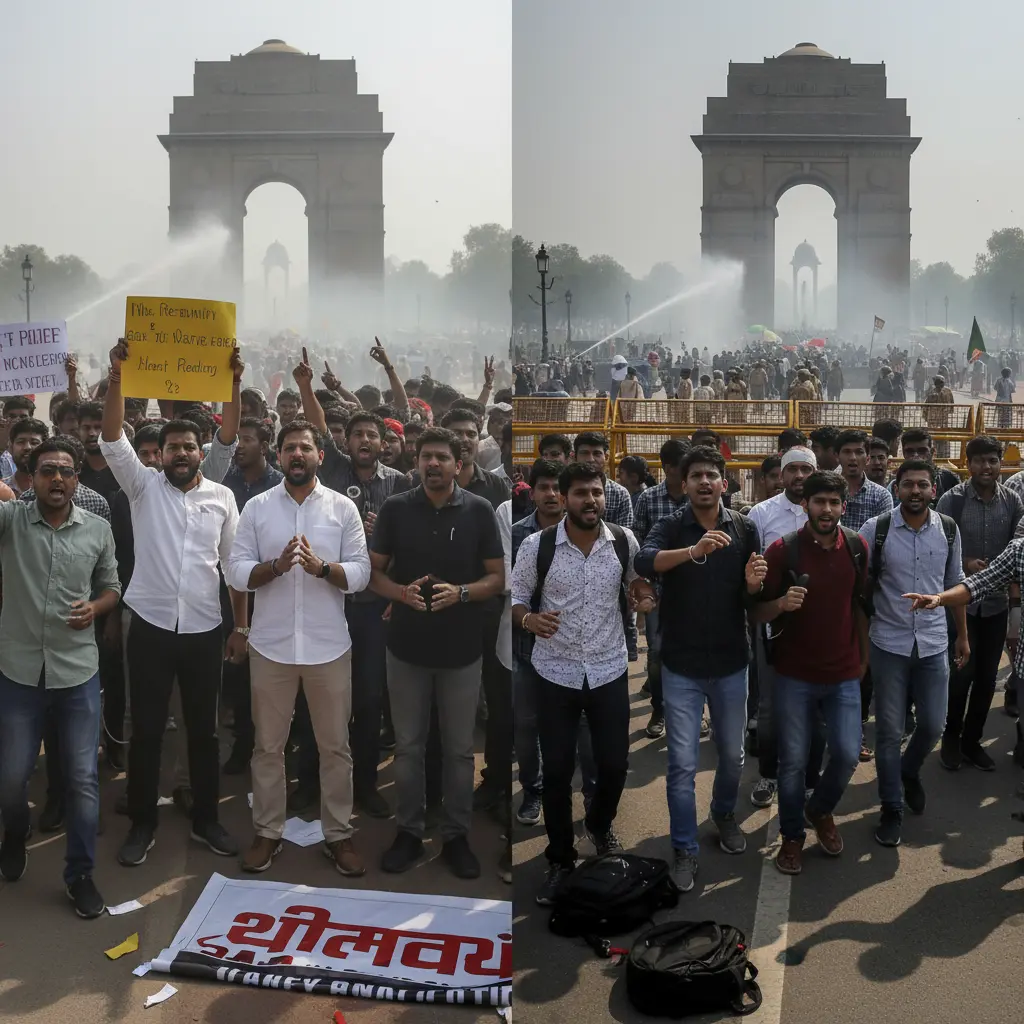
Walk past Jantar Mantar in New Delhi this week and you’ll see what the inside of Parliament has looked like for days now — students, placards, and a lot of frustration that refuses to quiet down. The Monsoon Session 2026 has turned into one of the more combustible sessions in recent memory, with the Public Examinations (Prevention of Unfair Means) Amendment Bill, 2026 caught in the crossfire between a government that wants it passed and an Opposition that wants answers first.
The bill itself is fairly straightforward on paper. Introduced by Union Minister Jitendra Singh, it proposes raising jail terms for exam malpractice to as much as ten years, along with fines of up to ₹50 lakh. Parliamentary Affairs Minister Kiren Rijiju has spent the past several days appealing to Congress and other Opposition parties to simply debate the bill rather than disrupt the House, framing it as a direct response to concerns students themselves have raised for years about leaked question papers derailing their futures.
But the paper leak bill Parliament debate hasn’t stayed confined to punishment clauses and jail terms. It’s gotten tangled up with something far more volatile — allegations of police violence against the very students the bill claims to protect.
Rahul Gandhi’s Charges Against the Government
Leader of the Opposition Rahul Gandhi has been the loudest voice pushing back, and his charges are serious. He has alleged that pellet guns were used against protesting students in Delhi, and — even more alarmingly — that AK-47 rifles were fired during protests in Bihar. Gandhi has demanded that Home Minister Amit Shah personally respond in the House, and has gone further, calling on Prime Minister Modi to apologise to the students affected.
The Rahul Gandhi Parliament offensive has been backed by the rest of the INDIA bloc, which conditioned its full participation in the bill’s debate on the government first addressing these allegations of police brutality. Congress fielded a heavyweight lineup for the Lok Sabha debate, including Gandhi himself, Priyanka Gandhi Vadra, KC Venugopal, and Gaurav Gogoi, while opposition floor leaders coordinated strategy in Rajya Sabha LoP Mallikarjun Kharge’s office to keep both Houses aligned.
The result has been repeated disruption. Lok Sabha Speaker Om Birla adjourned proceedings multiple times, at one point giving the government and Opposition a three-hour window just to work out their differences before resuming debate. Six hours were originally allotted for discussing the bill, with Birla signaling more time could be added depending on how the House proceeded — a small concession, but one that reflects how badly stuck the session had become.
Student Protests India: The Bigger Picture
None of this is happening in a vacuum. The student protests India has seen over the past several weeks trace back to the NEET-UG 2026 examination, which was cancelled after allegations of a question paper leak surfaced. That controversy triggered nationwide outrage, a CBI investigation, and continuing demonstrations at Jantar Mantar led by student groups demanding accountability — some even calling for Education Minister Dharmendra Pradhan’s resignation.
It’s a pattern students say they’ve seen before. Rahul Gandhi has previously raised similar concerns over Bihar’s BPSC exam scam and, separately, joined a protest march to Parliament with the National Students’ Union of India against frequent paper leaks and what demonstrators called the growing privatisation of education. For many of these students, this isn’t a one-off controversy — it’s the latest chapter in a years-long fight over whether India’s examination system can be trusted at all.
NTA Officials Sacked in a Major Overhaul
The government’s most concrete response so far has come not from Parliament but from within the examination system itself. The Centre has terminated 47 National Testing Agency officials as part of what’s being described as a sweeping institutional overhaul, with legal and criminal action expected against some of them. The NTA officials sacked in this round represent one of the biggest administrative shake-ups in the agency’s history, and officials say it won’t be the last phase — further “reformative measures” and a broader restructuring of the NTA’s outsourcing model are reportedly in the pipeline.
The timing is notable: the sackings came just hours after the Union Cabinet cleared the draft paper leak bill in a meeting chaired by PM Modi, suggesting the government wanted to show it was acting on two fronts simultaneously — tougher legislation and internal accountability.
Where Things Stand
As it stands, the Monsoon Session remains a tug-of-war. The government insists the amendment bill is a good-faith response to a real problem — one students themselves have demanded action on for years. The Opposition insists it can’t simply move on to debating punishments for paper leaks while allegations of pellet guns and gunfire against protesting students go unanswered. Somewhere in between sit the students, still gathered at Jantar Mantar, waiting to see whether either side is negotiating with them in mind at all.
For now, neither an apology from the Prime Minister nor a full explanation from the Home Minister has materialised, and the session’s final outcome — whether the bill passes, stalls, or gets watered down through negotiation — remains genuinely up in the air.