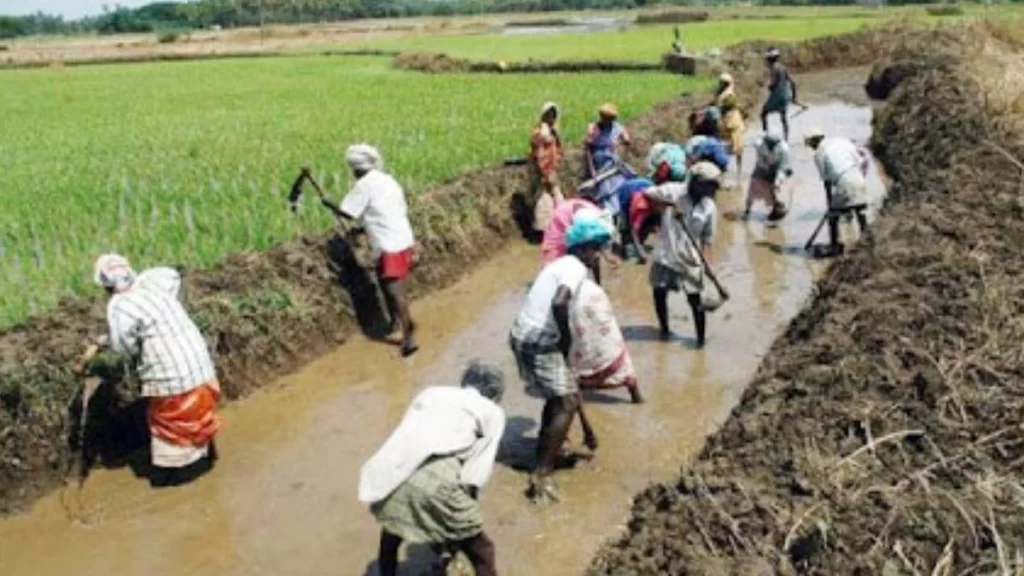
In a historic move during the ongoing Winter Session, the Central government has introduced the Viksit Bharat Guarantee for Rozgar and Ajeevika Mission (Gramin) Bill, 2025—abbreviated as VB–G RAM G Bill—in the Lok Sabha, signaling the repeal of the Mahatma Gandhi National Rural Employment Guarantee Act (MGNREGA), 2005. The proposal marks a significant transformation in India’s rural employment landscape, aiming to revamp job creation and social security mechanisms for rural communities.
The new legislation, according to government sources, is designed to provide guaranteed employment and livelihood support while promoting skill development, infrastructure creation, and economic sustainability in rural areas. Officials assert that VB–G RAM G seeks to modernize the rural workforce, enhance productivity, and align employment initiatives with contemporary development goals.
Key Objectives of the VB–G RAM G Bill:
- Guarantee employment opportunities tailored to local needs and skills.
- Integrate sustainable livelihood programs with rural infrastructure projects.
- Focus on skill development and entrepreneurship for rural youth and women.
- Streamline resource allocation to improve efficiency and accountability.
The introduction of the bill has generated immediate political reactions. Opposition parties criticized the move, arguing that repealing MGNREGA could undermine the social safety net for millions of rural workers. Critics highlighted that MGNREGA has historically played a critical role in poverty alleviation, food security, and gender empowerment. Several leaders questioned whether the replacement scheme could ensure comparable coverage and inclusivity.
Supporters of VB–G RAM G, on the other hand, emphasized that the bill represents a progressive reform aimed at enhancing economic productivity and reducing dependency on direct wage schemes. Proponents argue that by combining employment guarantees with skill-building and entrepreneurship opportunities, the new framework could empower rural communities in a more sustainable and long-term manner.
Expert Insights:
Economists and policy analysts note that the success of VB–G RAM G will depend on robust implementation, effective monitoring, and community participation. Some experts suggest that while MGNREGA addressed immediate livelihood needs, the new scheme could potentially create a more diversified and resilient rural economy if executed effectively.
Looking Ahead:
The Lok Sabha debate on the VB–G RAM G Bill is expected to intensify in the coming weeks, with extensive discussions on funding, execution, and regional adaptation. Policymakers will need to balance innovation in rural employment policy with protection for vulnerable communities to ensure that the transition does not disrupt livelihoods.
As India embarks on this ambitious reform, the VB–G RAM G Bill is poised to reshape rural employment and economic empowerment, setting a precedent for the integration of social security and skill-driven development across the country.