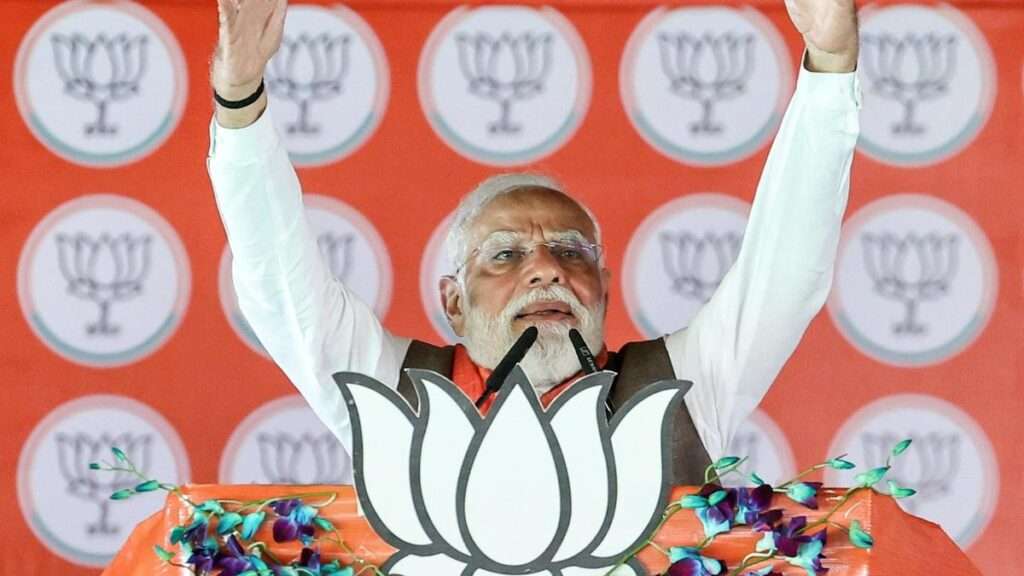
In a highly charged campaign atmosphere ahead of the 2025 Bihar Assembly elections, Prime Minister Narendra Modi addressed back-to-back poll rallies in the key constituencies of Muzaffarpur and Chhapra. The events marked a strategic push by the Bharatiya Janata Party (BJP) and its alliance partners to mobilise voters and reinforce momentum ahead of the voting phases.
With the stakes high in Bihar—one of India’s most politically pivotal states—the Prime Minister’s presence in Muzaffarpur and Chhapra underscores the central leadership’s determination to secure the state for the National Democratic Alliance (NDA). Both rallies drew massive crowds and were accompanied by elaborate arrangements, reflecting the intensity of the campaign and the significance of Bihar in the national political landscape.
In Muzaffarpur, the Prime Minister focused on themes of development, employment, and youth empowerment, reiterating his government’s commitment to transforming Bihar through infrastructure, education, and industrial growth. He highlighted various central schemes aimed at improving livelihoods and boosting local entrepreneurship, appealing directly to young voters and women beneficiaries. Chhapra, on the other hand, witnessed a strong emphasis on governance, welfare programmes, and social unity, with Modi urging citizens to vote for stability and progress.
These rallies come at a time when Bihar’s political landscape is witnessing rapid shifts. The opposition alliance, led by the Indian National Congress and regional parties, has intensified its efforts to challenge the NDA’s dominance. Modi’s direct engagement signals a tactical escalation aimed at energising BJP’s grassroots networks and consolidating voter sentiment ahead of the first phase of polling. The timing is critical, as the campaign enters its final and most competitive stage.
Another key element of the BJP’s strategy has been targeted demographic outreach. Women, first-time voters, and youth form a decisive portion of Bihar’s electorate, and the government’s welfare schemes, including financial subsidies and employment initiatives, have been positioned as symbols of inclusive development. The Prime Minister’s speeches in both constituencies connected these programmes to broader narratives of national growth and self-reliance, strengthening the party’s appeal among diverse voter segments.
Political analysts view these rallies as part of a calculated approach to maintain the NDA’s stronghold while addressing pockets of rising opposition influence. Muzaffarpur and Chhapra, in particular, represent constituencies where electoral margins can swing decisively, making Modi’s presence there both strategic and symbolic. His speeches not only reinforced the BJP’s central message of development and good governance but also sought to counter opposition narratives centred on unemployment and social justice.
By focusing on Bihar’s development trajectory, Modi’s rallies have effectively placed the state at the centre of India’s political discourse. The BJP’s campaign narrative now intertwines local aspirations with national pride, portraying the NDA as the driver of Bihar’s resurgence. However, despite the Prime Minister’s vigorous push, the electoral outcome remains uncertain. Bihar’s complex social fabric, marked by caste equations, regional loyalties, and local leadership dynamics, continues to shape voter behaviour in unpredictable ways.
As the Bihar Assembly elections draw closer, Modi’s rallies in Muzaffarpur and Chhapra mark a decisive escalation in the BJP’s campaign strategy. The focus on development, governance, and demographic inclusivity underscores the NDA’s attempt to convert national leadership credibility into state-level victory. The results in Bihar will not only determine the political future of the state but could also serve as a key indicator of India’s evolving electoral landscape ahead of future national contests.