President Droupadi Murmu’s highly anticipated visit to the Atal Tunnel in Himachal Pradesh has been abruptly cancelled, with authorities citing adverse weather conditions and safety worries as the primary reasons. The decision, taken late Monday night, underscores how unpredictable Himalayan weather continues to dictate even the most carefully planned high‑profile itineraries, especially in one of India’s most sensitive and disaster‑prone regions.
The President’s office confirmed that the proposed April 29 trip to the Atal Tunnel—part of her five‑day summer sojourn in Himachal Pradesh from April 27 to May 1—has been dropped from the revised schedule. Her visit was also meant to include stops at Rashtrapati Niwas in Mashobra, Shimla, and Palampur, but the Atal Tunnel halt no longer figures in the updated programme.
Why the Atal Tunnel Matters
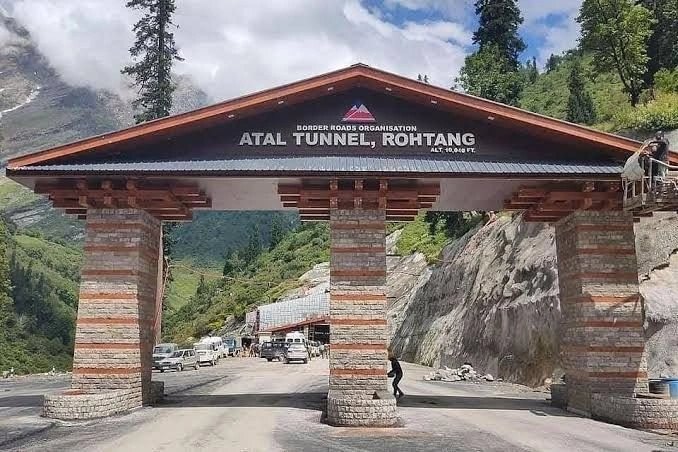
At 9.02 kilometres, the Atal Tunnel remains one of Asia’s longest and riskiest high‑altitude tunnels, piercing the Rohtang Pass at around 10,000 feet above sea level. It connects Manali in Kullu with Lahaul and Spiti, cutting travel time by more than four hours and transforming the region’s connectivity, economy, and tourism. For a sitting President, a visit to the tunnel is not just ceremonial; it is a symbolic reaffirmation of New Delhi’s commitment to border‑area infrastructure and the security of the Himalayan frontier.
In recent years, the tunnel has repeatedly figured in national headlines—sometimes for its engineering marvel, and sometimes for the dangers it entails. March 2026 saw the tunnel remain shut for several days in a row after heavy snowfall blanketed the approach roads and the surrounding slopes. At least three feet of snow piled up near the tunnel portals, forcing authorities to restrict vehicular movement and, in some cases, to close the tunnel entirely.
This broader context makes Murmu’s cancellation neither surprising nor trivial. It reflects not only concern for the President’s safety but also an awareness of how fragile the mountain corridor can be under stress from snow, rain, or avalanches.
Weather Woes and Safety Calculations
Officials in the Kullu district administration say the decision to call off the visit was triggered by forecasts of “inclement weather” and the increased risk of snowfall and avalanches along the Manali–Atal Tunnel route. The India Meteorological Department has, in recent weeks, issued multiple orange alerts for heavy rain and snowfall across Mandi, Shimla, and Sirmaur districts, exposing the region’s vulnerability to sudden weather swings.
At high altitudes, an orange alert does not mean “maybe it will rain”; it signals a real possibility of landslides, snowstorms, and blocked roads. Just days before the President’s scheduled visit, authorities had already issued an avalanche warning near the north portal of the tunnel, warning that hill slopes and stretches around Chandra Bridge were highly susceptible to snowslides. Tourist movement and commercial activity around the tunnel’s north portal were temporarily restricted, testimony to how quickly the situation can turn dangerous.
Given this backdrop, the President’s security team and the local administration had little room for risk. The head of state of a nuclear‑armed nation, travelling through narrow, high‑altitude roads with steep gradients and limited emergency options, cannot be treated like an ordinary tourist. The stakes go beyond optics—they are about national responsibility and the optics of negligence if something were to go wrong.
One could reasonably ask: In a region where hundreds of civilians still brave the same roads every day, why does the safety bar for a President need to be so high? The answer lies in the second‑and‑third‑order effects: a disruption in the tunnel or a serious accident involving the President could paralyse decision‑making, strain local rescue capabilities, and create a media storm that distracts attention from the everyday needs of residents and tourists.
Climate Stress in the Himalayas
The Atal Tunnel episode is not an isolated incident. It is part of a larger story about how climate change is reshaping the Himalayas, making their weather more erratic and extreme. In an unusual combination in March and early April 2026, Himachal Pradesh experienced heavy rain in the mid-hills and sustained snowfall in the higher altitudes, raising the risk of avalanches, landslides and flash floods.
For a state like Himachal, whose economy is heavily dependent on tourism, hydropower and agriculture, each of these shocks matters. When the Atal Tunnel is shut, Lahaul and Spiti are cut off for longer, supply chains get disrupted, and the fragile tourism season suffers. The region’s dependence on a single tunnel—remarkable as it is—also highlights a vulnerability. What happens if, in a future storm, the tunnel remains closed for days or even weeks?
From a policy perspective, Murmu’s cancelled visit could quietly nudge conversations about climate‑resilient infrastructure in the Himalayas. Should tunnels and high‑altitude highways be designed with more “margin for error”? How can early‑warning systems, slope monitoring, and alternate routes be strengthened? And how can India balance the desire to open up remote regions with the need to protect people from the growing fury of mountain weather?
These are not just technical questions; they are political ones. In a region where infrastructure investments are often seen as badges of national pride, the President’s absence from the Atal Tunnel on this day subtly reminds everyone that engineering grandeur and natural hazards must be weighed together, not in isolation.
The Political and Symbolic Angle
For a President, a visit to the Atal Tunnel is rich in symbolism. It signals recognition of the sacrifices made by soldiers, engineers, and civilians who helped build and keep the corridor alive. It also projects the idea that even the most remote parts of the Himalayas are being woven into the fabric of the Indian Union. When that visit is cancelled, the symbolism shifts: instead of “we are here,” it becomes “we respect the mountain’s limits.”
Murmu’s itinerary still includes meaningful engagements in Shimla and Palampur, and the Kullu administration has been asked to take necessary action in line with the revised schedule. None of those plans, officials say, compromise on security or protocol. The President’s visit to Shimla, for instance, is being closely coordinated with local authorities and the central security agencies, ensuring that even at lower altitudes, safety remains paramount.
But the absence from the Atal Tunnel will inevitably be noticed. In a country where road and tunnel inaugurations routinely dominate political narratives, the deliberate decision not to use a high‑profile visit for stage‑managed photo‑ops might be read as a quiet but significant statement: that some places are not just about infrastructure milestones, but about human risk and environmental reality.
This raises another question: In an era of 24‑hour news and social media, how much should the calendar of national leaders be shaped by the desire for visuals, and how much by an honest assessment of the ground? A last‑minute cancellation of a visit can be spun as “caution,” but it can also be interpreted as “prudence” in a country where the Himalayas are not just a backdrop, but a lived reality for millions.
Local Impact and Everyday Travel
While the President’s visit was a headline‑grabbing event for the national media, for people in Himachal Pradesh, the real story is much more mundane and continuous. Locals, truck drivers and tourists all share the same roads and weather every day, often without the option to cancel a vital trip. When the Atal Tunnel is closed, families in Lahaul and Spiti experience delays in receiving medicines, fuel and other necessities. Farmers and shopkeepers fear spoiled perishables and merchandise left stranded.
In the past, closing the tunnel has resulted in long lines of trucks and buses, and at times, angry protests by transporters and local businesses. The administration’s repeated advisories to restrict movement near the tunnel’s north portal, while sound from a safety standpoint, also expose the tension between caution and connectivity. How long can a region dependent on a single vital artery afford to stay disconnected?
Murmu’s cancelled visit, in this light, becomes a mirror held up to everyday life in the mountains. If even the President’s security‑heavy convoy cannot risk the route on a given day, what does that say about the conditions faced by ordinary travellers with fewer resources and fewer safeguards?
President Droupadi Murmu Cancels Atal Tunnel Visit Amid Bad Weather and Safety Concerns in Himachal Pradesh