
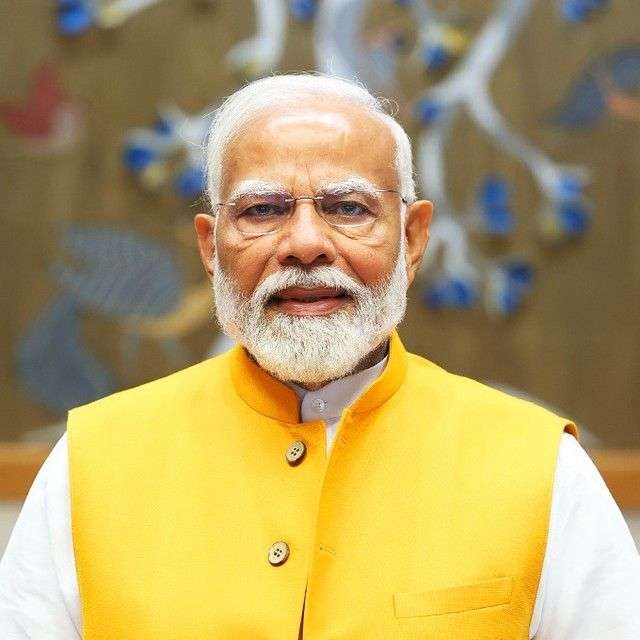
Prime Minister Narendra Modi on Saturday dedicated the new Bihta campus of the National Institute of Technology (NIT) Patna to the nation via videoconference. The inauguration was part of the Kaushal Deekshant Samaroh, during which the Prime Minister launched several youth-centric schemes worth over ₹62,000 crore, with a special focus on Bihar’s development and skill empowerment.
The newly inaugurated Bihta campus of NIT Patna has been developed as a state-of-the-art institution aimed at advancing research, innovation, and technical education. The campus is expected to accommodate thousands of students and reduce the pressure on the existing facilities in Patna. It marks a significant step towards strengthening Bihar’s higher education infrastructure.
Speaking on the occasion, the Prime Minister emphasized that the initiatives launched under the Kaushal Deekshant Samaroh aim to equip India’s youth with skills aligned to the demands of modern industries. “India’s youth are the architects of our future, and our goal is to provide them with every opportunity to learn, grow, and contribute to the nation’s progress,” he said.
Among the major announcements, Modi unveiled the Pradhan Mantri Skilling and Employability Transformation through Upgraded ITIs (PM-SETU) scheme, with a financial outlay of ₹60,000 crore. The initiative seeks to modernize 1,000 government-run Industrial Training Institutes (ITIs) across India through a hub-and-spoke model — establishing 200 hubs and 800 spoke centers — to enhance the employability of youth through industry-relevant training.
The Prime Minister also announced the establishment of 1,200 vocational skill labs in Navodaya Vidyalayas and Eklavya Model Schools across 34 states. These labs will focus on training in high-demand sectors such as IT, electronics, agriculture, logistics, and tourism. Additionally, foundation stones were laid for infrastructure development in four universities in Bihar — Patna University, Bhupendra Narayan Mandal University (Madhepura), Jai Prakash University (Chhapra), and Nalanda Open University — under the Pradhan Mantri Uchchatar Shiksha Abhiyan (PM-USHA) scheme.
In a bid to support the state’s young population, the Prime Minister also launched multiple welfare schemes for Bihar. These include a monthly allowance of ₹1,000 for five lakh unemployed graduates for two years, interest-free education loans up to ₹4 lakh under the Bihar Student Credit Card scheme, and the formation of the Bihar Yuva Ayog, a statutory youth commission aimed at strengthening coordination among youth welfare programs. Furthermore, appointment letters were distributed to over 4,000 newly recruited government employees, and ₹450 crore in scholarships were transferred directly to 25 lakh students under the state’s education initiatives.
Political observers view the announcement as a major outreach to Bihar’s youth, especially as the state heads toward assembly elections. The substantial investment in skilling, education, and employment is seen as both a developmental and strategic move by the central government.
With the inauguration of NIT Patna’s Bihta campus and the roll-out of the ₹62,000 crore youth-focused initiatives, the government aims to transform Bihar into a hub of education, innovation, and skill development. The success of these initiatives, however, will depend on their implementation and the ability to translate policy promises into tangible benefits for the state’s young population.

