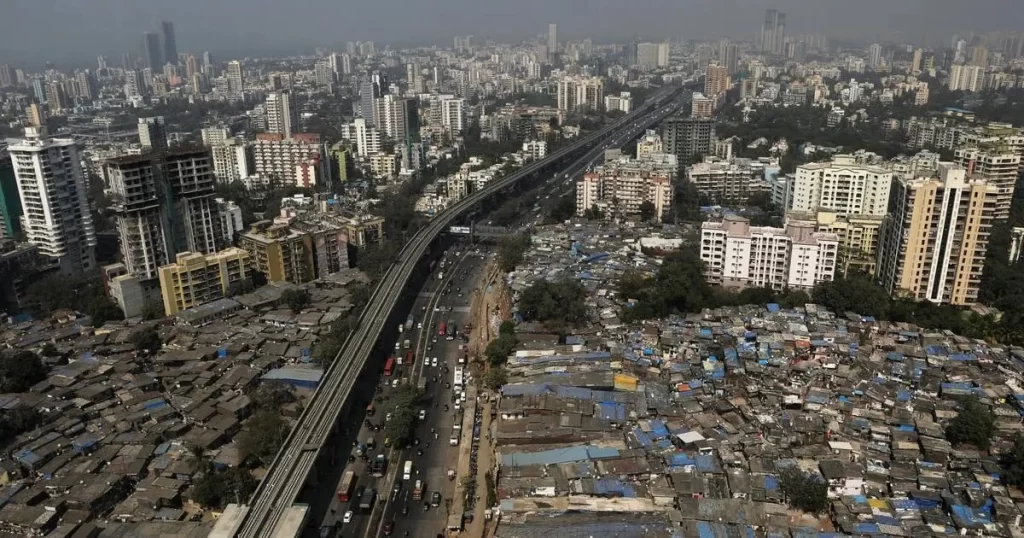
Pune, a busy IT center in western India, is used to severe monsoons. But the rains this year have pushed the city to its limits. Last week, the Maharashtra city had more than 150 millimeters of rain in only 24 hours. This was the most rain the city had ever gotten in one day since records began in 1901. Rivers surged through streets, homes were swamped, and traffic ground to a halt. With the floodwaters gone, a pressing concern remains: can Pune’s infrastructure keep pace with its swift growth?
And what does this portend for other Indian cities experiencing similar growth?
This isn’t just a Pune-specific dilemma. Urban planners across India are closely monitoring climate change, which is intensifying rainfall. Pune’s struggles highlight vulnerabilities in drainage systems, building regulations, and emergency preparedness. These problems affect millions of people living in fast-growing cities like Bengaluru, Hyderabad, and Mumbai.
The flood that surprised everyone
It began like any other July day. Dark clouds moved in over Pune’s neighborhoods with lots of trees and tall buildings. The sky let loose their rage around nightfall. At Shivajinagar station, the India Meteorological Department (IMD) recorded 158 mm, breaking the previous record of 132 mm established in 1967. The worst neighborhoods were Koregaon Park, Baner, and Hinjewadi, which are home to tech workers and entrepreneurs.
Cars were inundated up to their roofs on Nagar Road, people were wading through knee-deep water in Kothrud, and a part of the Mutha River was swelling dangerously close to bridges. The Pune Municipal Corporation (PMC) said that there were more than 200 places where water was pooling. In other places, the power was out for hours, and at least five people died—two from electrocution, and the rest from falling walls or drowning.
Why is it so bad? Meteorologists say that a “mesoscale convective system,” which is a fancy name for strong, isolated storms caused by warm seas in the Arabian Sea, is to blame. But many in the area don’t believe the “act of God” line.Rajesh Patil, a trader in Aundh whose business on the ground level lost lakhs worth of goods, stated, “We’ve expanded this city too quickly.” “Old drainage lines from the 1970s can’t withstand the rain we get now.”
Pune has seen significant expansion.
It used to be a tranquil place for retirees to live, but now it has 7.5 million people and is Maharashtra’s second-largest metropolis. The IT sector alone employs more than 500,000 people, many of whom come from other parts of India. Hinjewadi’s IT parks cover 2,800 acres, which is good for the economy but bad for everything else.
Urban sprawl has taken up agriculture and green spaces. According to satellite data from the Indian Space Research Organisation (ISRO), built-up areas grew by 150% from 2001 to 2021. That means there’s more concrete and less earth to absorb the rainwater. The situation is exacerbated by encroachments along nullahs, the natural channels for water. Illegal structures in Balewadi, for instance, have blocked off what were once floodplains.
Here’s a brief look at Pune’s transformation:
The population has swelled from 3 million in 2001 to 7.5 million today.
There are now over 4 million registered vehicles, which clogs the roads during downpours.
The PMC approves more than 50,000 constructions per year.
This growth comes in money—Pune’s GDP is bigger than that of some tiny countries—but it also shows problems. When cities grow quickly, they typically don’t prepare ahead, which makes them reactive instead of strong.
The main cause of the problem is the crumbling drainage.
What is the main problem in Pune? A drainage system that is no longer up to date. It can handle 50 to 75 mm of rain a day, but anything more than that will stop it. There is a lot of silt, plastic trash, and other junk in a lot of pipelines. A PMC audit in 2023 indicated that 60% of the 2,000-kilometer sewer-drainage infrastructure needs major repairs.
Look at the Mula-Mutha rivers. They used to be Pune’s lifelines, but now they’re trash dumps. Their flow is slowed down by untreated sewage and industrial waste. Backflow floods low-lying regions like Sinhagad Road during the monsoon season. Experts say Pune needs ₹5,000 crore to modernize, but that money is taking a long time to come in.
Look at how this compares to other countries. The “ABC Waters” program in Singapore turns drains into bio-swales that naturally filter rain. Tokyo keeps floodwater in underground reservoirs. Pune? It’s trying to catch up. The Smart City Mission has given ₹1,000 crore since 2016, yet projects like the 23-kilometer underground drainage in Pimpri-Chinchwad are behind schedule.
People sense it every day. “”It’s the same scenario every monsoon,” said Meera Joshi, a teacher from Wadgaon Sheri. “We pay taxes, but where’s the fix?”
When the monsoon and climate change get together
Pune’s record isn’t unique. Floods in India’s cities are getting worse. The 2020 flood in Mumbai killed 50 people, and the 2015 flood in Chennai forced a million people to leave their homes. The IMD says it’s because of changes in the weather: warmer air holds 7% more water for every degree Celsius rise. In the last ten years, Maharashtra has had 20% more days of heavy rain.
Urban heat islands, those concrete jungles, are a major problem in Pune. They hold onto heat, and this can intensify storms. A 2025 study from IIT Bombay warned that, without intervention, extreme rainfall events lasting a day could become more frequent by 2030.
What if we just let things be?
Could the next big rain in Pune be deadly? Planners have to deal with this question directly.
Data from the government backs up the trend:
Extreme rain incidents in Maharashtra have gone up 15% since 2010.
More than 50 cities in India are at risk of flooding, including 10 metros.
Floods cost the country ₹10,000 crore every year.
Voices from the Ground: Stories of How People Survived
In the middle of the numbers, stories about people come to light. Laxman More, a 65-year-old farmer in Bavdhan, lost his crop because the Indrayani River overflowed. He remembered, “No warnings, no boats—just panic.” Priya Sharma, who is a techie, spent the night on her balcony in Magarpatta with water lapping at her door. “Work from home? “Try living at home.”
PMC workers spent extra hours to pump out water and hand out meals. But the answer was uneven. Some places got NDRF late, and the helplines were busy. WhatsApp groups communicated updates in real time, and neighbors drove the elderly around.
These stories show strength, but they also show gaps. Why weren’t there any flood barriers early on? Why are control rooms short-staffed?
Response from the government: promises in the face of criticism
Chief Minister Eknath Shinde said that ₹100 crore would be given for relief and that investigations would be done against encroachments. Shekhar Singh, the PMC Commissioner, promised to take a “zero-tolerance” approach to unauthorized buildings. Long-term? The goal of the Jalswarajya project is to fix up 500 km of drains by 2028.
But there is a lot of doubt. In the past, monsoons delivered similar promises that weren’t kept. People like Sarang Kulkarni of the River Revival organization want citizens to keep an eye on things. He says, “Audit every nullah in public.”
The National Disaster Management Authority pushes for “sponge cities” across the country. These are towns with green infrastructure like permeable pavements and rain gardens. Pune’s pilot in Kharadi is promising since it can hold 30% more water.
What India can learn from its cities in the future
The flood in Pune isn’t a one-time thing. As India becomes more urbanized—by 2036, there will be an estimated 600 million people living in cities—its infrastructure needs to change. The 2022 lakes-turned-lakes disaster in Bangalore is similar to this one. There are ways to fix this: enforce zoning, restore wetlands, and use climate models in planning.
Being involved in your community is important too. Apps like Pune Pulse now show waterlogging in real time, giving locals more power. What part can you play in your city? Reporting encroachments or advocating for green roofs could make a difference.
Looking Ahead: Making Pune More Rain-Proof
The rain has stopped, but the scars are still there. The episode in Pune makes a very clear point: uncontrolled growth leads to calamity. Maharashtra’s 2025–30 budget plans to invest ₹2 lakh crore on infrastructure. If done well, this might be a good thing.
Improvements like raised roads, sophisticated sensors, and bringing wetlands back to life might make Pune a model city. But it needs political will, public pressure, and better engineering. If you ignore it, it will happen again, and it will cost you more each time.
For now, the city is drying out, rebuilding, and waiting for the next heavy rain. Will leaders learn? The future of Pune and India is in the balance.
Pune’s deluge, a new record, starkly illustrates the consequences of poor urban infrastructure planning.