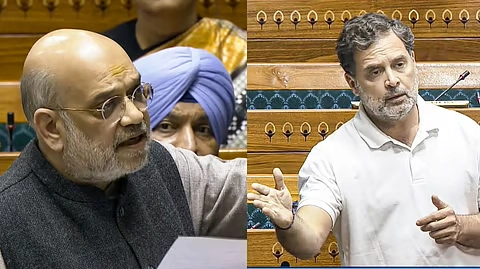
In a dramatic escalation of political tensions in the Winter Session of Parliament, Congress leader and Lok Sabha Leader of Opposition (LoP) Rahul Gandhi publicly accused Union Home Minister Amit Shah of being “under tremendous mental pressure” and visibly nervous with trembling hands during a Wednesday debate on electoral reforms. The sharp exchange comes against the backdrop of ongoing controversy over the Special Intensive Revision (SIR) of electoral rolls and claims of “vote chori” leveled by the opposition.
Addressing reporters outside Parliament House on Thursday, December 11, 2025, Gandhi said that Shah’s demeanor during his speech — marked by apparent nervousness, a defensive tone, and the use of “wrong language” — suggested he was struggling to respond to opposition pressure. “Amit Shah ji was very nervous… his hands were trembling… he is under a lot of mental pressure — which the whole country saw yesterday,” Gandhi asserted, amplifying a narrative of vulnerability around the senior BJP leader.
Clash Over Electoral Reforms and Vote Chori Allegations
The confrontation between Gandhi and Shah erupted during a contentious Lok Sabha debate focused on electoral reforms, particularly the government’s Special Intensive Revision (SIR) process intended to update and cleanse voter lists ahead of future polls. The opposition has claimed this process has created irregularities and fuelled allegations of “vote chori,” a phrase that has come to dominate political discourse this year.
Gandhi used the moment to challenge Shah directly, questioning his refusal to substantively address key opposition concerns — including alleged discrepancies in voter rolls, demands for transparent voter data, and calls to open up EVM architecture for scrutiny. He reiterated his demand that Shah participate in a formal debate to directly tackle the points he has raised in multiple press conferences.
The exchange grew more heated when Gandhi criticised what he described as Shah’s “use of foul language” in the House — an allegation that further inflamed the already charged atmosphere in Parliament.
Parliamentary Dynamics and Political Reactions
The debate quickly transcended procedural discussion, highlighting deeper fissures between the ruling Bharatiya Janata Party (BJP) and the opposition INDIA bloc. Several opposition MPs staged a walkout in protest after asserting that Shah’s speech failed to directly address their substantive concerns. This action underscored persistent distrust between parties on issues of electoral transparency and democratic accountability.
While Gandhi’s remarks dominated headlines, the BJP camp dismissed his assessments as politically motivated. Senior ministers and allied leaders accused the opposition of adopting “hit‑and‑run politics” and of failing to engage constructively in substantive policy debates. In sharp rebuttals, BJP spokespeople insisted Shah’s stance was rooted in defending constitutional procedures and maintaining legislative order amidst disruptions.
Key Implications and Broader Narrative
This latest parliamentary showdown is likely to have enduring resonance as India approaches critical regional elections in 2026 and continues to grapple with intense debates over electoral integrity. The confrontation vividly illustrates how procedural discussions on reform can rapidly escalate into high‑stakes political theatre — with both sides mobilising public opinion around issues of democratic legitimacy and governance credibility.
Key Facts at a Glance
| Issue | Explanation |
|---|---|
| Central Leaders Involved | Rahul Gandhi (Congress); Amit Shah (BJP) |
| Session Context | Lok Sabha debate on electoral reforms and SIR |
| Main Accusation | Gandhi alleges Shah was nervous and under pressure |
| Opposition Critique | Lack of detailed answers on vote roll concerns |
| BJP Response | Emphasis on constitutional process and order |
As political rivalries intensify ahead of future elections, the narrative of pressure, transparency, and parliamentary conduct is poised to remain central to India’s political discourse well into 2026.