Raj Kundra, a well-known businessman and Shilpa Shetty’s husband, has been released on bail in a large money laundering case that has to do with Bitcoin. This is a big move in one of India’s most closely followed Bitcoin cases. The fact that this case is being handled in a special court in Mumbai shows that the government is cracking down on Bitcoin-related financial crimes. It also makes people wonder about the proof and how attentively the courts are looking at it.
People are stating that Kundra got 285 Bitcoins from the person who led the GainBitcoin Ponzi scheme. This is worth more than 150 crore rupees. This shows how risky it might be to trade cryptocurrency at first.
Bhardwaj, who was nicknamed India’s first “Bitcoin millionaire,” promoted the concept hard at crypto events, taking advantage of the 2017 Bitcoin boom when prices around the world rose beyond $20,000.
The Maharashtra Police arrested the brothers in 2018 after persons in Pune filed FIRs at the Nigdi and Nanded police stations. Amit Bhardwaj had a heart attack and died in 2022 while he was out on bail.
India didn’t have any laws against crypto Ponzi schemes, which is why they were able to spread. This scheme is one of the first to highlight how bad they are. Later, the Enforcement Directorate (ED) used the Prevention of Money Laundering Act (PMLA) to discover the money, freeze assets, and charge a number of persons.
Raj Kundra’s Alleged Role: From Mediator to Suspect
The main item the investigation is looking into is that Amit Bhardwaj is reported to have given Kundra 285 Bitcoins between 2017 and 2018. The ED said that five payments were made to buy a Bitcoin mining farm in Ukraine, but the deal never went through. Kundra still owns the assets, which are currently worth ₹150.47 crore.
The ED made some key remarks, like:
Kundra didn’t give up wallet addresses, even though he was told to do so in 2018. He asserted that a “damaged iPhone X” deleted evidence, but the FBI concluded that was just an excuse.
People who say he was only a “mediator” between Bhardwaj and his Ukrainian colleagues are wrong because he remembers the details of the deal clearly years later.
A “Term Sheet” deal with Mahendra, Bhardwaj’s father, that provides Kundra the beneficial ownership instead of the middleman.
Kundra has fully cooperated with investigators since 2018 and has been in for interrogation without being arrested till the chargesheet. The ED’s extra prosecution charge dated September 2025 mentioned him as one of 18 defendants, along with Rajesh Satija, who lives in Dubai. In January 2026, this resulted to a court summons.
Court Proceedings and Bail Grant Show Legal Information
On February 19 and 20, 2026, Kundra went to Mumbai’s special court. Special PMLA Judge R.B. Rote looked over the chargesheet and allowed him go. Sections 88 CrPC and 91 BNSS usually say that you have to pay a ₹1 lakh bond and get permission before you can leave the country.
The court accepted witness testimony as prima facie evidence but decided that Kundra should be released on bail because he had never been arrested before and had always followed the rules. Prashant Patil, his lawyer, said that the ED’s case wasn’t strong enough and that he had been working with them for years.
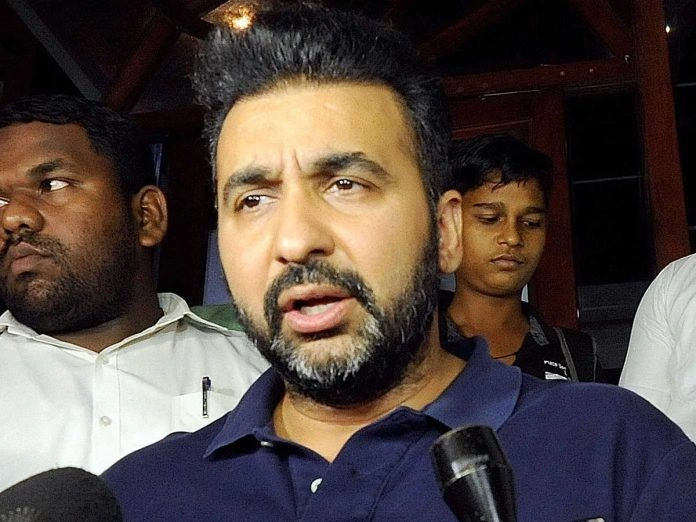
Kundra told reporters outside the court that the media buzz was too much and that he would maintain following the law. He used the phrase “Satyamev Jayate,” which means “Truth alone wins.”
Attachments from earlier in 2024 added up to ₹69 crore. There was a prosecution charge in 2019, and it was added to in February 2024.
ED also said that Kundra “layered” the money he made to make it look clean, even when he acquired houses for less than what they were worth on the market.
People have talked about Shetty because of shared assets, but no one has directly accused her of anything. In this case, assets were frozen in a method that is comparable to how they were frozen in Kundra’s 2021 pornography case bail. It shows that the two are always getting into issues with the law.
In the big picture, crypto money laundering in India
India’s campaign against utilizing cryptocurrencies to launder money is getting stronger as more and more people around the world become interested in them. In Kundra’s situation, this is quite evident. A Chainalysis analysis from 2026 says that the amount of illegal crypto rose by 145% from the year before, reaching $158 billion in 2025. This was due of scams and not wanting to be among nation-states.
Expert Opinions and What to Do Next
Lawyers believe that bail is only a process and not proof that someone is innocent. The amount of money displayed and the reliability of witnesses are important in trials. Experts in cryptocurrency say that India’s atmosphere is getting better. The PMLA changes make it easier to get money back, but there are still worries about transactions that happen outside of India.
People that are working on the project expect:
ED and FIU should work together more, like they do when they sign agreements with Chainalysis in the U.S.
Changes in rules that require users to report their wallets to stop people from exploiting their privacy.
Using AI to teach investors how to avoid scams like memecoins and Ponzi schemes.
If it can be established that Kundra fully collaborated, he could lose his job. If not, the case could take a long time.
Raj Kundra was let out on bail in a ₹150 crore charge of Bitcoin money laundering. This is a huge step forward in an inquiry that a lot of people know about.