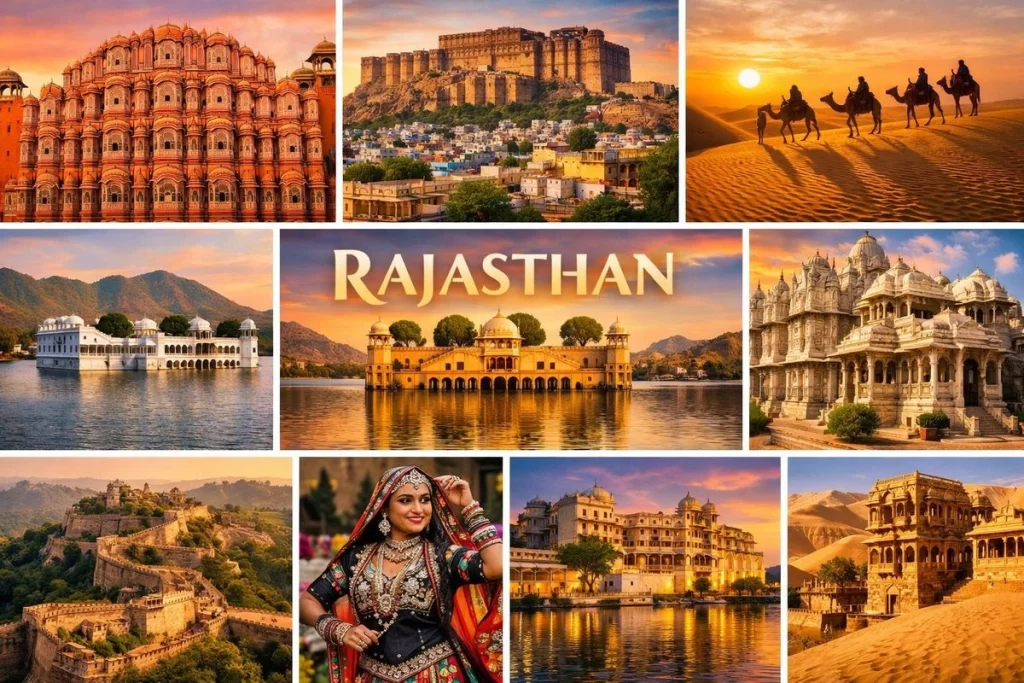
Rajasthan Day 2026 is an important occasion on India’s cultural calendar. It shows off the state’s rich heritage at a time when more people are coming to see it. There are things going on all across Jaipur and even outside of it. The mix of old and new ads is drawing more attention than ever.
Getting to Know the People
The 2026 celebrations got off to a good start at the Albert Hall Museum grounds in Jaipur, where Chief Minister Bhajan Lal Sharma lighted the ceremonial flame to kick off the festivities. People from 33 districts put on Ghoomar and Kalbelia shows that wowed thousands of people. This event illustrates that Rajasthan is becoming a cultural behemoth in India and is heading toward long-term tourism. National news coverage has revealed that these events are not only something that those who live there are proud of, but they also draw people from all across the country. Famous people and people with a lot of social media followers have helped get the word out.
The story of Rajasthan Day
After India became free, Sardar Vallabhbhai Patel sought to bring people together. This is how Rajasthan Day began. In 2026, events will highlight how the economy has shifted from one that relied on royal legacies to one that relies on tourism. This will happen in more than 70 years. One of the most essential things about the tribute to Maharaja Sawai Man Singh II is that he had the idea to establish a contemporary Jaipur. Historians think that this year’s topic, “Heritage for Tomorrow,” coincides with the Swadesh Darshan 2.0 initiative’s national goals of making cultural circuits better. There are 50 UNESCO World Heritage Sites in the state, such as Amber Fort and the living fort at Jaisalmer.
There are 100 folk groups from all throughout the state working together to conserve culture. For cultural projects in 2026, the government has committed up ₹500 crore. This is 15% more than last year. This shows that they care about the past even as the country moves forward.
A big cultural event starts
The primary cultural event was place in Jaipur’s Chomu Palace. It had odd things like the Pabuji Ki Phad story and the Terah Taali folk dance from Jalore. These steps help keep creative forms alive that are in danger of dying out, and UNESCO’s lists of intangible heritage make them even more vital. Aishwarya Rai Bachchan and other Bollywood stars streamed live events that attracted millions of views, which got a lot of people talking.
Boat parades on Lake Pichola lit up the City of Lakes in Udaipur. Ten thousand diyas lighted up the procession. People traveled from Delhi and Mumbai to observe Lavani rhythms at the Mehrangarh Fort in Jodhpur. Here are some of the most noteworthy cultural events:
Ghoomar workshops for 5,000 young people where people of all ages can teach and learn from one other.
Kalbelia snake dance exhibitions use music to talk about how to protect wildlife.
Puppet shows that teach about past wars and show how valiant the Rajputs were.
At handcrafted melas, artisans show customers how to make Bandhani fabrics and Blue Pottery right in front of them.
These events keep culture alive and well, and they attract millennials who live in cities and want to have significant experiences.
How the rise in tourism affects the economy
Rajasthan’s tourism industry, which accounts up around 12% of the state’s GDP, is seeing more visitors than ever before. Plans are in place for 100 million people to join in 2026. The celebrations for Rajasthan Day are just the beginning. With new packages like “Heritage Trails,” you can see 10 forts in 7 days. IRCTC is working with high-end trains like the Maharaja Express, which is fully booked till June. This has made people all around the country pay closer attention to the matter.
Since the pandemic, the number of tourists from the US has gone up by 30%, largely because of work done in Tier-2 cities. There are now fewer severe visa regulations, therefore 20% more people from the US and UK are traveling abroad. The economy is quite badly hurt. For instance, eco-resorts in Ranthambore are expected to boost hospitality revenues from ₹15,000 crore in 2025 to ₹19,500 crore in 2026. Handicrafts could make ₹11,000 crore by working with other countries to offer their goods. Adventure tourism, like hot air balloon safaris in Pushkar, might bring in ₹4,800 crore, and spa retreats in Bundi could bring in ₹3,000 crore.
This information reveals that culture and tourism are getting more and more attention across the country, which is expected to lead to the creation of 2 lakh jobs.
Government Programs That Make Things Happen
The Bhajan Lal Sharma government has put the “Rajasthan Tourism Policy 2026” into action. The major goals of this method are to promote eco-tourism and make use of technology. Adding 50 new glamping sites in the Aravalli hills and giving virtual tours of Hawa Mahal are two of the most critical things to do. We worked with MakeMyTrip to offer flash offers for Rajasthan Day that save you 25%.
To make sure the rites last, a particular group watches busy sites like Ajmer Sharif Dargah for traffic jams. The “Golden Triangle Plus” circuit tourism agreement with adjacent states, which runs all the way to Jaisalmer, illustrates that the country is coming together. These efforts have made Rajasthan a great example of how to bring back cultural tourism.
What’s in the news
There are still challenges, even though everyone is excited. There are too many tourists at historic places, which can cause problems like traffic jams in Jaipur during busy times. Because Jaisalmer is primarily desert, there isn’t enough water, so new hotels have to come up with unique ways to gather rainwater. People are pushing for actual preservation since events that are commercialized can weaken traditions.
Many intellectuals, including Dr. Rima Hooja, a prominent historian from Rajasthan, advocate for balanced growth. “Culture must change without losing its soul,” she argues. “Tourism should give power to locals.” If you take care of these things, they will last a long time.
The National Spotlight and Media Buzz
Some major news organizations, like NDTV and the Times of India, have created special pieces for Rajasthan Day 2026 with titles like “Rajasthan’s Cultural Renaissance.” Within 48 hours, 50 million people saw posts on social media that used the hashtag #RajasthanDay2026. Fashion influencers from Mumbai liked the mirror work in Jaisalmer. It let individuals from both cities and countries get to know each other better.
Bollywood’s involvement, like making new movies in forts, makes it even more popular in India. Political crossovers, like the Union Tourism Minister’s speech, suggest that states might be able to work together.
Getting people in the community and young people interested
The people who live there make the 2026 celebrations unique. People were proud when 1 lakh people entered the “My Rajasthan” contests at schools. Women start self-help groups that handle souvenir stores, which gives 10,000 artists more power. Young people put on drone shows over Nahargarh Fort to show how technology may help preserve traditional traditions alive.
These factors help Gen Z, who likes to travel to learn new things, connect with culture.
Rajasthan Day 2026: The state’s culture and tourism make it a national priority.