
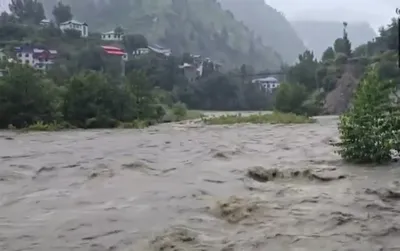
Farmer associations across Rajasthan have intensified calls for the government to stop surplus water flows to Pakistan, following India’s April decision to suspend the Indus Waters Treaty (IWT). The move, triggered by a terrorist attack in Jammu and Kashmir, has renewed debate over water distribution, particularly in drought-prone states such as Rajasthan.
The IWT, signed in 1960, governs water sharing between India and Pakistan from the Indus river system. Under the treaty, India controls the eastern rivers — Ravi, Beas, and Sutlej — while Pakistan manages the western rivers — Indus, Jhelum, and Chenab. Despite the arrangement, both nations have long accused each other of violations, and tensions have periodically escalated over the decades.
In April 2025, India formally suspended the IWT, citing repeated acts of cross-border terrorism and violations by Pakistan. This decision, government officials say, is aimed at securing India’s rights over water resources and ensuring they meet domestic needs. For Rajasthan — a state grappling with one of its worst droughts in recent years — this has become a rallying point for farmers.
Rajesh Meena, a farmer leader from Jalore district, told reporters, “We have been pleading for years to end water outflow to Pakistan while our fields suffer. Now, with the treaty suspended, it is time to redirect these waters to our farmers.” Similar demands have been raised by farmer unions in Barmer, Bikaner, and Jaisalmer, where groundwater depletion and poor monsoon rains have crippled agriculture.
The Rajasthan government has backed these demands, urging the Centre to prioritise local water needs and implement policies that divert surplus flows to arid regions. Officials have pointed to extensive canal systems under the Indus basin that could be used to channel additional water to drought-affected areas if treaty provisions are reconsidered.
Experts highlight that this development could have far-reaching implications for India-Pakistan relations and regional water security. “Suspension of the IWT will intensify tensions, but it also opens a discussion about equitable water use within India,” says Dr. Arvind Joshi, a water policy analyst. “States like Rajasthan, Haryana, and Punjab could benefit significantly if surplus water is retained for domestic use.”
For now, Rajasthan’s farmers remain determined. “Our demand is simple: water for our fields, water for our future,” Meena said. Farmer groups have announced plans for peaceful protests and petitions to the central government in coming weeks to press their case.
As India navigates the complex diplomatic and domestic consequences of suspending the IWT, Rajasthan’s water crisis and farmers’ voices are set to remain central in the national conversation.

