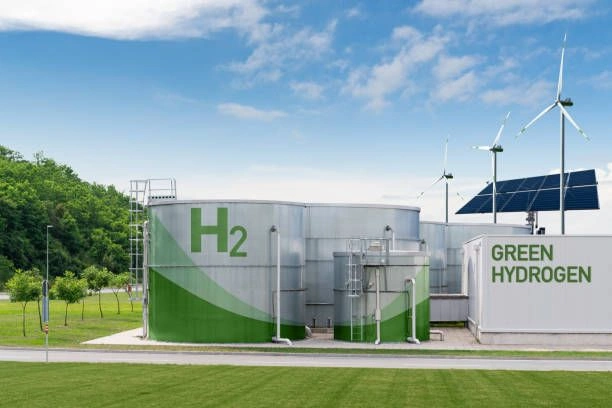
Reliance Industries, the Indian company that has long been in charge of oil refining and communications, just made a big announcement. On a clear morning in Mumbai, Chairman Mukesh Ambani announced intentions to invest more than ₹75,000 crore in renewable energy and green hydrogen projects over the next 15 years. Reliance isn’t just making noise; they’re fully committed to hitting net zero by 2035 and positioning India as a frontrunner in green energy. As energy demands climb and climate discussions intensify ahead of COP31, this move appears poised to reshape the landscape.
What’s driving this change? India’s dependence on fossil fuels is faltering, a direct result of increasing imports and the growing influence of international environmental standards.
The announcement was made at Reliance’s yearly shareholder meeting, and Ambani’s statements left little room for interpretation.
He remarked, “Green hydrogen will be the fuel of the future,” drawing a picture of his kingdom moving from “black gold” to “clean power.” This isn’t just a side job; it’s a key part of the plan. Reliance already has solar and wind farms running in the Rajasthan desert. But green hydrogen, which is made by splitting water with renewable electricity, could change the way we store and ship energy forever. This could significantly alter India’s energy landscape, especially as the nation seeks to reduce its dependence on coal and combat air pollution.
Unpacking Reliance’s Ambitious Green Aspirations
In simple terms, Reliance intends to build the world’s largest integrated green hydrogen facility.
This ambitious project will be situated in Jamnagar, Gujarat, sharing the same site as its existing oil refinery.
Picture this: by 2030, massive electrolysers, powered by 20 gigawatts of solar and wind energy, will produce millions of tons of green hydrogen annually. This will be enough to fuel trucks, ships, and factories, thereby reducing emissions from diesel and natural gas.
The plan’s core elements encompass:
A ₹75,000 crore investment over a decade to fifteen years, supplementing the ₹2 lakh crore already earmarked for new energy by 2030.
Each year, the addition of 10 GW of solar and 2 GW of wind power, culminating in a total of 100 GW of renewable energy capacity.
Green hydrogen hubs are planned for Jamnagar, Kandla, and coastal Kerala, linked to pipelines for export.
Backup power will come from batteries and biofuels, ensuring a steady supply.
This new endeavor expands upon Reliance’s Dhirubhai Ambani Green Energy Limited (DAGEL), which first launched in 2021.People who didn’t believe it back then termed it “greenwashing,” as Reliance still runs India’s biggest refinery. But three years later, with 2 GW of solar now up and running and agreements with big companies like Chevron and BP, it’s starting to gather traction. What Ambani said? India can’t afford to buy 85% of its oil anymore; renewable hydrogen might cut that cost by $100 billion a year.
India’s Secret Weapon in the Global Race: Green Hydrogen
Why is green hydrogen so important? The green material has no carbon, unlike “gray” hydrogen from fossil fuels. When you zap water with clean electricity, you get hydrogen and oxygen. Boom—fuel for everything from steel mills to planes. India has the best setup because its shores are bright and its plains are breezy. The National Green Hydrogen Mission says that by 2030, the government wants to produce 5 million tons of green hydrogen.
To help with this, they are giving out ₹19,744 crore in incentives.Reliance isn’t the only one. Adani Green is looking at comparable plants in Kutch, and NTPC, which is operated by the government, is testing pilots in Vindhyachal. But what gives Reliance the edge? Size and joining together. Their Jamnagar center will combine hydrogen production with existing refineries to make green ammonia for fertilizers. This sector uses around 30% of India’s natural gas. If farmers in Punjab switched to zero-emission urea, it would really affect the countryside.It’s a race around the world.
The Inflation Reduction Act gives the US $3/kg in subsidies, while Europe is spending billions on North Sea ports and China is the world’s largest manufacturer of electrolyzers. India is behind in technology but ahead in costs; solar power is 20% cheaper here than in Germany. Reliance’s move could make India the number one exporter, sending pink hydrogen (produced with nuclear) or blue hydrogen (with carbon capture) to Europe through pipelines under the Arabian Sea.
Have you ever thought that India may go from being an energy beggar to an energy supplier?But there are problems ahead. Electrolysers are very expensive right present, costing ₹300–400 per kilogram. They need to drop to ₹100 per kilogram to be useful. Because there isn’t enough water in Gujarat, desalination facilities are needed, which raises costs. What about enhancements to the grid? India’s old infrastructure can’t tolerate 100 GW spikes without causing blackouts.Bringing It Back to India’s Energy Crisis
This is really important for India. We are the third biggest producer of carbon in the world, and 70% of our power comes from coal. Every year, youngsters in Delhi choke on smog, and heat waves put a strain on the power grid.Last summer, it reached 50 GW.Reliance’s push for renewable energy in India is in line with PM Modi’s goal of 500 GW of non-fossil energy by 2030. Solar power capacity has already grown from 2 GW in 2014 to 80 GW now.For example, Reliance’s Bhoye solar park in Rajasthan covers 10,000 acres and employs 5,000 people from the area.
According to NITI Aayog, green hydrogen projects across India might create 600,000 jobs, such as welders in Kandla and engineers in Jamnagar. Cheap green power implies lower prices for Mumbai’s busy manufacturing, which helps exports.Mukesh Ambani’s commitment to sustainability isn’t new; Jio’s data centers rely on renewable energy, and the company’s retail divisions promote electric automobiles. But skeptics are unsure about the timelines. Reliance didn’t meet its solar goals for 2025 because of problems in the supply chain caused by the COVID-19 pandemic and the wars in Russia and Ukraine. Still, the company’s profits for the fourth quarter showed a 50% increase in new energy revenue, which is a sign of progress.Partners, Tech, and the Problems That Are Coming Up
Reliance is working together in a smart way. A $1 billion joint venture with Saudi Arabia’s ACWA Power will develop 5 GW hybrids, while Saint-Gobain will provide the panels. They are looking at alkaline electrolysers from India’s L&T and also getting PEM technology from Nel Hydrogen in Norway. Battery gigabytes with Ambri (US) guarantee low-cost storage.Are there any roadblocks? Investors are scared by policy changes. Subsidies helped, but buying land in Gujarat is taking too long. It’s hard to get financing; green bonds brought in ₹5,000 crore, but rates are going up over the world. And there is competition: Tata Power’s 10 GW pipeline and JSW Neo Energy are right behind it.A quick look at India’s drive to green:
Current production of green H2 is very low.By 2030, the goal is 5 MMT, and by 2050, 46 MMT.Cost trend: $4–6 per kilogram presently → $1–2 per kilogram after 2030.Saving: ₹8 lakh crore on oil imports.Reliance’s promise to reach net zero by 2035, five years before Paris, puts pressure on other companies like ONGC. If they succeed, Jamnagar will be known as “Green-nagar” and will send goods to Japan and South Korea.Daily Victories and Wider Effects
Zoom out: This has effects all over. Steel companies like JSW could use hydrogen instead of coal, which would cut India’s emissions by 8%. Airlines are testing hydrogen jets.Could IndiGo go green? For you and me, cheaper power implies reduced costs.For example, renewables are already cheaper than coal at ₹2.5/kWh.Charging an electric vehicle with green hydrogen in Pune or Bengaluru makes commutes cleaner. Farmers may receive ammonia for a low price, which lowers the cost of fertilizer by 20%. It’s hardly a pipe dream; pilots in Leh currently use hydrogen to power buses.But is that enough? One question to think about: Does one firm truly have the power to make a whole country green, or does it need the help of the government?
Reliance’s Big Bet on Green Hydrogen: A ₹75,000 Crore Push to Power India’s Clean Energy Future