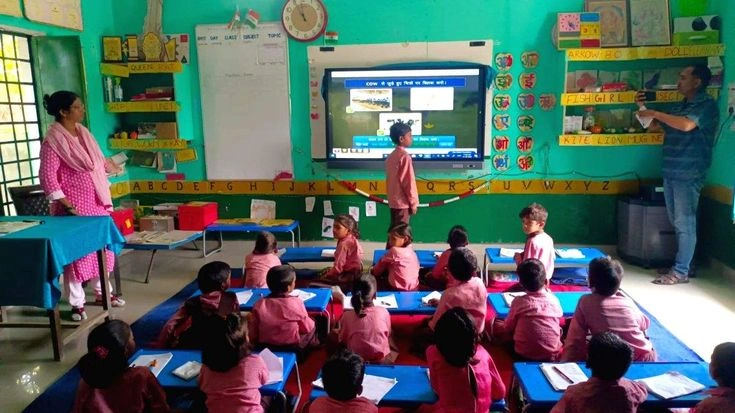
The Ministry of Education just made a big step in a country where millions of youngsters in remote areas still chase teachings on broken blackboards. Last week, on a clear morning, officials announced a number of digital learning programs geared directly at rural India, where slow internet and old textbooks have long held back hopes. This isn’t just a showy city project; it’s a focused attempt to close the huge gap in access to education. It will use tools like more e-learning platforms, solar-powered gadgets, and teacher training programs to reach more than 250 million children in places that don’t have enough resources. According to latest NSSO data, almost 14% of students in rural areas drop out of school. These initiatives feel urgent because students are still losing ground in their studies after the pandemic. Why now? Because India’s youth bulge needs it—more than 40% of our population is under 25, and leaving rural youngsters behind means the country’s future workforce will be smaller.
The announcement, which came during a virtual news conference from the ministry’s headquarters in New Delhi, builds on accomplishments like PM e-VIDYA while also addressing ongoing problems. Dharmendra Pradhan, the Union Education Minister, said that “digital equity isn’t a luxury; it’s the pillar of inclusive progress.” With a budget boost of Rs 6,000 crore, these projects are expected to start in stages over the next two years. It’s a gamble on technology to make things fair, but can it work in villages where the power goes out and siblings share smartphones?
The Rural Education Gap: A Harsh Reality Check
Rural India is huge—about 65% of the country’s people live there—but it doesn’t do very well when it comes to basic education. Imagine a typical village in Bihar or Rajasthan, where kids have to walk for miles to get to schools that don’t have enough personnel, teachers have to deal with 60 pupils at a time, and lessons are interrupted by monsoons or farm chores. UNESCO says that 73% of males and only 57% of women in India’s rural areas can read and write. In urban areas, the rates are much higher: 89% for men and 79% for women. The epidemic made this gap even bigger. According to ASER surveys, rural enrollment dropped by 11% in 2020–21 because many families couldn’t afford data packs for online classes.
The ministry has started new digital learning programs. They’re not making something new; they’re just making what’s already there better. At the heart of it all is the growth of PM e-VIDYA, the hub-and-spoke arrangement that broadcasts classes through DIKSHA, SWAYAM, and even Doordarshan TV. Now it’s going rural with content in 12 regional languages, the ability to download courses offline in locations with slow internet, and lessons that use voice through community radio. In places like Uttar Pradesh and Madhya Pradesh, where more than 40% of schools don’t have computers, this might mean that youngsters can use shared tablets to learn arithmetic without having to be connected to the internet all the time.
What is one thing that stands out? “Digital kits” powered by solar panels for 50,000 cluster schools. These tough devices come with NCERT e-books and interactive quizzes already loaded on them. They function in any weather. Pilot testing in the tribal areas of Odisha showed that students studied 25% more hours each day. It’s not just a dream; it’s useful technology.
Key Pillars of the Initiative: What’s on the Table
The ministry came up with a plan that included infrastructure, content, and people. Here’s a short look at the big players:
DIKSHA, which now has 5 crore users, is getting AI-driven customisation to help reach more people in rural areas. Algorithms will propose lessons based on a student’s dialect or how fast they learn. This is very important in rural areas where people speak more than one language. Also, there is a new “Rural Learning App” with short movies that are less than 5MB in size and function well on 2G networks.
Device and Infra Push: By 2027, 10 lakh low-cost tablets and laptops would go to rural government schools, with each one costing Rs 5,000. Along with 1 lakh new digital labs in aspirational districts, which are the 112 laggards that NITI Aayog found.
Teacher Empowerment: NISHTHA 3.0 will train 20 lakh rural teachers in a big way. They will learn how to combine modern tools with traditional ones, such utilizing QR codes on books to link to video explanations.
Connectivity Blitz: Using the BharatNet fiber backbone, BSNL and Jio are teaming up to put 50,000 Wi-Fi hotspots in communities. Early results from Gujarat pilots? In six months, usage rates went up by two times.
These aren’t just one-time changes. The ministry is working with edtech companies like BYJU’S and Unacademy to create curated content, and there are no ads or memberships needed to access it. Are there any global parallels? India’s problems with power outages, language barriers, and tight budgets make it hard to use Kenya’s digital textbooks or Estonia’s e-schooling.
Voices from the Ground: Real Stories, Hope, and Obstacles
When you talk to people who are actually doing the work, excitement and doubt blend. Sunita Patil, the principal of a school in Nashik district, Maharashtra, talked about how the DIKSHA trials last year turned her mud-school into a mini-studio. “Kids who loathed algebra now beg for screen time,” she added over a bad phone line. Her class of 45, largely kids of farm workers, did 15% higher on state tests. From Assam’s tea estates, where voice lessons in Assamese are helping girls stay in school, to Tamil Nadu’s coastal hamlets, where offline modules are helping people fight cyclones, there are stories like hers all over.
But there are big problems ahead. According to TRAI stats, rural households still spend 5–10% of their income on mobile recharges. What if families put WhatsApp ahead of school? And what about infrastructure? According to UDISE data, only 24% of rural schools have working computers. Another fear is cybersecurity. How do we keep kids safe from threats when they’re using electronics without scaring parents away?
Activists like Anuradha Ravi from Pratham Education say that the problems go deeper. “Tech is amazing, but without skilled teachers and parents on board, it’s simply shiny toys,” she says. What did the ministry say? Community camps to show off tools, with rewards like free data plans for the best schools. It’s a gesture to the human aspect, since trust, not orders from above, is what makes rural India work.
Have you ever thought about what doors might open for a village kid in Jharkhand if she learns to code using these apps?
Linking to Bigger Goals: India’s Goal for Digital Education
This push fits perfectly with national plans. NEP 2020 says that by the end of the decade, 50% of people should be able to use computers and the internet. It fits with the G20’s promises for fair edtech and echoes the Digital India backbone. BharatNet’s 2.5 lakh gram panchayats are now lit up with fiber. India’s action is unique around the world; while the US worries about screen addiction, we’re using digital tools to fight poverty.
The stakes are very high for the economy. According to a World Bank study, one extra year of school can lead to 10% higher income. By 2030, rural digital learning programs might add $500 billion to GDP by creating a trained workforce. Think of semiconductors in Gujarat or electric vehicles in Tamil Nadu. Tomorrow’s engineers could come from the backwoods of Bihar.
Wins that are only for India? States like Kerala, which is already 90% ready for digital technology, will help those who are behind through a “digital twinning” program that pairs urban and rural schools for virtual exchanges. It’s not a competition; it’s a collaboration.
Hurdles Ahead: Making It Work
No sugarcoating: there are a lot of problems. Blackouts during the monsoon could leave solar kits useless. Also, females typically lose time on their devices to their brothers because of gender disparities. It’s also hard to carry out the budget; for example, Samagra Shiksha lost 20% of their funds. The ministry’s countermeasures include real-time dashboards for keeping an eye on things and audits by other parties.
Privacy is important. With AI keeping track of developments, the new DPDP Act will make data protection a must. And what about fairness? Plans include digital clubs run by women in communities to attract more girls to sign up, with a focus on the 30 million girls who are not in school.
India’s rural students get a digital lifeline: the Ministry of Education launches a bold new push for learning.