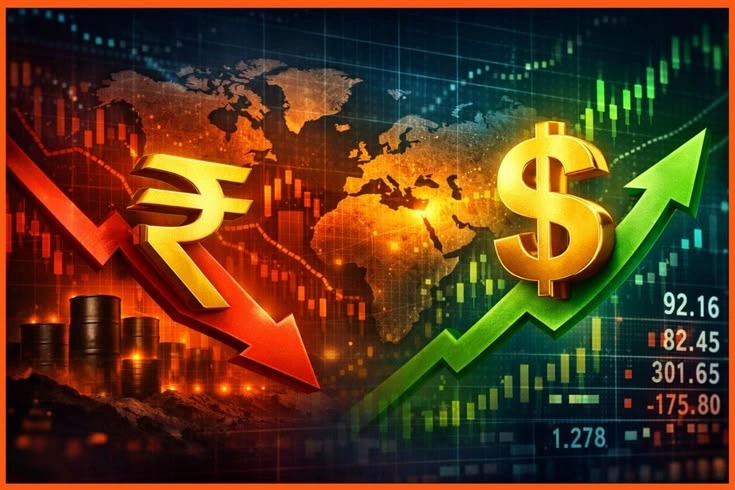
When there are problems in West Asia, they tend to affect the world’s financial centers. Right now, that’s happening. New tensions between Israel and Iran, together with ongoing wars in Gaza and Lebanon, are causing financial markets around the world to fall. People are worried about the stock market, oil prices are going up, and gold and other safe-haven assets are shining brighter than ever. The Dow Jones fell more than 2% in one session last week, and India’s Sensex fell 1.5% in the same time period. Why does a far-off war suddenly seem so near to your investments? This article goes into the chaos and explains how these tensions are causing the market to be unstable and what this means for regular investors from Mumbai to Manhattan.
The Spark: What is Starting the Fire in West Asia?
West Asia has been a powder keg for years since it is home to some of the world’s most important oil chokepoints. But the last few months have turned up the fire. Israel’s targeted attacks on Iranian proxies in Syria and Lebanon, followed by Iran’s retaliatory drone and missile attacks, have brought the area closer to open conflict. The long-running battle between Israel and Hamas, which is now in its third year, and Houthi strikes on shipping lines in the Red Sea make for a perfect storm.
Reports came out last week that Israeli troops were fighting Hezbollah along the border with Lebanon. This caused thousands of people to have to leave their homes and raised worries of a larger battle. Iran promised a “severe response” through its “Axis of Resistance,” which shows off its strength. These aren’t simply news stories; they’re messing up supply systems. The Strait of Hormuz, which carries 20% of the world’s oil, is becoming a source of worry. Any obstruction there might cause crude prices to go beyond $100 a barrel, which is already priced into the markets.
This is really near to home for Indians. India gets more than 85% of its crude oil from the Middle East, with Saudi Arabia and Iraq being the main suppliers. If the problem lasts for a long time, it could raise the price of gas at pumps in Nagpur or Delhi, which would hurt both families and businesses. Brent crude oil prices rose 5% in just a few days, reaching $92 a barrel. This shows that global markets are reacting quickly to the risk.
The Volatility Kingpin: Oil’s Wild Ride
Oil price changes are a sure sign of “geopolitical tension,” and West Asia has a lot of them. When things get tense, worries about supply take over. Many of the OPEC+ countries are in the Gulf and are pumping at almost full capacity, but that’s barely keeping up with demand from economies like China and India that are starting to recover.
Here’s a brief look at how oil prices have been going up and down lately:
Brent at $78/barrel on the pre-tension baseline (Jan 2026).
After the strike, the price went up 8% to $85.
As of April 3, the current hover is $92, and if Hormuz tightens, futures might reach $100.
Energy equities are doing well—ExxonMobil is up 4% and Reliance Industries is up 3% in India—but the market as a whole doesn’t like uncertainty. Fuel prices are hurting airlines and transportation companies a lot. Think of IndiGo or multinational airlines like Delta. When jet fuel prices go up, earnings go down or tickets go up. What if these surges stay around? Could your next airplane ticket cost you more money?
This isn’t vague. Similar tensions between Iran and the US in 2019 caused oil prices to rise to $70, which hurt global economy by 0.5%. Central banks are stuck right now since inflation is still stubbornly high at 3–4% in major nations. If they raise rates to battle imported inflation, they risk a recession.
Stock Markets Going Up and Down: From Wall Street to Dalal Street
The world’s stock markets are hurting. Last Friday, the S&P 500 dropped 1.8%, its worst day since October 2025. This was because tech companies like Apple and Nvidia, which need dependable supply chains, were hit hard. The STOXX 600 in Europe dropped 1.7% as well, as countries that rely on imported energy, like Germany, worry about finding other sources of gas from Russia.
Japan’s Nikkei fell 2.2% in Asia because it relies on oil imports. China’s Shanghai Composite stayed steady at -0.9%, thanks to suggestions of stimulus, but problems with real estate make things riskier. India’s Nifty 50 followed the global trend and fell 1.6%, with $2 billion leaving the country in March alone. Sectors tell the story:
Oil and gas (ONGC +5%) and defense (HAL +7%) were the winners.
IT (TCS -3%), cars (Maruti -4%), and FMCG (HUL -2%) all lost.
Foreign institutional investors (FIIs) are leaving India and dumping their stocks for US Treasuries that pay 4.5%. The rupee fell to 84.5 against the dollar, which made import costs go up. Traders in Mumbai are glued to their screens, talking about “black swan” incidents. But deal seekers look for dips. History suggests that following a downturn, the market always goes back up, like the 15% rise in the S&P after the shocks in Ukraine in 2022.
Safe havens shine in the storm.
When stocks go up and down, money goes to bunkers. Gold hit a new high of $2,650 per ounce as central banks from India to Turkey stockpiled it. In the first quarter of 2026, the Reserve Bank of India added 25 tonnes to its reserves to protect against price swings.
The US dollar index went up 1.2%, which hurt emerging markets. Bonds also went up, with 10-year US Treasury rates falling to 4.1%. Cryptos? Bitcoin stayed at $95,000, while altcoins fell because people were worried. The Swiss franc and the Japanese yen also joined in, which is a typical flight-to-quality move.
During wedding season, demand for gold in India rose by 20%, sending local prices up to ₹78,000 per 10 kilos. Investors want to know if this is a buying slump or the start of something worse.
India’s Frontline Exposure: Trade, Energy, and More
West Asia isn’t far away for India; it’s important. Families back home get $120 billion a year from 9 million Gulf workers who send money home. Any disagreement might cut it in half, which would hurt consumption.
12% of India’s exports go through the Red Sea. Houthi disruptions have already added 10 to 15 days to shipping times, costing exporters millions. Big drug companies like Sun Pharma are having to wait. On the other hand, defense stocks are doing well; Bharat Dynamics is up 12% on rumors of new orders.
What did the government do? Hardeep Puri, the Minister of Petroleum, called for strategic reserves, which are now at 65 days’ worth of imports. PM Modi’s diplomacy is working: he is balancing relations with Israel (in technology and defense) and the Gulf states (in energy). His recent trips to the UAE got him inexpensive oil. There are still threats of inflation. If oil prices go beyond $100, the CPI may approach 6%.
The oil embargo during the 1973 Yom Kippur War caused prices to rise fourfold and led to stagflation. What’s the twist today? The switch to cleaner energy slows down diversification. Electric vehicles assist, but aviation and plastics still need crude oil.
Central Banks are in a tough spot: should they raise or lower rates?
Markets want clear rules from governments, but geopolitics makes things more complicated. The US Fed stopped raising rates after the cuts in 2025, but they said they were still watching. Chair Powell said, “Supply shocks make the fight against inflation harder.”” Lagarde of the ECB agreed and kept rates at 3.75%.
RBI Governor Das retained the repo rate at 6.25% because of “external headwinds.” Cutting rates now could cause the rupee to drop, while waiting could drag things down. If tensions lessen, futures markets expect rates to drop by 25 basis points by June.
What does this mean for you? Mortgage rates stay the same, but EMIs go up if the rupee falls. Corporate borrowing costs go up, which makes capex harder.
The Business World Prepares for Impact
CEOs are having trouble sleeping. Boeing is behind on deliveries because of supply problems, while Tata Steel is looking to raise prices. Tech? Semiconductor chains, which depend on the Taiwan Strait being stable, are keeping a close eye on West Asia. Any oil shock would hurt fabs.
Adani Ports said that problems in the Red Sea have caused a 5% decline in volume in India. Reliance is getting into renewable energy, but Jio’s data centers need a lot of power. There are some good things that come out of this: energy companies like Adani Green do well as oil prices rise.
Looking Ahead: Will the Storm Calm Down or Get Worse?
These problems in West Asia won’t go away right away. There are ways for diplomacy to work, such US-mediated discussions between Israel and Iran and Qatar’s support for Hamas, but retaliation might make things worse. According to IMF simulations, oil prices over $100 may cut global GDP by 1%, and India might see growth drop by 0.7%.
But the markets are strong. After the Gulf War in 1991, equities went up 20% in a few months. If peaks recede, investors switch to cyclicals. Spread your money around: 10–15% in gold, energy ETFs, and high-quality bonds.
The major issue is still out there: will cooler heads win out, or will we have a long period of volatility? For now, get ready—geopolitics just changed the rules for your investments. Keep up with the news, be savvy about your investments, and pay attention to the news from West Asia. They could be the ones who decide how much money you make next quarter.
Rising Geopolitical Tensions in West Asia Spark Wild Swings in Global Stock Markets