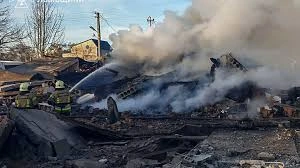
Russia unleashed one of its largest coordinated air assaults of the year on the night of November 19–20, 2025, targeting multiple Ukrainian regions with a combination of missiles and drones. The strikes, which hit both residential areas and critical energy infrastructure, caused extensive damage across the western cities of Ternopil and Lviv and resulted in significant civilian casualties.
At least 25–26 people were killed in Ternopil alone, including several children, after two nine-storey residential buildings were struck and engulfed in flames. Ukrainian emergency services reported that over 70 people were injured, while rescue teams continued clearing rubble through the early morning hours. Officials described the scene as catastrophic, noting that upper floors had collapsed and multiple apartments were completely destroyed.
The barrage, which included more than 450 drones and dozens of missiles, also targeted vital power and transport facilities. In Lviv, an energy site was damaged, and fires broke out at a wood-processing plant and a warehouse, prompting authorities to impose rolling blackouts across the region. The nationwide electric grid faced severe strain as emergency outages were introduced to stabilize supply.
Ukrainian air defenses reported intercepting the majority of the incoming drones and cruise missiles, though several managed to bypass the shield, causing extensive destruction in western regions that had experienced relative calm in recent months.
The attack coincided with President Volodymyr Zelenskyy’s diplomatic visit to Turkey, where he was engaged in discussions on security and potential peace negotiations. Ukrainian officials emphasized that the scale and timing of the assault underscored Russia’s intention to intensify pressure both on the battlefield and in the diplomatic arena.
The repercussions of the strike extended beyond Ukraine’s borders. Poland, reacting to the massive bombardment near its airspace, temporarily closed two southeastern airports and deployed fighter jets to reinforce surveillance operations. The incident reignited regional concerns about escalation risks and the potential for spillover into NATO territory.
Key Impact Summary
- Casualties: At least 25–26 civilians killed, including children
- Injuries: Over 70 people wounded across affected regions
- Scale of Attack: More than 450 drones and nearly 50 missiles launched
- Primary Targets: Residential buildings, energy infrastructure, industrial facilities
- Wider Effects: Emergency power outages in western Ukraine; heightened regional security measures in Poland
This latest assault marks a sharp escalation in Russia’s campaign to degrade Ukraine’s energy network ahead of winter, raising fears of prolonged outages and worsening humanitarian conditions. As temperatures continue to drop, damage to power facilities threatens essential services and increases vulnerabilities for millions of civilians.
The Ukrainian government is expected to elevate the matter in international forums, urging allies for additional air-defense resources and stronger diplomatic pressure on Moscow. The scale of destruction in western Ukraine — far from the frontline — reflects a widening of Russia’s strategy aimed at undermining both civilian resilience and national infrastructure.
As rescue operations continue and authorities assess the full extent of the damage, the strike stands as one of the most consequential attacks in recent months, highlighting the ongoing volatility of the conflict and the growing urgency for reinforced international support.