
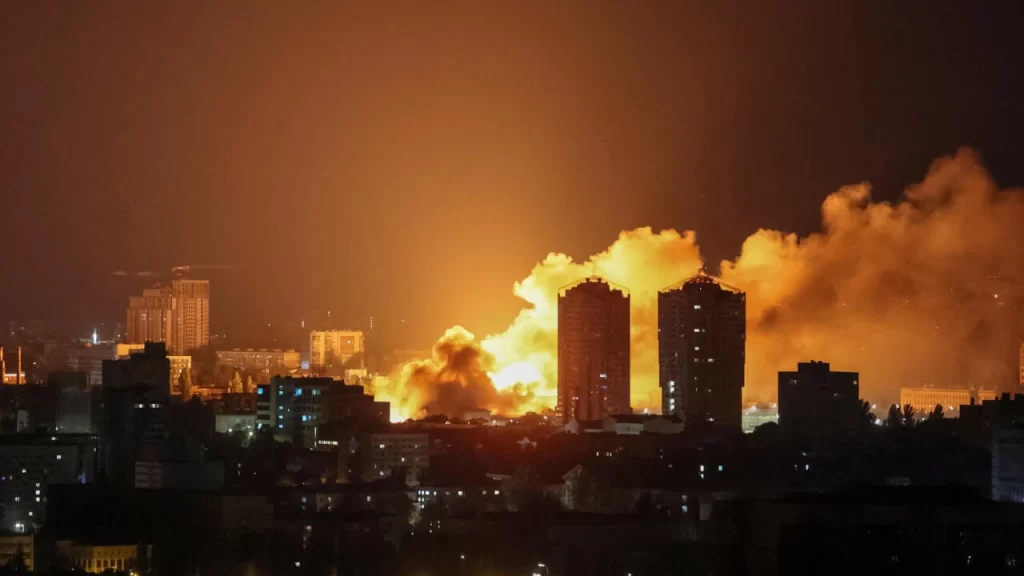
The Russia-Ukraine conflict witnessed one of its most intense escalations on Tuesday, December 23, 2025, as both sides launched large-scale aerial assaults and deep-territory drone attacks, marking a significant shift in the war’s operational intensity. The latest developments underscore the growing reliance on advanced drone warfare, long-range missiles, and coordinated air defense systems, raising fresh concerns about regional security and the conflict’s long-term trajectory.
Escalation Through Aerial and Drone Warfare
According to official statements from both nations, the day saw massive aerial strikes targeting critical military and infrastructure assets. Russia launched waves of missiles and unmanned aerial vehicles (UAVs) aimed at energy facilities, logistics hubs, and air defense positions across Ukraine. Ukrainian authorities reported sustained overnight bombardment, describing it as one of the most coordinated attacks in recent months.
In response, Ukraine carried out deep-territory drone attacks, striking strategic sites well inside Russian-controlled areas. These strikes demonstrated Kyiv’s expanding drone capabilities and its intent to disrupt supply chains and command centers far from the front lines. The reciprocal nature of the attacks highlights how drone technology has become central to modern warfare in Eastern Europe.
Key Developments on December 23, 2025
The escalation featured several notable elements that signal a changing phase of the war:
- Massive aerial strikes involving missiles and combat drones deployed simultaneously
- Deep-territory drone attacks targeting military infrastructure beyond active battle zones
- Heightened air defense activity as both sides attempted to intercept incoming threats
- Increased pressure on energy and logistics networks, impacting civilian and military operations
These actions reflect a broader strategic approach aimed at weakening the opponent’s operational depth rather than focusing solely on frontline engagements.
Strategic and Security Implications
Military analysts note that the expanded use of long-range drone warfare represents a critical evolution in the Russia-Ukraine war. By striking deep inside enemy territory, both sides are seeking to gain psychological and tactical advantages while stretching air defense resources.
The intensification of aerial attacks also raises concerns about escalation risks, particularly as strikes increasingly affect dual-use infrastructure such as power grids and transportation corridors. This trend could further complicate humanitarian conditions and place additional strain on regional stability.
From a geopolitical perspective, the latest escalation reinforces the conflict’s role as a testing ground for modern military technologies, including advanced UAVs, electronic warfare systems, and integrated air defenses. Observers warn that lessons drawn from these engagements may influence military doctrines beyond the region.
Impact on Civilians and Infrastructure
While military targets remain the stated focus, the scale of the attacks has heightened fears of collateral damage. Repeated strikes on energy infrastructure have previously led to widespread disruptions, especially during winter months. Authorities on both sides have urged civilians to remain vigilant as air raid alerts and emergency measures continue.

