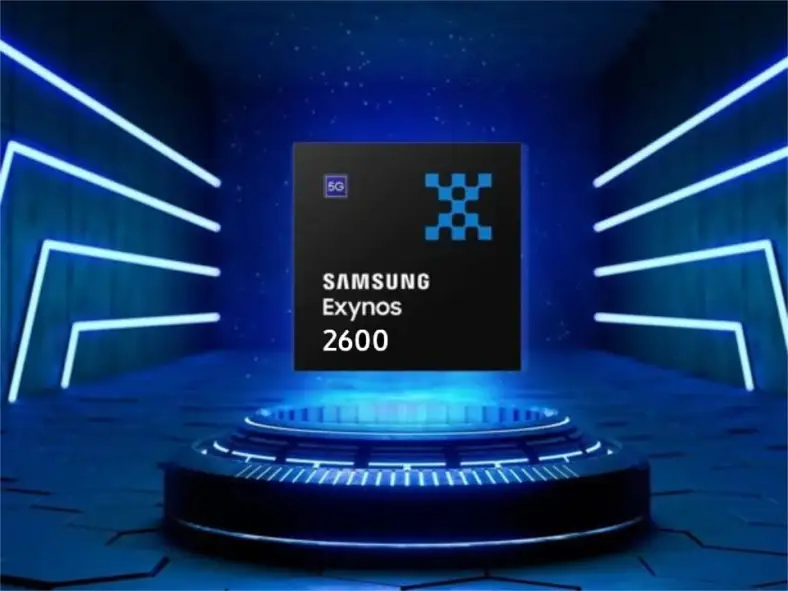
Samsung Electronics has officially announced the Exynos 2600, a groundbreaking mobile system‑on‑a‑chip (SoC) that stakes its claim as the world’s first smartphone processor built on a 2‑nanometer (nm) Gate‑All‑Around (GAA) manufacturing process—a leap forward in semiconductor technology that promises to reshape the performance, efficiency, and AI capabilities of mobile devices. The chip is widely expected to debut in select variants of the upcoming Samsung Galaxy S26 series, slated for launch in early 2026, marking a high‑stakes moment in the ongoing global competition among mobile chipmakers.
The Exynos 2600 represents a dramatic technical advance over previous generations such as the Exynos 2500, featuring a sophisticated 10‑core CPU built on Arm’s latest v9.3 architecture, integrated with a powerful GPU and neural processing unit (NPU) geared for next‑generation artificial intelligence and immersive gaming. Samsung’s transition to the 2nm GAA process gives the chip substantial gains in performance and energy efficiency by allowing tighter control of electron flow and reduced leakage compared to older transistor designs—a critical factor for both battery life and sustained high‑performance operation.
Performance, Architecture, and AI Focus
According to detailed specifications released by Samsung, the Exynos 2600’s CPU features a 1+3+6 configuration, combining one ultra‑performance core, three high‑performance cores, and six efficiency‑tuned cores to optimize both speed and power consumption. Samsung claims the new architecture delivers up to 39 % greater CPU performance versus its predecessor, while the integrated NPU demonstrates more than double the AI throughput, enabling advanced on‑device generative AI tasks without reliance on cloud servers.
The graphics subsystem, powered by the Samsung Xclipse 960 GPU, also receives a major upgrade, with support for enhanced ray tracing and artificial intelligence‑driven frame enhancement through technologies like Exynos Neural Super Sampling (ENSS). These features are designed to deliver smoother gaming experiences and high‑quality visual output, particularly for high‑refresh‑rate displays and graphically intensive applications.
Enhanced Connectivity and Multimedia Capabilities
Beyond raw processing power, the Exynos 2600 supports cutting‑edge memory and storage standards including LPDDR5X RAM and UFS 4.1 storage, enabling faster data throughput and improved multitasking performance. The chip’s image signal processor (ISP) supports sensors up to 320 megapixels, advanced video capture at 8K resolution, and sophisticated low‑light video noise reduction, affirming Samsung’s focus on premium mobile photography and videography features.
A notable innovation is Samsung’s Heat Path Block (HPB) thermal solution, aimed at improving heat dissipation within the compact SoC, which can help maintain performance over sustained workloads—a historical challenge for previous Exynos chips.
Strategic Implications and Industry Impact
Samsung’s unveiling of the Exynos 2600 arrives amid intensifying competition in the mobile silicon landscape—especially with rivals such as Qualcomm and MediaTek accelerating their own advanced chips. By leveraging an industry‑leading 2nm process, Samsung aims not only to reclaim technological leadership but also to strengthen its vertical integration between foundry and device divisions.
The broader implications extend beyond flagship devices: success with the 2nm GAA node could position Samsung Foundry to attract more external customers and innovate further in AI‑centric architectures—an area with rapidly growing demand across consumer and enterprise markets.
Conclusion: A New Flagship Standard?
As Samsung prepares to integrate the Exynos 2600 into its flagship Galaxy S26 lineup, the company’s bold move into 2nm GAA territory signals a pivotal shift in smartphone chip design. With enhanced performance, efficiency, and AI capabilities, the Exynos 2600 has the potential to elevate mobile experiences while challenging competitors on both technological and market fronts. Whether these advancements translate into real‑world supremacy will unfold through consumer adoption and performance benchmarks in early 2026.
Key Specifications Snapshot:
| Feature | Detail |
|---|---|
| Process Node | 2 nm Gate‑All‑Around (GAA) |
| CPU Cores | 10‑core (1+3+6) |
| Architecture | ARM v9.3 |
| GPU | Samsung Xclipse 960 |
| AI Performance | Up to +113 % generative AI gain |
| Memory & Storage | LPDDR5X, UFS 4.1 |
| Camera Support | Up to 320 MP, 8K video |
| Thermal Tech | Heat Path Block (HPB) |