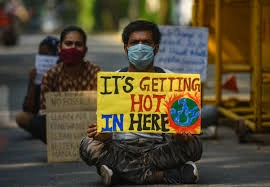
Climate change has gotten worse by 2026, and scientists predict that Earth’s systems are now perilously close to points of no return that can only be stopped with drastic action. The melting of ice sheets, the thawing of permafrost, and the weakening of ocean currents are all signals that we are at a critical juncture. World leaders and communities need to act right away.
Getting to Know Tipping Points
Climate tipping points are times when small changes in the environment start feedback loops that make things worse. These loops can cause big, fast, and often permanent changes in global systems. Some of these are the likely demise of the Amazon rainforest, the speedy melting of polar ice sheets, and the stopping of major ocean currents. In 2026, the average temperature around the world will be about 1.3°C higher than it was before the Industrial Revolution. A few tipping points are about to happen, changing risks that used to persist for hundreds of years into risks that only last for decades.
The Atlantic Meridional Overturning Circulation (AMOC), which includes the Gulf Stream, has been around 15% weaker since the middle of the 20th century. This is because melting ice in Greenland has let in more freshwater. Because of this, weather patterns in the Northern Hemisphere are messed up. This could mean that winters in Europe are colder and storms are stronger in other locations. When the permafrost melts in big areas of the Arctic, it lets out a lot of methane, which is a gas that traps heat 80 times better than CO2 for short periods of time. This makes things warmer faster, which is dangerous.
The Ice Sheet Meltdown is getting faster.
The Greenland ice sheet is shedding material at an alarming rate of roughly 270 billion tons every year. This is happening because there are more and more times when the surface melts to record lows. In July 2025, over 20% of the sheet melted all at once. This used to happen only once every ten years, but today it happens virtually every year because the Arctic is warming twice as fast as the rest of the world. If the temperature rises more than 1.5°C, full meltdown could raise sea levels by up to 7 meters over hundreds of years, flooding coastal communities all across the world.
The Doomsday Glacier in Antarctica is likewise under jeopardy because warm ocean currents are wearing away at its base. Scientists witnessed the grounding line go back more than 10 kilometers in just two years, from 2025 to 2026. This made the marine ice sheet unstable, which may make sea levels rise by 65 cm on its own. According to conservative projections, these losses might cause floods every year for more than 300 million people by 2050. It would cost trillions of dollars in damage and need massive improvements to infrastructure in locations like Florida, Bangladesh, and the Netherlands, which are the most at risk.
Amazon Dieback Is a Big Deal
The Amazon rainforest takes in more than 2 billion tons of CO2 every year, making it the lungs of the globe. But cutting down trees and long periods of drought are bringing it closer to the point where it will stop absorbing carbon and start releasing it. El Niño’s dry spells hurt 20% of the basin in 2026. Wildfires emitted 500 million tons of CO2 in 2025, and deforestation rates went up 5% even though officials said they would do something about it. The present rate of forest loss is 17%, which is near to the 20–25% level where less rain and vegetation loss would keep savanna conversion progressing on its own.
According to native sources, many trees are dying, which means that biodiversity is falling apart. The Amazon has 10% of all species on Earth. Key indicators show that deforestation is happening faster, going from 11,000 square kilometers in 2020 to 15,000 square kilometers a year. Drought coverage has tripled, and fire emissions have almost doubled. This makes the climate increasingly more unstable all around the planet.
Issues with ocean currents
One of the most worrisome tipping points is the possible shutdown of the AMOC. Paleoclimate records suggest that prior failures have led to unexpected cold episodes like the Younger Dryas. Recent research shows that the intensity of Greenland meltwater has fallen by half since 1950. It is projected to halt between 2028 and 2035 if emissions are high. This would interrupt the monsoons that feed 2 billion people in Asia and Africa and make other places too hot.
Coral reefs are also breaking down. Since 2023, there have been four global bleaching events. The most recent one killed half of the shallow corals during record heat waves. When the ocean absorbs CO2, it makes the water more acidic. This hurts structures and ecosystems that support 25% of marine life and the lives of 1 billion people. This happens all the time at well-known areas like the Great Barrier Reef, where the temperature of the water’s surface is now often more than 2°C higher than normal.
Scientists argue that in 2026, we can’t ignore the tipping points of climate change any longer.