
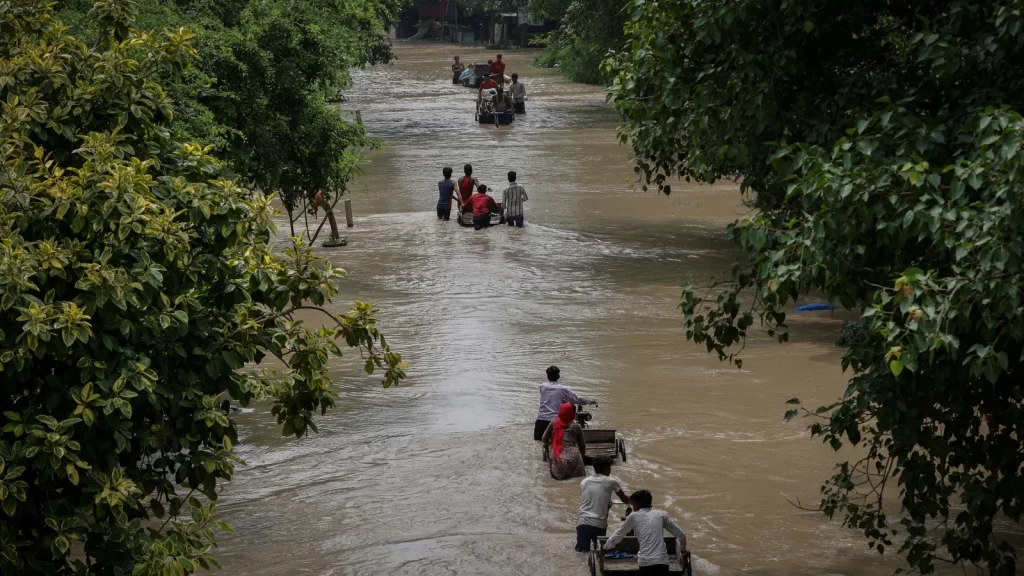
Northern India is facing severe flooding as heavy monsoon rains continue to batter the region, affecting Punjab, Himachal Pradesh, and the national capital, Delhi. The India Meteorological Department (IMD) has issued red alerts in several areas as the Yamuna River approaches its danger mark, raising concerns of potential devastation.
Heavy Rainfall Causes Widespread Disruption
In Himachal Pradesh, incessant rainfall has triggered landslides and flash floods, particularly in the districts of Chamba, Kullu, and Mandi. Authorities have mobilized rescue teams, and residents in vulnerable zones have been advised to evacuate. The IMD has warned of very heavy rainfall and thunderstorms over the next few days, signaling a high-risk situation for the hill state.
Punjab is also experiencing severe flooding, especially in Ludhiana, Patiala, and Jalandhar. The Hathnikund Barrage has released substantial volumes of water, causing the Yamuna River to swell and inundate low-lying areas. The state government has placed all districts on high alert and is actively coordinating relief measures.
Delhi on High Alert
The situation in Delhi is increasingly critical as the Yamuna River’s water level has reached 205.12 meters, surpassing the warning level of 204.5 meters and nearing the danger mark of 205.33 meters. Over 29,000 cusecs of water were recently released from the Hathnikund Barrage, exacerbating the flood threat. Authorities have intensified monitoring of flood-prone areas and advised residents to remain vigilant. The IMD forecasts continued rainfall in the coming days, which may further elevate river levels.
Government Response and Relief Efforts
State governments have activated disaster management protocols to mitigate the impact of flooding. In Himachal Pradesh, rescue teams are assisting stranded individuals, and temporary shelters have been set up for displaced residents. Punjab has deployed emergency services, providing relief materials and medical aid to affected communities.
Delhi authorities are closely monitoring flood-prone zones, coordinating with local agencies to ensure the safety of residents. The Haryana government has also stepped up measures to manage the rising water levels along its borders with Punjab and Delhi.
Outlook and Concerns
The IMD has predicted above-normal rainfall across northern India for September, particularly in Uttarakhand, north Rajasthan, south Haryana, and Delhi. This prolonged rainfall heightens the risk of further flooding and landslides in vulnerable areas. Experts emphasize that improving infrastructure resilience and disaster preparedness is crucial to mitigating the effects of recurring monsoon floods.
As northern India grapples with this crisis, authorities and communities remain on high alert, working to prevent further loss of life and property while managing the immediate impacts of the heavy rains.

