
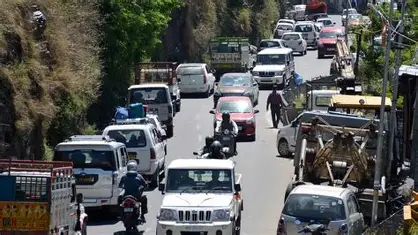
In what is being described as an unprecedented tourist rush, the hill station of Shimla has witnessed the entry of over 3 lakh vehicles in the first fortnight of June, causing severe traffic congestion and throwing daily life out of gear. The inflow, largely attributed to the summer vacation season, has raised fresh concerns over the town’s capacity to handle such large volumes of tourists and vehicles.
According to official sources from the Shimla Police and the transport department, the vehicle count between June 1 and June 15 crossed the three-lakh mark, far exceeding the average figures recorded in the past few years. Roads leading to popular spots such as The Ridge, Mall Road, and Kufri remained choked for hours, with traffic moving at a snail’s pace through much of the day.
Locals complained of being unable to reach offices, schools, and hospitals on time, while many tourists found themselves stranded in gridlocks with no alternative routes available. “This is not tourism, it’s chaos,” said a local shopkeeper in Lakkar Bazaar. “Our city is turning into a parking lot.”
Despite the deployment of additional traffic police and appeals to tourists to use park-and-ride services, there has been little relief. Authorities have also restricted the entry of heavy vehicles during the day in an effort to ease congestion.
The situation has reignited debates over the sustainability of tourism in Shimla, which is already grappling with limited road width, scarce parking, and fragile ecological balance. Environmentalists warn that the unchecked flow of private vehicles is accelerating pollution, resource depletion, and long-term damage to the region’s environment.
“Shimla is overburdened,” said Mr. Ramesh Chauhan, a noted environmental activist. “What we need is regulated tourism, not this kind of free-for-all that benefits no one in the end—not the tourists, not the locals, and certainly not the hills.”
In response to the growing crisis, the state government is reportedly considering the introduction of an e-pass system to cap vehicle entry during peak seasons. Discussions are also underway to expand parking facilities outside city limits and strengthen public transport connectivity to major tourist points.
Officials from the tourism department, while pleased with the economic boost, have acknowledged the need to redirect tourist flow to lesser-known destinations in the state to reduce the pressure on Shimla.
As the town braces for more visitors in the coming weeks, residents are hopeful that swift and sensible measures will be taken to restore some semblance of order in the Queen of Hills.

