
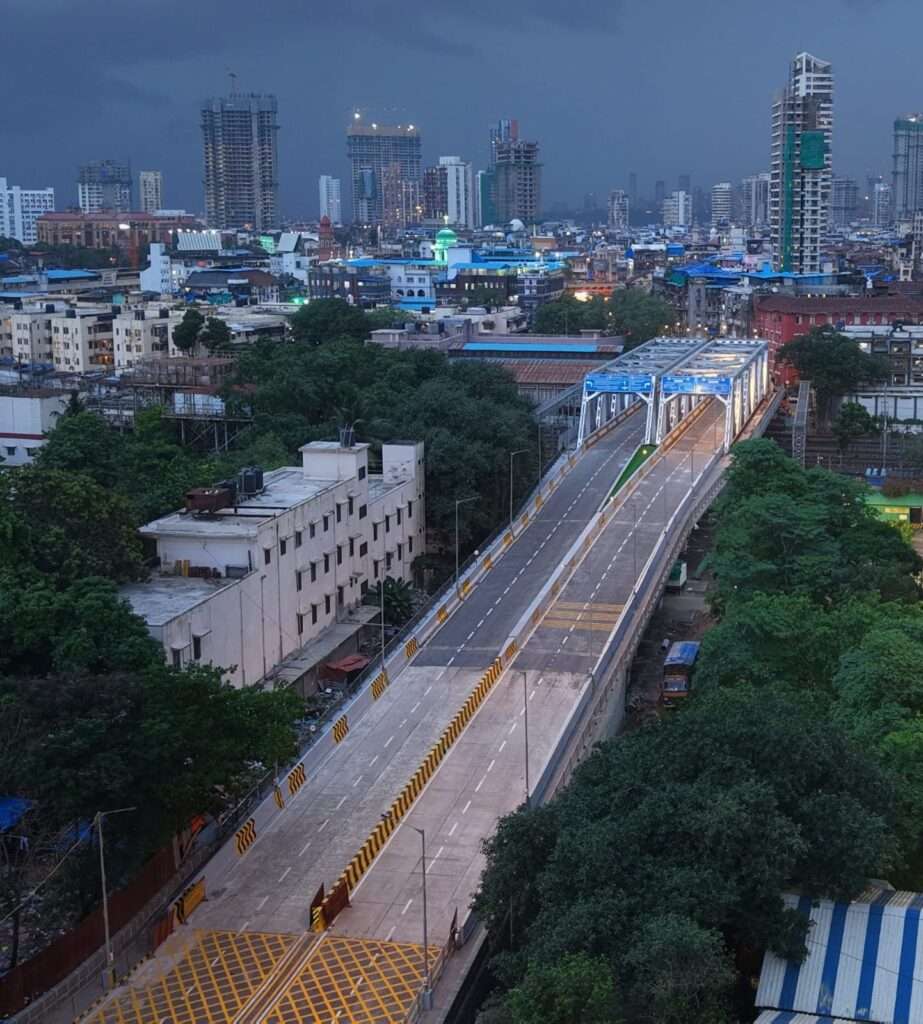
10 July, 2025-The long-awaited Sindoor Flyover is set to open on 10 July 2025, marking a significant milestone in the modernization of Mumbai’s aging infrastructure. Replacing the historic 150-year-old Carnac Bridge, the new flyover is expected to ease traffic congestion, improve rail safety, and provide a vital link in the city’s expanding road network.
The Carnac Bridge, constructed in 1865 during the British colonial era, had served as a crucial connection over the Central Railway tracks, linking the eastern and western parts of the city. However, years of structural deterioration prompted concerns about safety, especially due to the heavy vehicular load and the risk posed to train operations underneath. After multiple assessments and delays, the bridge was finally dismantled in 2022, making way for a modern structure aligned with current safety and engineering standards.
The Sindoor Flyover, named in reference to the vermilion-colored sandstone used in its design and also as a tribute to Indian heritage, spans approximately 670 meters. It is equipped with state-of-the-art safety features including anti-skid surfaces, LED lighting, and seismic shock absorbers. The four-lane flyover is expected to carry more than 80,000 vehicles daily, significantly reducing traffic buildup at one of the city’s busiest intersections.
Urban development experts and civic planners have welcomed the opening, calling it a “crucial step toward infrastructure renewal” in Mumbai. According to project engineers, the Sindoor Flyover has been designed not just to accommodate current traffic volumes but also to support the city’s long-term transport needs, including integration with future metro lines and smart traffic monitoring systems.
The reconstruction project, led by the Mumbai Metropolitan Region Development Authority (MMRDA) in collaboration with Central Railway, faced numerous challenges including coordination with rail operations, monsoon delays, and heritage concerns. Nonetheless, officials confirmed that the flyover passed all structural safety checks last week and is ready for public use.
Environmental sustainability was also prioritized in the construction. The flyover features noise barriers to reduce sound pollution and rainwater harvesting systems to manage runoff, aligning with the city’s green infrastructure goals.
While many residents will miss the iconic Carnac Bridge and its colonial-era design, the new flyover has been praised for blending modern utility with aesthetic appeal. “The Sindoor Flyover is not just a replacement; it’s a symbol of the city’s evolving identity,” said a senior MMRDA official.
The inauguration ceremony on 10 July will be attended by key representatives from civic bodies, railway officials, and urban development ministries. Traffic diversions that were in place during construction will be lifted, and authorities have assured that new signage and signals are ready to guide commuters through the modified routes.
As Mumbai continues to grow, the opening of the Sindoor Flyover is seen as part of a broader push to upgrade vital city infrastructure. It not only replaces an outdated structure but also serves as a model for future urban transit projects across India.

