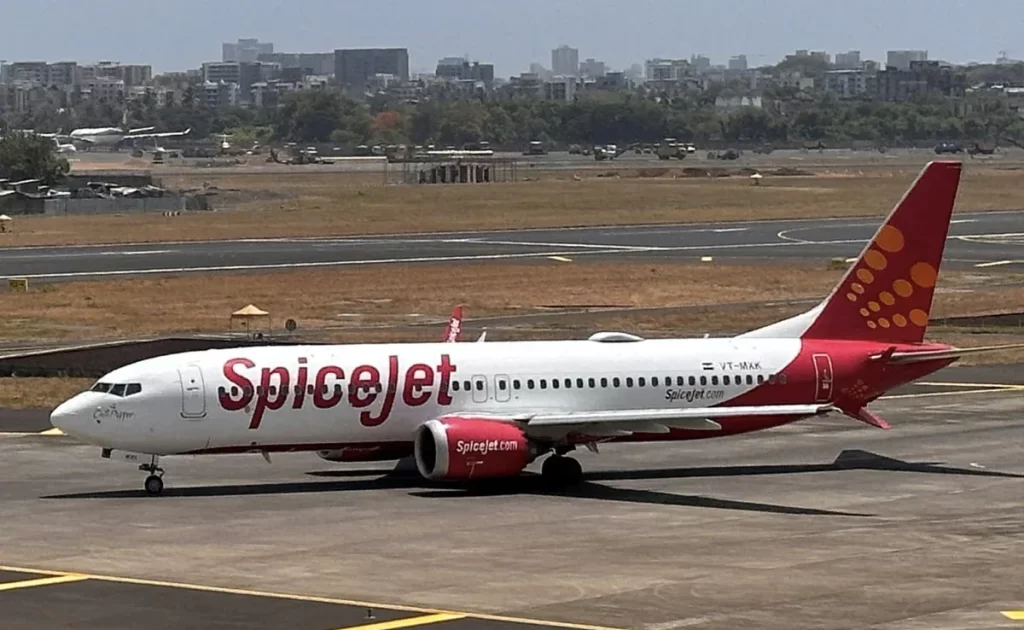
SpiceJet on Wednesday announced that its consolidated net loss widened to ₹635.42 crore for the September quarter of the 2025–26 financial year (Q2 FY26), as the budget airline struggled with multiple operational and financial challenges. The airline attributed the larger loss to foreign exchange fluctuations, costs associated with grounded and reinducted aircraft, and airspace restrictions, which collectively strained its profitability.
According to the company’s filing, the airline’s performance was impacted by non-recurring expenditures and volatile fuel prices, even as passenger demand in the Indian aviation market remained steady. In comparison, SpiceJet had reported a net loss of ₹431.5 crore in the same quarter last year, marking a significant increase year-on-year.
Despite the setback, the airline’s total income rose to ₹2,314 crore during the quarter, up from ₹2,097 crore in Q2 FY25. The rise was driven by higher passenger load factors and growth in ancillary revenues, including cargo and charter services. However, these gains were overshadowed by mounting operational expenses and unfavorable macroeconomic conditions.
Operational Challenges and Forex Impact
SpiceJet highlighted that foreign exchange losses stemming from currency fluctuations had a notable impact on its quarterly results. The depreciation of the Indian rupee against the U.S. dollar led to higher lease and maintenance costs, particularly for aircraft leased from overseas lessors. Additionally, the reactivation of grounded aircraft—part of the airline’s fleet recovery plan—added to the company’s cost burden.
Sources within the aviation industry noted that airspace restrictions due to ongoing geopolitical tensions in certain regions have forced airlines, including SpiceJet, to operate longer routes, increasing fuel consumption and flight times. This has further dented profitability at a time when carriers are already grappling with high operational costs.
Management Outlook
SpiceJet’s management reiterated its focus on restoring fleet capacity and improving cost efficiency in the coming quarters. A spokesperson stated that the airline is “committed to strengthening its financial position through strategic restructuring and optimization of operations.” The carrier also aims to enhance its network reach and resume more grounded aircraft to service, which it expects will gradually improve revenue generation.
The company has been working on a debt resolution and equity infusion plan, seeking to bring in new investors and streamline existing liabilities. Analysts, however, believe that consistent profitability may take longer to achieve unless forex volatility stabilizes and fuel costs ease.