
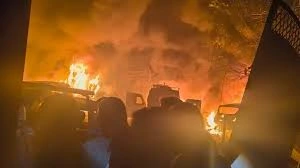
The recent Srinagar blast at the Nowgam Police Station has shaken Jammu and Kashmir, raising serious questions about explosive-handling protocols and ongoing terror investigations in the region. With several casualties and multiple injuries, the incident has drawn nationwide attention and prompted a high-level review of security procedures.
This article breaks down the key facts, background, and impact of the blast, providing a clear and comprehensive understanding for readers of all age groups.
A Tragic Night in Srinagar
Late in the night, an unexpected explosion ripped through the Nowgam Police Station, causing massive damage inside the building. The blast occurred while police personnel and forensic experts were examining a large quantity of seized ammonium nitrate and other explosive chemicals connected to a recently busted terror module.
The explosion was powerful enough to claim multiple lives, injure dozens of officers, damage the police station’s interior, and leave the entire area in a state of shock. Rescue teams worked through the night amid fears of possible secondary blasts.
Cause of the Explosion: An Accidental Detonation
Preliminary investigations have suggested that the Srinagar blast was accidental, triggered during routine forensic handling of explosive substances that had been seized just days earlier. The materials included:
- Ammonium nitrate
- Potassium nitrate
- Sulphur compounds
- Other chemicals commonly used in improvised explosive devices (IEDs)
These chemicals were part of a larger cache weighing nearly 360 kilograms, confiscated during an investigation into a suspected terror network. Experts believe that even a minor error or friction during sampling could have set off such a powerful explosion.
What Authorities Have Confirmed So Far
Officials have confirmed several important details:
- The blast occurred inside the police station premises, not in a public area.
- Most victims were police personnel, forensic staff, or members of the investigation team.
- The explosives were stored temporarily for examination as part of an active investigation.
- Initial findings point to an accidental ignition, not a planned attack.
This has brought renewed attention to how explosive materials are stored, transported, and examined by law enforcement across the region.
Link to a “White-Collar” Terror Module
One of the most alarming aspects of the investigation is the involvement of what officials describe as a “white-collar terror module.”
Unlike traditional militant groups, this module allegedly involved:
- Highly educated individuals
- Professionals, including those in the medical field
- People operating silently and methodically
The explosives seized at the Nowgam Police Station were reportedly recovered from locations linked to this group. Their sophisticated methods and use of chemical compounds have opened up a deeper investigation into radicalization among educated circles.
Srinagar’s History With Explosions and Terror Incidents
The Srinagar blast has revived painful memories of earlier attacks in the Kashmir Valley. While this explosion appears accidental, the region has faced numerous deliberate attacks in the past, including grenade blasts, suicide bombings, and IED strikes.
Though the nature of this incident is different, the impact on public sentiment remains similar—fear, concern, and a renewed focus on safety.
Impact on Public Safety and Local Sentiment
The explosion has raised several concerns among Srinagar residents:
- Fear of stored explosives in public or crowded buildings
- Concerns about forensic and police safety standards
- Apprehension over rising terror-related cases
- Anxiety about tourism and daily life disruptions
Srinagar, known worldwide for its beauty and tourism, depends heavily on peace and stability. Any major security incident—even accidental—tends to affect public confidence.
Security Forces Step Up Measures
Following the blast, authorities have intensified security measures across the region. These include:
- Increased police patrolling in Srinagar
- Fresh checks at sensitive installations
- Tighter controls on explosive storage
- Review of forensic examination protocols
- Reassessment of ongoing terror-related investigations
The focus now is not only on preventing attacks but also on avoiding internal procedural accidents that can be equally devastating.
Key Lessons and the Way Forward
The Srinagar Nowgam blast is a wake-up call on multiple fronts. Here are the major lessons that security agencies and policymakers are now prioritising:
1. Strict Forensic Safety Measures
Handling materials like ammonium nitrate requires advanced training and high-tech equipment. Regular audits and modern storage systems are essential.
2. Safe Storage of Seized Explosives
Police stations are not built for long-term volatile storage. Dedicated, remote explosive storage units must become standard practice.
3. Tracking Radicalisation Trends
The involvement of educated individuals in extremist activities highlights the need for stronger counter-radicalisation programs.
4. Public Awareness and Community Policing
Residents must be encouraged to report suspicious activities. Community-police cooperation remains a powerful tool against emerging threats.
5. Strengthening Inter-Agency Coordination
Forensic teams, intelligence agencies, and police departments need seamless coordination, especially when handling hazardous materials.

