
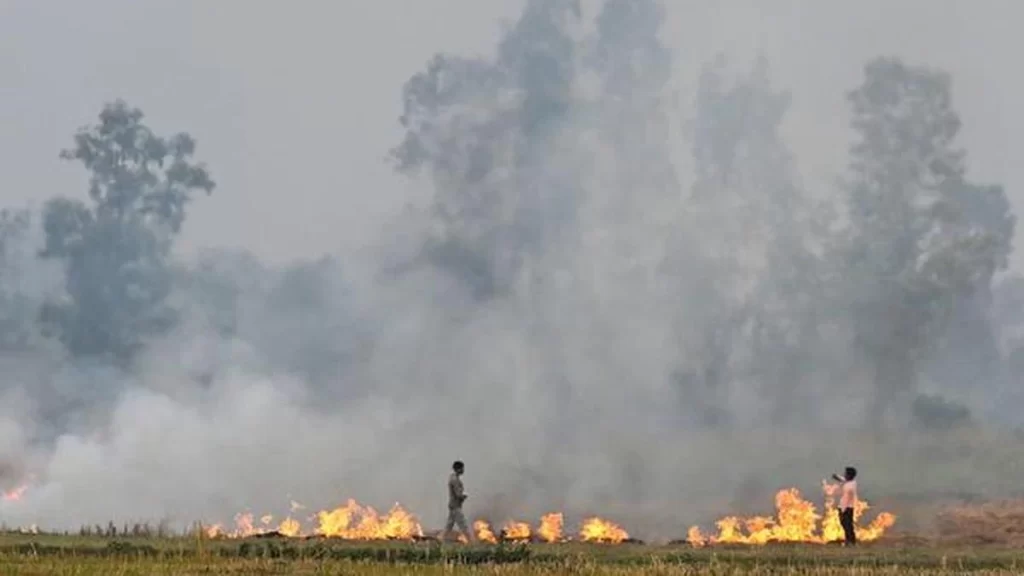
In a significant hearing on Monday, the Supreme Court of India pressed the central government to craft a long-term strategy to tackle worsening air pollution in the Delhi-National Capital Region (NCR). The bench also directed the Chief Secretaries of Punjab and Haryana to ensure full compliance with directives issued by the Commission for Air Quality Management (CAQM). At the core of the crisis is recurring seasonal smog driven by rampant stubble-burning in the neighboring states.
Full Scope of the Crisis
Delhi’s air quality is plunging again, with key monitoring stations recording Air Quality Index (AQI) values in the “very poor” to “severe” range, indicating dangerous levels of fine particulate matter. One of the major contributors remains crop-residue burning in Punjab and Haryana, with satellite data suggesting that the scale of the fires may be underestimated. The Court highlighted that existing short-term measures such as seasonal bans and temporary restrictions are no longer sufficient and emphasised the need for a sustained long-term solution.
Key Judicial Directives
The bench, led by Chief Justice B. R. Gavai and Justices K Vinod Chandran and N V Anjaria, asked the central government to submit concrete long-term proposals instead of relying on ad-hoc fixes. While the Court rejected the notion of imposing a blanket, year-round ban on construction, vehicular movement, or other economic activities in Delhi-NCR, it stressed the urgency of tackling air pollution effectively. The Court also demanded detailed information about monitoring infrastructure in Delhi, citing concerns that some air-quality monitors were inactive or readings artificially lowered.
Underlying Challenges
Senior Advocate Aparajita Singh, appearing as amicus curiae, highlighted that the stubble-burning issue is linked to structural agricultural constraints, such as delayed paddy sowing in Punjab, which shortens the harvesting window and prompts farmers to burn crop residue. While the CAQM and state governments have subsidised machinery to prevent burning, the Court noted that success remains limited, and monitoring remains weak. The regulatory response, guided by the Graded Response Action Plan (GRAP), triggers restrictions based on AQI thresholds, but the Court observed that waiting until AQI becomes “severe” is too late for effective mitigation.
Key Issues and Considerations
| Issue | Details |
|---|---|
| Major pollutant driver | Stubble burning in Punjab/Haryana contributing to Delhi-NCR smog |
| Monitoring concerns | Some AQI monitors non-functional; data accuracy questioned |
| Judicial demand | Long-term sustainable plan, not seasonal patches |
| Economic/livelihood balance | Court wary of livelihood disruption if blanket bans imposed |
| Agricultural structural root | Delayed paddy sowing, compressed harvest window, lack of alternatives |
The Supreme Court’s intervention on November 17 underscores that the air-pollution crisis in Delhi-NCR is no longer a seasonal nuisance but a systemic issue requiring robust, long-term policy action. The direction to the central government, Punjab, and Haryana to produce actionable solutions signals a shift from reactive measures to sustained structural reform. For residents, the ruling serves as a stark reminder that even when daily restrictions ease, the underlying causes of pollution remain unchecked. The effectiveness of future outcomes will depend on the strength and enforceability of the government’s plan and the timely implementation of measures, from efficient monitoring networks to viable alternatives for farmers. The Court’s warning is clear: failure to act decisively will prolong the winter air crisis for millions in the Delhi-NCR region.

