
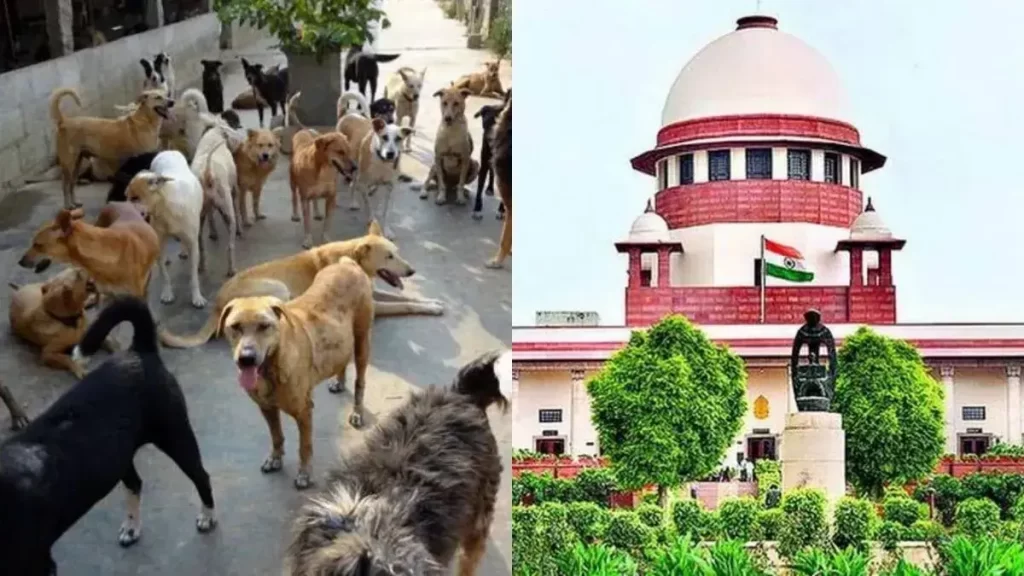
In a decisive move to ensure public safety and hygiene, the Supreme Court of India on Friday directed all states and Union territories to remove stray dogs from educational institutions, hospitals, sports complexes, bus depots, and railway stations. The court further stated that after capture and sterilisation, such dogs must not be released back into the same locations. The order aims to address growing concerns over public safety and frequent incidents involving stray dogs in densely populated areas.
The Supreme Court’s directive comes amid increasing reports of dog bites and safety concerns, particularly in public places frequented by children and vulnerable groups. The bench observed that authorities have a duty to protect citizens from potential harm caused by stray animals. “Infants and young children must not, at any cost, fall prey to stray dogs,” the court remarked during the proceedings, emphasising the need for swift and effective implementation.
While the ruling has been welcomed by many citizens and resident associations, it has also raised serious operational and ethical concerns. Animal welfare organisations have pointed out that India’s existing Animal Birth Control Rules, 2023, provide for the capture, sterilisation, vaccination, and release of stray dogs back into their original territories — a model designed to maintain territorial balance and prevent aggressive behaviour among canine populations. The new directive appears to contradict this principle, creating uncertainty about how the guidelines will be harmonised.
Experts have highlighted the practical difficulties in executing the order. Major metropolitan cities such as Delhi, Mumbai, and Bengaluru collectively house hundreds of thousands of stray dogs, yet the infrastructure for large-scale sheltering or relocation remains inadequate. Municipal corporations are expected to face logistical challenges in capturing, sterilising, and housing such large numbers humanely. Moreover, there are concerns that indiscriminate removal without proper shelter facilities could lead to inhumane treatment or overcrowding in already strained animal shelters.
Public health advocates, however, argue that the court’s decision is necessary to curb rising cases of dog bites and potential rabies transmission. According to government data, India records over a million dog bite cases annually, with several fatalities linked to rabies each year. Ensuring that public institutions remain free of stray dogs could, therefore, reduce these risks significantly and help maintain cleaner, safer environments.
The court has also indicated that it will review broader aspects of the country’s stray dog management policy. The Chief Justice noted that there is a pressing need to strike a balance between human safety and animal welfare, urging states and civic authorities to work towards practical, humane solutions. The upcoming hearings are expected to clarify how the order will align with existing animal welfare regulations and what measures will be implemented to manage stray populations responsibly.
The Supreme Court’s latest directive marks a significant shift in India’s approach to managing stray dogs in public spaces. While it prioritises citizen safety and institutional hygiene, it also places a heavy responsibility on local governments to develop sustainable, humane, and legally compliant solutions. As the implementation process begins, the nation will be closely watching how this policy unfolds — balancing compassion with public protection.

