
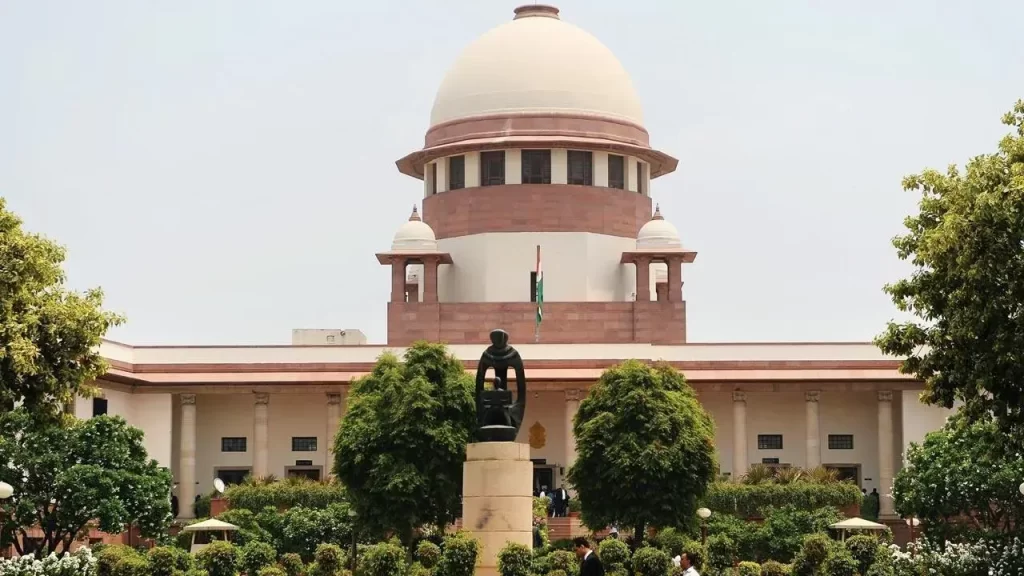
The Supreme Court of India has summoned the chief secretaries of all states and Union Territories, except for West Bengal and Telangana, for failing to submit compliance affidavits on measures taken to manage the stray dog population. The officials have been directed to appear personally before the court on November 3, 2025, to explain the delay and present updates on actions taken in accordance with the court’s earlier order issued on August 22.
In its August directive, the Supreme Court had expressed concern over the rising incidents of dog bites and the growing number of stray dogs across urban and rural areas. The court had instructed all states and Union Territories to submit detailed compliance reports outlining the implementation of the Animal Birth Control (Dog) Rules, 2023. These include sterilisation, vaccination, and other humane measures to control the stray dog population while ensuring public safety.
Despite the clear order, the majority of states and UTs failed to file their affidavits within the stipulated time, prompting the court to take strict action. The bench observed that non-compliance with its directions on such a serious public issue cannot be tolerated and that chief secretaries must be held personally accountable for the lapse.
The court’s decision follows a series of earlier hearings concerning the management of stray dogs, particularly in urban areas such as the National Capital Region (NCR). India records millions of dog-bite cases every year, many involving children, creating growing public concern over the menace. While previous directions called for the removal of stray dogs to shelters, the court later clarified that only aggressive or rabid dogs should be relocated. Others must be sterilised, vaccinated, and released back into their local areas as per the Animal Birth Control Rules.
Animal welfare organisations have welcomed the Supreme Court’s decision to demand accountability but have also urged that implementation should remain humane and scientifically informed. They argue that mass relocation or culling would violate the 2023 rules and international standards on animal welfare.
The court has emphasised that stray dog management should not be treated as a mere civic issue but as a coordinated responsibility involving state-level oversight. The upcoming hearing on November 3 is expected to assess the progress made by states in developing sterilisation facilities, vaccination drives, and awareness programmes to address the problem effectively.
The Supreme Court’s latest directive marks a crucial step toward ensuring systematic and humane management of the stray dog population in India. As the chief secretaries prepare to appear before the bench, the proceedings are expected to determine the pace and seriousness with which states respond to one of India’s most persistent urban and public health challenges.

