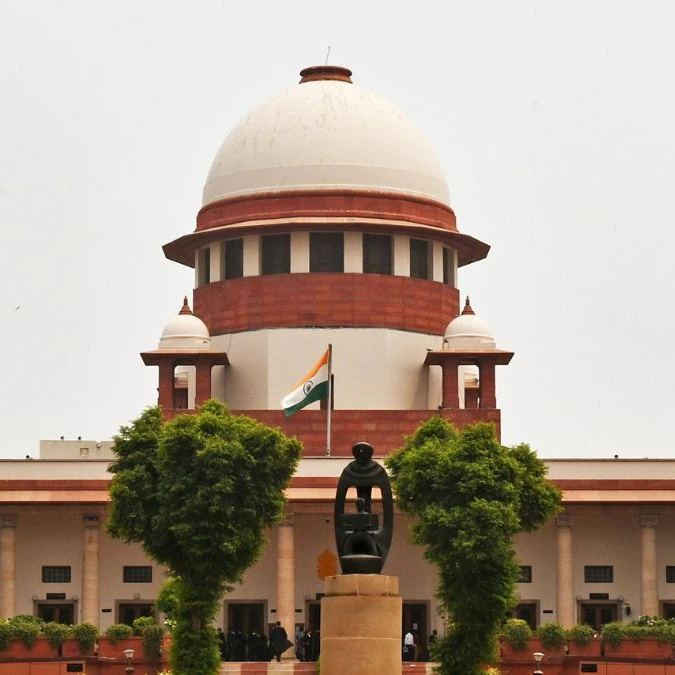
The Supreme Court of India has issued a sharp warning that the ongoing Special Intensive Revision (SIR) of electoral rolls could slip into “anarchy” if violence, intimidation and non-cooperation by state authorities are not immediately contained. The observation came during a hearing on petitions highlighting threats and obstruction faced by Booth Level Officers (BLOs), particularly in West Bengal, as they conduct door-to-door verification under the nationwide revision exercise.
Court Flags Serious Threats to Electoral Integrity
A bench headed by Chief Justice Surya Kant and Justice Joymalya Bagchi expressed grave concern over reports that BLOs — frontline workers responsible for verifying voter details — have been facing harassment and obstruction while performing their duties. Several accounts described officials being stopped from conducting house visits, confronted by groups, or pressured to halt verification activities in politically sensitive zones.
Calling the allegations “deeply disturbing,” the Supreme Court underscored that ensuring the safety of these officers is essential to safeguarding the integrity of the electoral process. The Court cautioned that if such interference continues unchecked, it may lead to widespread administrative breakdown, warning, “Deal with the situation or it will cause anarchy.”
Election Commission Highlights Operational Challenges
The Election Commission of India (ECI) informed the Court that while it retains constitutional authority to protect the electoral process, ensuring safety before the formal poll period poses operational limitations — particularly in states where law-and-order machinery is under state control. The Commission indicated that it may need to deploy police personnel to accompany BLOs in high-risk zones if the threats escalate.
The SIR exercise, which spans 12 states and Union Territories, aims to clean up voter rolls by removing duplicate, inactive, or deceased entries while adding new eligible voters. Ensuring accuracy in this process is crucial for maintaining public trust and preparing for upcoming elections.
Concerns Over State-Level Cooperation
The Supreme Court also took note of complaints that certain state governments were not extending adequate support to officials conducting the revision exercise. The bench indicated that non-cooperation, especially in states witnessing political tension, could further weaken the integrity of the voter-roll update.
The Court has asked the ECI to provide a detailed report on incidents of obstruction, threats to officers, and lapses in coordination. It also signalled that if authorities fail to ensure a safe working environment, judicial directions may be issued to protect the process.
Key Issues Identified by the Court
- Increasing instances of intimidation and violence against BLOs
- Lack of cooperation from some state administrations
- Potential delays in the nationwide roll-revision schedule
- Growing concerns over electoral transparency and voter confidence
Broader Implications for India’s Democratic Framework
The Supreme Court’s remarks serve as a critical reminder of the stakes involved. The accuracy of electoral rolls forms the foundation of free and fair elections — and any compromise in the verification process can distort representation and undermine public faith in democratic institutions.
With several states preparing for assembly polls, disruption in the SIR could derail electoral timelines and fuel political tensions. The coming weeks will test the ability of both state and central authorities to preserve order, uphold neutrality, and ensure that ground-level workers can carry out their duties without fear.