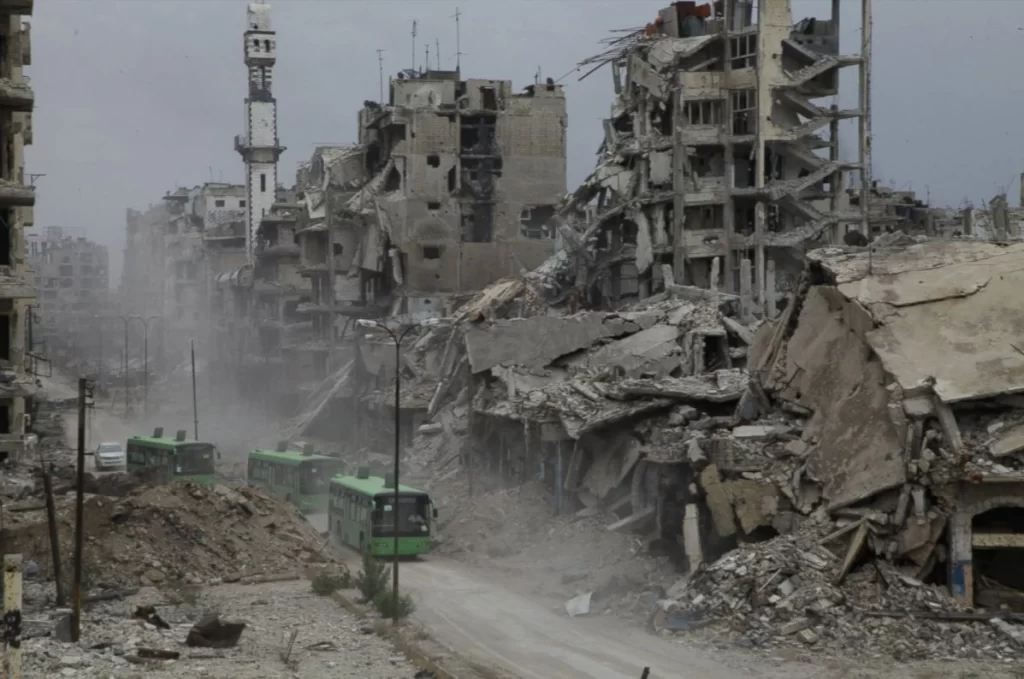
Israel’s airstrikes have done a lot of damage to southern Lebanon, killing and hurting numerous civilians. People are scared that this may lead to a bigger war in the Middle East.
The history of the conflict
We need to recall how long Israel and Hezbollah have been fighting each other to comprehend what’s happening on right now. Hezbollah has been fighting against Israeli occupation since the 1980s, with help from Iran.The worst example of this was the 2006 Lebanon War, which killed more than 1,200 Lebanese and 160 Israelis. In 2023, Hezbollah backed Hamas by firing thousands of rockets from southern Lebanon. This led to violence across the border that prompted tens of thousands of residents on both sides of the Blue Line to leave their homes.
The U.S. and Qatar tried to help the two sides negotiate a truce in the months running up to February 2026, but it didn’t succeed because both sides argued the other side disregarded the rules. Israel has stepped up its “Northern Arrows” campaign, which aims to get rid of Hezbollah’s estimated 150,000 rockets. Israel thinks they need these to stop another tragedy like the one that happened on October 7, but Lebanese officials feel there are too many of them. Because of this long-standing antagonism, Israeli airstrikes in southern Lebanon aren’t just one-time events; they’re part of a dangerous proxy conflict that includes Iran, Syria, and world powers.
An examination of the methods employed in the strikes.
The bombings took advantage of Israel’s sophisticated air power, with F-35 stealth fighters delivering bombs on underground infrastructure that could break through bunkers. One of the main targets was a Hezbollah command center in Khiam, where 12 militants were killed. Another was a rocket launch site in Marjayoun that had been firing rockets at Kiryat Shmona. Witnesses said that loud explosions damaged windows miles away, and more booms following that suggest that munitions dumps were hit.
The amount of deaths shows that more over 30 Hezbollah fighters and 15 civilians are undoubtedly dead. Most of the dead and hurt people had wounds from shrapnel and burns. Reports of destruction show that more than 20 buildings were demolished, including homes that were turned into bases for terrorists. Damage was done to roads and electricity lines as well. Hezbollah flew drones to Galilee to attack, but they didn’t hurt anyone or kill any Israelis.
Israel’s “mowing the grass” strategy dictates that they should hit their target regularly to weaken them without fully invading them. These attacks match with that. But the scale has made others worry. UNIFIL soldiers say that more planes are flying over the area, which goes against Resolution 1701, which says that Hezbollah shouldn’t be in the area south of the Litani.
The world is going through a crisis.
The people who live in southern Lebanon are in a really bad health position. Almost 5,000 people had to abandon their homes during the most recent wave. This is in addition to the 60,000 who had already done so since 2023. There are a lot of people in Nabatieh and Tyre hospitals, and they are running low on blood and medical staff. They are also having trouble with power outages. The Lebanese Red Cross has moved hundreds of people to safety, but the roads are too damaged for supply convoys to get through.
Kids are the ones that are hurting the most right now since schools are closed and there are a lot of mental health problems. A peasant from Aita al-Shaab said, “We ran away with only the clothes on our backs.” This shows how scared people are in places close to the border. UNICEF and other international humanitarian groups are warning that the situation is growing worse since Lebanon’s economy has collapsed. Since 2019, its GDP has decreased by 40%, making it less able to deal with the crisis.
Responses from other countries and what happens in diplomacy
Leaders from throughout the world have spoken out against the surge. During his second term, Donald Trump, the President of the United States, called for moderation but nevertheless supported Israel’s right to defend itself. The White House said, “Hezbollah must back down or face the consequences.” This was a way to back Israel while simultaneously asking for things to calm down. France sent Jean-Yves Le Drian to Lebanon as an envoy to undertake shuttle diplomacy since it has a long relationship with the country.
Two Arab countries, Saudi Arabia and Egypt, called the assaults “aggression.” Iran vowed it would strike back with its “Axis of Resistance.” The US announced it would veto any decisions made during an emergency meeting of the UN Security Council, so they were put on hold. The European Union’s foreign ministers pushed for additional discussions, using the shaky truce from November 2024 as an example.
Experts say that there is a chance of making a mistake. Elijah Magnier, an expert on the Middle East, warns, “One wrong rocket or attack on the wrong target could start a full war.” Israel is currently involved in a number of disputes in the area, such as Gaza, where peace talks aren’t going well, and Yemen’s Houthis are attacking ships in the Red Sea again.
Hezbollah’s military power and Israel’s goals
Hezbollah is still a dangerous threat, and its guided missiles could be able to sneak past Israel’s Iron Dome. The IDF reported that recent strikes hurt about 10% of their southern supplies. But leaders like Naim Qassem say they will get more supplies from Syria. In 2006, Israel decided to deploy airpower instead of ground attacks, which cost a lot of money.
Satellite images show that 50 square kilometers of land have burned, but Hezbollah is hiding in homes, which makes things harder. Military historian Benjamin Shapiro calls this “urban guerrilla warfare on steroids.” In the long run, Israel wants a buffer zone, and it might shift Lebanese land to make that happen. People think of this as an occupation.
Effects on Lebanon’s economy and other parts
Warnings against travel are making tourism, which used to make up more than 20% of Lebanon’s GDP, go away. This is making the economy of the country, which is already weak, even worse. Hezbollah’s strongholds in the south, which depend on smuggling and money transferred home, are cut off from the rest of the world. Israel’s economy, which is dependent on technology, is suffering because it spends $1 billion a month on wars.
Prices for oil around the world rose up 3%, reaching $85 a barrel. This was because people were anxious about problems with oil supplies in the Strait of Hormuz. Ports like Haifa would close, which would stop the flow of semiconductors, which are very important to Israel’s friends. More than 65,000 refugees in Lebanon and 60,000 evacuees in northern Israel have been displaced, which has put a burden on UNHCR resources. This year, energy prices have gone up 5%, yet the electrical grid in southern Lebanon is down by 30%.
The bombings by Israel damaged southern Lebanon, killing a number of people and making matters worse in the area.