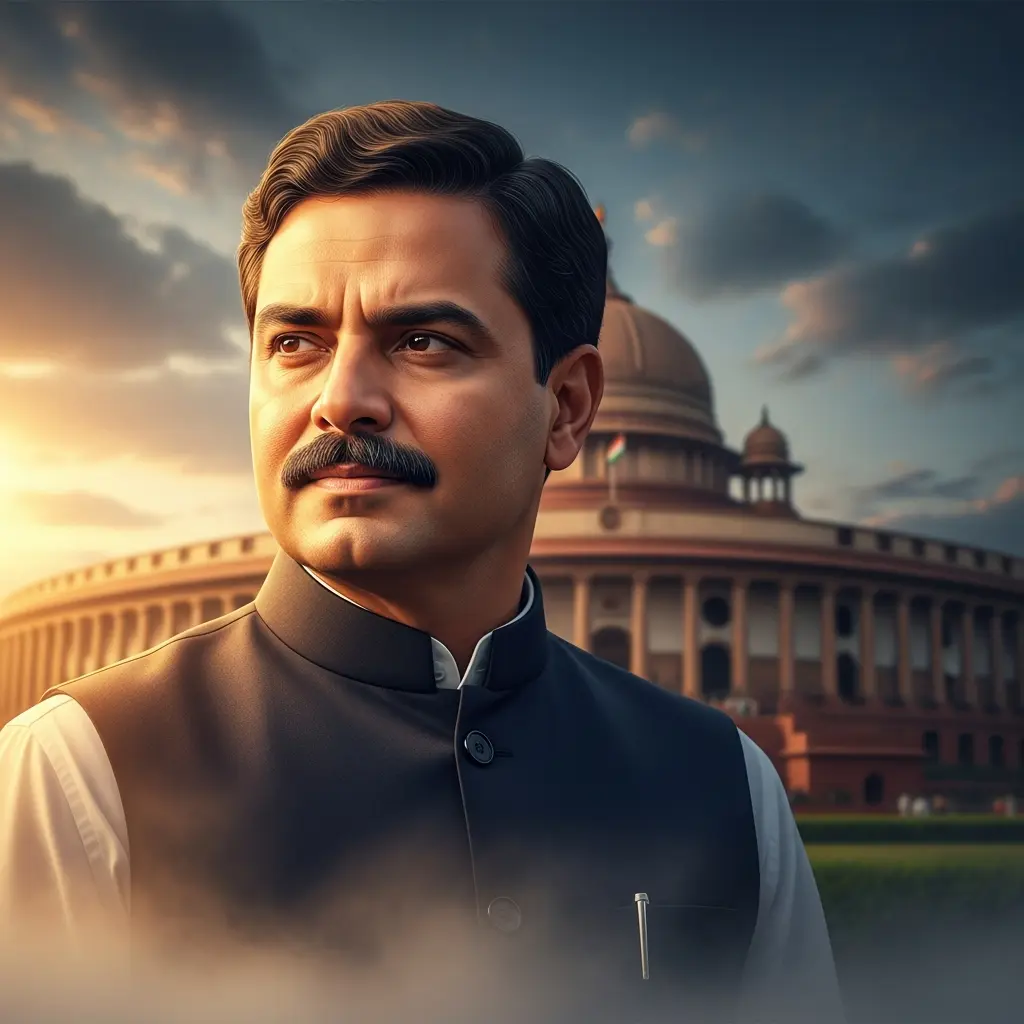
Samrat Choudhary took the oath of office as Bihar’s Chief Minister on April 15, 2026. He was the first BJP leader to hold the position. It’s a moment that changes the course of politics in one of India’s most important states for the next thirty years.
Over the years, Bihar has had its fair share of political earthquakes. The fall of Congress’s power, the rise of Lalu Prasad’s social revolution, and Nitish Kumar’s long and careful rebuilding of the state all felt like huge changes at the time. That list should also include what happened on April 15, 2026.
Samrat Choudhary took the oath of office as Chief Minister of Bihar at Lok Bhavan in Patna. This ended Nitish Kumar’s nearly two-decade hold on the state’s top job. More importantly, this is the first time in Bihar’s history that the Bharatiya Janata Party, which has always been the smaller partner in government but the bigger partner in elections, has had its own leader in the chief minister’s chair. That’s not just a change in leadership. That’s a change in the structure.
How we got to this point
The change was planned, not by chance. The election of Nitish Kumar to the Rajya Sabha set the clock in motion. On April 14, he led his last cabinet meeting. That same night, he gave his resignation to the Governor of Bihar and stepped down gracefully. He publicly supported the new leadership and promised to stay involved as a guide. Political analysts saw the exit not as a fall, but as a planned handover set up by the NDA’s central leadership.
The BJP acted quickly. At the party’s state headquarters in Patna, the BJP legislative party met. Senior leader Vijay Kumar Sinha suggested Samrat Choudhary’s name. Everyone voted the same way. By the end of the day, Choudhary had met with Governor Lieutenant General (Retd.) Syed Ata Hasnain at Lok Bhawan, made his claim, and the oath ceremony was set for the next morning.”Only development—development, development, and delivery.” This is what Samrat Choudhary said when he ran for office in the 2025 Bihar elections.
Who is Samrat Choudhary, really?
People in Bihar politics have known the name for a while, but not everyone outside the state knows the whole story. Samrat Choudhary was born in Lakhanpur village in Munger to a very political family. His father, Shakuni Choudhary, was an MLA six times and an MP, and his mother was an MLA from the same Tarapur constituency that he now represents. He got involved in politics in 1990. But the path was anything but straight.
The story about the turban is a little bit like a play and says something about how Choudhary works. People say he is combative, blunt, and strategic by nature. During the 2025 Bihar elections, Amit Shah campaigned for him in Tarapur and famously told voters that “Samrat will one day be a big man.” That day came as planned.
The OBC calculation and why it is important
Choudhary’s rise to power isn’t just about his own political career. It shows the BJP’s planned and years-long effort to gain the trust of Bihar’s OBC communities. He is a member of the Koeri-Kushwaha caste, which is a large group with power in many parts of the state. In a political world where caste alignment is still the main rule of electoral math, putting a Kushwaha OBC face as Chief Minister makes a lot of sense from a strategic point of view.
The BJP government in Bihar is no longer seen as a party for upper-caste people. Instead, it is now seen as a party that combines “Mandalwadi and Kamandalwadi” sensibilities, according to Choudhary. This means that it has a social justice focus and a broader cultural appeal. The party has been trying to find a balance for years, and this appointment is probably the loudest statement yet of that effort.
What stays the same and what changes
The BJP government in Bihar takes over a state that Nitish Kumar spent twenty years changing. He left behind a stable social coalition, infrastructure, and welfare delivery. Choudhary doesn’t start with a blank slate; he starts with a working structure that he needs to build on, speed up, and make his own.
The immediate goals are clear: law and order (he was the Deputy CM in charge of the Home portfolio), jobs, and a real effort to solve Bihar’s long-standing migration problem. He has said directly that he wants Biharis to no longer have to leave the state to find work. That is a goal. Making it a policy is the hard part.
People who follow Indian politics should also pay attention to this change in leadership in Bihar because it has effects on eastern India as a whole. Bihar’s large and spread-out population of voters—Bihari voters have moved to many states—makes this change important on a national level as well as in Bihar. A BJP government firmly in charge in Patna strengthens the party’s hold on the Hindi heartland, which is very important for future elections.
A new chapter has begun in Bihar politics in 2026. The question that will shape the years to come is whether Samrat Choudhary can write it boldly enough to match the importance of this historic moment.