
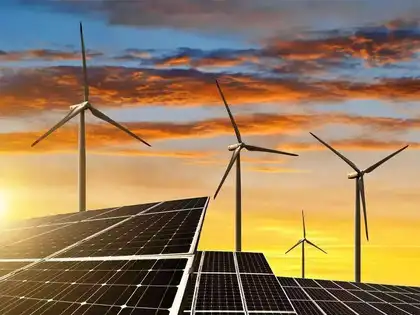
Solar, wind, and hydropower are all sources of renewable energy that are changing economies around the world by creating jobs and making people less reliant on fossil fuels. Countries are putting sustainability first, therefore this transition will lead to growth in the long term, even when the weather is bad.
A huge increase in investment all around the world
In the last few years, investments in renewable energy have reached their highest levels ever. By 2025, they will be worth more than $1.1 trillion a year. This is helping to develop roads, bridges, and other things all around the world. A lot of this money is going to Europe and Asia to help build solar panels and wind turbines. China builds the most, but the European Union spends a lot of money on wind projects that are not on land. To get businesses to utilize new technology and improve their supply chains, governments provide them tax incentives and other benefits. These supply chains link many businesses and affect the economies of the communities they service.
Economic multipliers show that for every dollar spent on renewable energy initiatives, they produce up to three times as many employment as traditional energy sources. Since 2022, the Inflation Reduction Act and other items have helped create more than 300,000 employment in the US in the renewable energy sector. These jobs aid rural economies by keeping things like installations and logistics working and making them better.
The main reasons for adopting
Many countries are starting to use renewable energy for a variety of reasons. It is now a big part of plans for the future.
Since 2010, the cost of solar panels that transform sunshine into electricity has gone down by 89%. Because of this, renewable energy is cheaper than coal in most places, which makes it more likely to get business around the world.
Countries like Germany and India benefit from energy security because it makes them less reliant on imports and helps keep trade balances stable when tensions rise across the world and fossil fuel prices shift.
New techniques to store batteries and other tech breakthroughs help fix power shortages and make it possible to give power all day, every day. They also assist keep the grid safe from bad weather.
These things are what make renewable energy a big part of GDP growth. By 2050, there could be as many as 42 million employment in the world in the areas of installation, manufacturing, and maintenance. It’s easier for both new and old towns to grow their economy in different ways when they use renewable energy.
How it affects the economy of the area
Renewable energy has varying effects on different places, which highlights how crucial it is to develop rules that employ local resources. The Green Deal says that by 2030, 45% of Europe’s electricity should originate from sources that can be used again. Building huge wind farms and upgrading supply chains in nations like Germany and Spain will help people get their jobs back.
For instance, in Kenya’s Lake Region, farms, clinics, and businesses are powered by solar mini-grids. The US gives a lot of money to wind and biofuel projects in North and South America. This makes power and ethanol, which means that Brazil and Mexico may acquire their energy from a lot of different places. It also makes more than 500,000 employment. These variances between places illustrate that renewable energy can be used in different ways. Geothermal energy works well in East Africa, and huge solar farms operate well in the Middle East.
Changes in business and new ideas
Big businesses are utilizing renewable energy sources to save money and please stakeholders who care about the environment and the health of the firm in the long run. Google and other tech corporations have made their data centers work with renewable energy. This saves them millions of dollars on their energy expenses every year and shows other businesses how to do the same. By 2026, BP and other big oil firms will invest 30% of their money on technology that uses renewable resources. This shows that the whole industry is evolving toward using both fossil fuels and renewable energy.
New ideas that work have a significantly stronger impact on economies around the world. Floating solar panels let you use sun electricity in more places in reservoirs. In Southeast Asia, where land is hard to come by, this can boost output by as much as 20%. Green hydrogen projects in Europe are spending €40 billion to lower carbon emissions in heavy industries and build new industrial centers for long-haul transportation. It is more accurate to utilize AI to guess how much power a wind farm will make. This saves downtime by 15% and helps operators generate more money. These changes not only bring in more money from exports—Denmark’s wind technology exports alone bring in $10 billion a year—but they also make countries who are leaders in the green economy more enticing to foreign direct investment.

