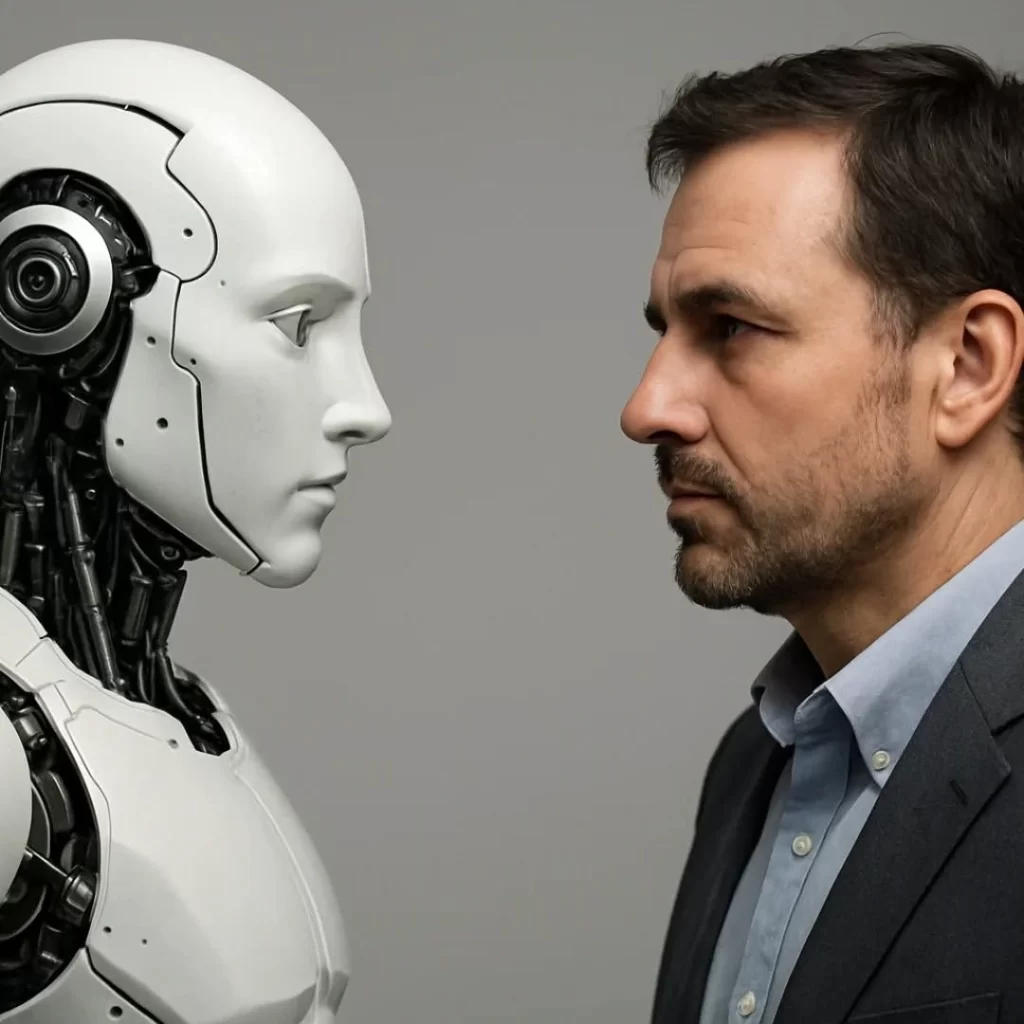
AI is moving swiftly, taking over dull jobs and starting arguments over job losses while also making new jobs available. Workers need to develop new skills to deal with this transformation properly.
AI’s impact on jobs that leads to issues
AI is amazing at doing the same thing over and over again. That’s why robots are taking over employment in manufacturing where they can execute inspections and assembly faster and better than any human. As AI handles inventory and customer service, retail processes evolve and there is less need for traditional workers. Automated scheduling and data processing make it easier to do office work, which changes the way the office works in a large way.
Transportation is changing a lot because self-driving cars will take over driving. This will affect millions of employment around the world. These improvements illustrate that AI can function all the time. This is transforming the labor market in many fields.
Jobs that AI is most likely to take over: Jobs that depend on patterns that may be predicted are very likely to be taken over by AI. Customer support positions are becoming less popular since chatbots can rapidly and effectively answer most questions. There are fewer data entry jobs because computers can handle data much faster.
In the beginning, AI can process images faster than people in healthcare. Algorithms work on legal paperwork, which means there are fewer entry-level employment. As self-driving technology gets better, fewer people are needed to drive, especially truckers.
Customer service is handled by AI systems that can interpret natural language.
Data clerks were replaced by instruments for recognition and automation.
Predictive calling algorithms work better than telemarketers.
Basic accountants made it easier to keep track of ledgers.
AI that makes pictures more accurate adds to the work of doctors.
New opportunities in the AI economy
AI needs individuals who can build and run it, such engineers and ethicists. AI helps doctors figure out what’s wrong, so they need to keep an eye on the results. People in creative fields use AI to produce drafts that they can then work on.
Drones that keep an eye on crops aid farmers, which gives technicians work. There is currently gig labor for AI-related jobs like changing models. These changes produce more jobs than they take away when adaption happens.
How to help workers stay alive and change
The key to making AI innovations last is to learn ahead of time. Online platforms educate people the basics of AI and programming, which makes it easier for them to switch. Workers who are in risk are retrained to be in control of things like running autonomous systems.
We still have an edge because we can empathize and be creative. Governments pay for retraining, and corporations pay for training that happens in their own offices.
Make time every week for classes on AI and coding.
Get better at making decisions and getting along with other people.
Go to work in AI assistance, perhaps as a trainer.
Push for laws that make it easier to move from one thing to another.
Start enterprises with AI tools that are easy to find.
Sectors with a lot of impact Going Through Changes
AI is useful in everyday life because of technology. It changes traders’ jobs since finance uses it to uncover fraud and create deals. Healthcare makes assessments more accurate, which is how hybrid experts come to be.
Manufacturing needs maintenance workers and employs predictive tools to keep things from breaking down. Retail employs data to make experiences more personal, which leads to opportunities in optimization. Patterns show that moving up in the ranks leads to more advanced jobs.
Global Points of View and Ethical Issues
Automation makes the gap between rich and poor greater, and it impacts communities with few trained workers in developing areas the most. People disagree about using tech taxes to pay for changes. The idea is to make AI fair by using a lot of different types of data.
Global projects look for benefits that everyone can enjoy and emphasis being open about how they are done.
Answers from the government and corporations
President Trump’s actions assist improve AI training and infrastructure. Laws protect workers and also encourage innovative ideas. Tech leaders give their employees training programs.
National systems grant credits for continuing education, which makes it easier to get further help.
Advanced AI can work with several types of data, which makes changes happen faster. The internet and other modern technologies indicate that technology opens up more opportunities. You need to work with AI to be successful.