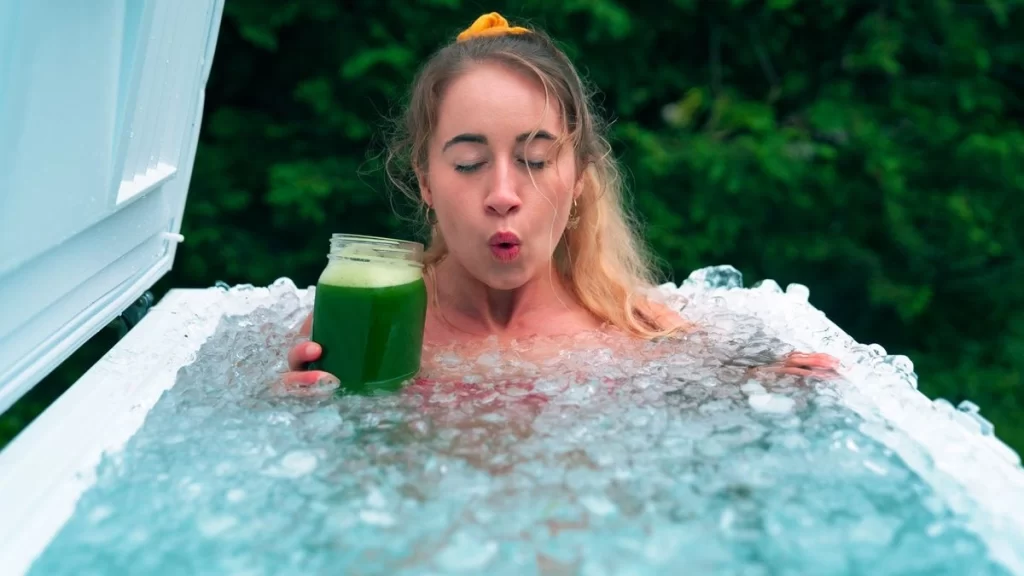
Millions of people are posting videos of themselves jumping into freezing water for 30 seconds to several minutes as part of a new “ice bath challenge” that has become popular on TikTok, Instagram Reels, and YouTube Shorts. People often use hashtags like #icebathchallenge, #coldplunge, and #biohacking to make the fad look like a quick way to lose weight, clear your mind, strengthen your immune system, and even “detox.” But as the videos garner more views, doctors and sports scientists are sounding the alarm: a lot of these viral workouts are being done without enough supervision, guidance, or knowledge of the risks. This article talks about the trend of ice baths and how safe and wonderful they are for you. It also talks about the science behind cold exposure therapy and gives those who are thinking about trying it tips based on what has been proven to work.
The “ice bath challenge” on TikTok usually goes like this: fill a tub with cold water, add some ice trays, wait for the water to settle down, then jump in for a short duration while filming your reaction.There are “shock” drops that last 30 seconds and are called “morning reset,” and there are also 2–5 minute sessions that are said to “burn fat” or “boost metabolism.”Friends take turns in group contests, trying to stay in the water the longest. People who do it a lot say it burns hundreds of calories in minutes, makes you feel better, lowers your anxiety, and “trains the nervous system” while also making you more disciplined. Influencers make these claims stronger by suggesting that anyone can take an ice bath at home without any special tools.
Putting yourself in cold water isn’t a new idea. Professional athletes have been using ice baths and cold plunges to help them recover from hard training for a long time. Some health groups have even made them a part of their daily life. Studies show that short, controlled exposure to cold can help ease muscle pain and edema after exercise by tightening blood vessels and slowing down metabolism. It can also speed up your heart rate and turn on the sympathetic nervous system, which can make you feel more awake for a short time. Some research suggest that regular, supervised exposure to cold may modify stress-response pathways, which has been related to enhanced mood and resilience in trained individuals. Most of this research, on the other hand, comes from controlled and supervised settings, such sports medical clinics, where healthy persons who didn’t have any heart or lung problems were only exposed for brief amounts of time, usually 1 to 3 minutes. The science says that controlled cold exposure can help with recovery and health, but not when it’s a virus that can’t be managed.
Health experts say that plunging into ice-cold water without getting ready or gaining medical clearance can be deadly, especially for young people who look fit. When you suddenly plunge into frigid water, your heart rate and blood pressure may go up, and you may gasp and breathe quickly. People who don’t know they have heart problems may be more susceptible to develop arrhythmias or even heart attacks. The body’s core temperature can drop even after a short time, especially if the person stays in too long or doesn’t warm up enough afterward. If you’re shaking, confused, or having trouble controlling your movements, it could be tougher to get out of the tub securely. When you’re in cold water, you might hold your breath or breathe in a strange way.People with asthma or other breathing difficulties shouldn’t do this. You can experience frostbite-like damage if you touch ice for a long time, especially on your hands, feet, and ears. Doctors say that social media challenges often tell individuals to “push through” pain, which can make the body’s natural warning signals stop working when it’s too cold.
A lot of people who do the ice bath challenge say it “burns fat,” “boosts metabolism,” or “cleanses the body.” Most of these claims are not accurate or are too extreme from a scientific point of view. When you are cold, your body has to work harder to maintain its core temperature stable, which might help you burn more calories. But the effect is very small and fluctuates all the time. If you merely take a 2–3 minute ice bath and burn extra calories, you won’t drop a lot of weight. You also need to work out and eat better. Some studies suggest that regular, controlled exposure to cold may change how brown fat works and how sensitive to insulin it is. However, these procedures are carefully planned and watched. There is limited evidence suggesting that a single viral-style cold bath session significantly “reprograms” metabolism. Physiology does not support the assertion that ice baths remove toxins from the body.Most of the work of detoxifying the body is done by the liver and kidneys. There isn’t much clinical evidence that being in cold water assists this process. In short, being cold might have some little effects on the body, but it is neither a quick way to reduce weight or a magical technique to clean.
According to medical rules, certain people shouldn’t do ice-bath challenges alone or should talk to a doctor before getting into any kind of frigid water. People with heart disease, high blood pressure, a history of heart attack or stroke, respiratory diseases like asthma or chronic obstructive pulmonary disease, pregnant women (because being cold puts stress on circulation and blood pressure), children and teens (because their bodies may not be able to control temperature as well and they are more likely to experience cold-water shock), and anyone with Raynaud’s phenomenon, peripheral neuropathy, or other nerve or circulatory conditions. Experts say that even healthy people should start with less intense cold exposure, such chilly showers or short cold rinses, instead of plunging right into an ice bath challenge.
Health experts say that people who still want to try being cold should do it in a safe and gentle way, not by following viral TikTok scripts. One important rule is to take it easy at first. You could, for instance, take cooler showers or short cold rinses at the end of a warm shower, and then over the course of weeks, you could make them longer and cooler. Also, it’s crucial to keep an eye on the time and the weather. You shouldn’t take full ice baths at home unless a professional is there to observe you. If you do decide to take a cold plunge, keep it short—usually less than 2–3 minutes—and make sure the water isn’t so cold that it hurts or makes you shiver right away. If you feel sick, dizzy, or can’t move, don’t do it alone. Have someone there to help you. When you come back inside from being outside in the cold, towel yourself off and warm up your body slowly by moving around and putting on warm clothes. But don’t take a hot shower right immediately because rapid swings in temperature could be dangerous for your heart. If you have chest pain, trouble breathing, confusion, or a lot of pain, get out of the water straight away and call a doctor. These steps don’t completely get rid of the threat, but they do make it far less likely that something awful will happen.
The ice-bath challenge is just one example of how “side quests” on social media, including micro-dramas and wellness trends, may develop quickly without anyone actually paying attention to them.
The Ice Bath Challenge is becoming viral, but is it safe?