
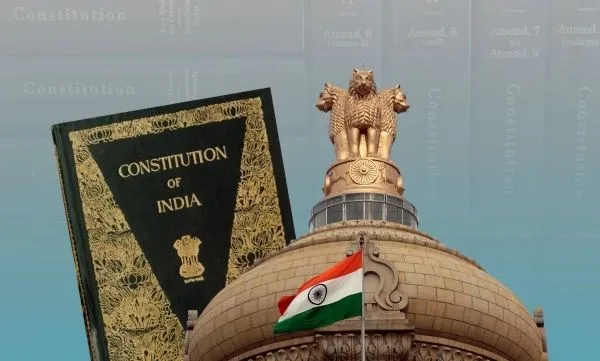
August 15, 2025 — As India approaches its 78th Independence Day, the nation once again turns its attention to the Constitution — a document that stands as both a legal framework and a moral compass, shaped by the ideals that fueled the country’s struggle for freedom. Adopted on January 26, 1950, it represents the aspirations of a newly independent people determined to build a just, democratic, and inclusive society.
Roots in the Fight for Independence
India’s freedom movement was more than a campaign for political sovereignty; it was also a demand for equality, dignity, and human rights. Visionaries such as Mahatma Gandhi, Jawaharlal Nehru, B.R. Ambedkar, and Sardar Vallabhbhai Patel sought to ensure that these values were permanently embedded in the nation’s governance. The drafting of the Constitution became the means to translate these principles into lasting laws and institutions.
The Constituent Assembly, composed of members from across regions, religions, and social groups, engaged in nearly three years of detailed discussions to create a framework suited to India’s unique diversity. Dr. B.R. Ambedkar, as head of the Drafting Committee, played a crucial role in balancing democratic traditions with the realities of India’s complex social structure.
Safeguarding Rights and Freedoms
At the heart of the Constitution are the Fundamental Rights, outlined in Part III, which guarantee equality before the law, freedom of speech, religious liberty, and protection from discrimination. These provisions were designed to prevent any repeat of the colonial-era curtailment of civil liberties.
Over the decades, the judiciary has reinforced and expanded these rights through landmark judgments — from strengthening the right to education to affirming the right to privacy in the digital age. Such interpretations have ensured that the Constitution remains responsive to modern-day concerns while preserving its core values.
Adapting to a Changing Nation
One of the document’s enduring strengths is its capacity for change. With over a hundred amendments since its adoption, the Constitution has evolved to address emerging social, economic, and political challenges. Initiatives like reserving seats for women in local governance and recognizing the right to education as a fundamental right illustrate its adaptability.
This flexibility allows the Constitution to remain relevant without losing its foundational principles — a balance that has been essential for navigating linguistic diversity, economic reforms, and shifts in the political landscape.
A Symbol of Unity in Diversity
In a country as vast and varied as India, the Constitution serves as a unifying force. It not only establishes a system of governance but also reinforces the shared national commitment to democracy, secularism, and social justice. Its principles continue to guide the country’s progress while honoring the sacrifices of those who fought for independence.
Continuing the Legacy
As India steps into the future, the Constitution’s spirit — rooted in equality, liberty, and fraternity — remains central to its democratic journey. Protecting and upholding these ideals is vital to ensuring that the vision of the freedom struggle endures for generations to come.

