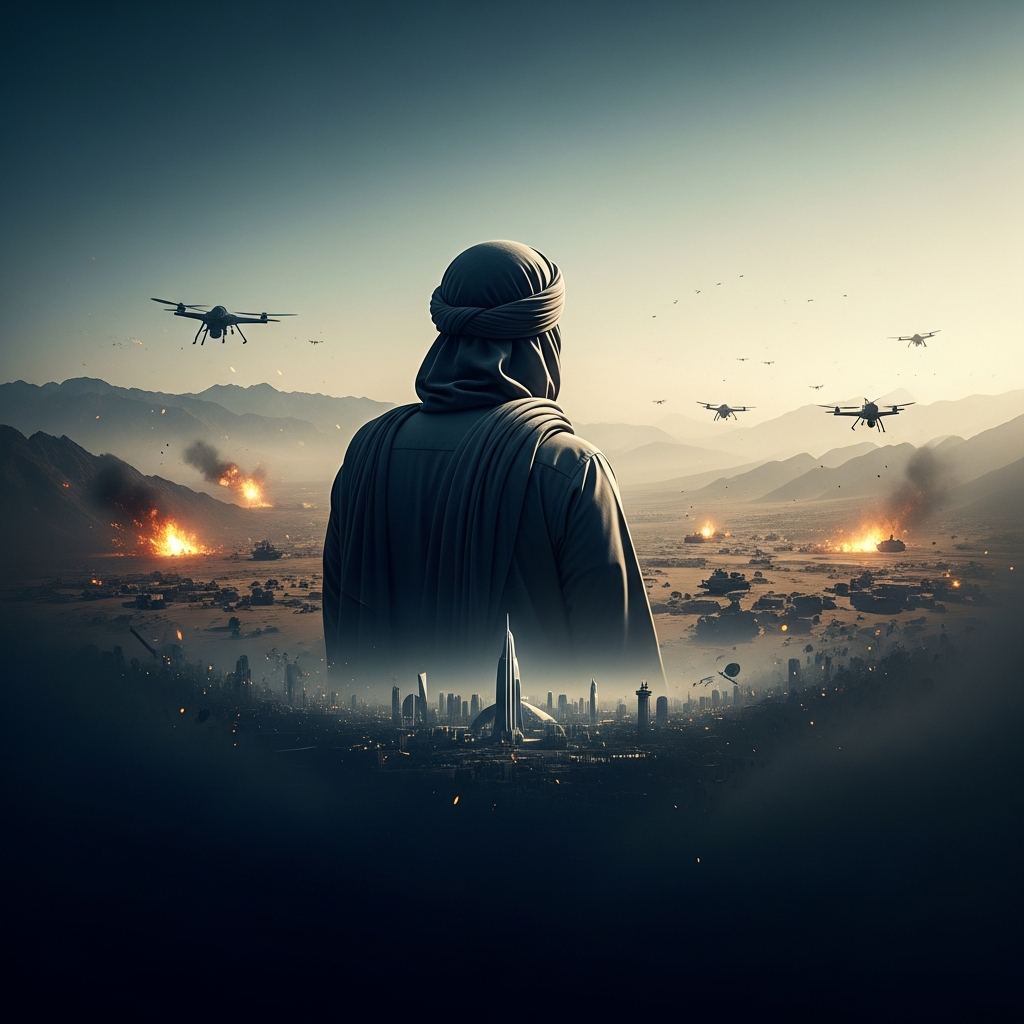
There is a particular type of dread that takes hold when a fragile peace finally breaks. For weeks, the region had been holding its breath — a ceasefire in place, tensions simmering but contained, diplomats cautiously optimistic. Then came the strikes.
Iran’s recent missile and drone strikes on the United Arab Emirates have shattered whatever semblance of peace had begun to settle over the Middle East. Images from the region – smoke plumes, wailing sirens, families scrambling for cover – remind us that silence in the world of geopolitics is seldom peace. It’s often just the pause before the next storm.
A Ceasefire in Name Only
The ceasefire that had held for several weeks was always fragile. Anyone watching closely could see the cracks. Back-channel negotiations were stalling, hardline voices on multiple sides were growing louder, and trust — if there was ever much to speak of — was wearing thin.
Now, that ceasefire appears to be breaking down entirely. The Iran-UAE strikes have shifted the conversation from “how do we maintain stability?” to “how bad could this get?” And the honest answer, according to regional analysts, is: quite bad.
The UAE has long positioned itself as one of the more diplomatically agile nations in the Gulf — building ties with Israel through the Abraham Accords, maintaining trade relationships across the political spectrum, and projecting an image of measured stability. Strikes on UAE soil don’t just threaten a nation; they threaten a model. And that rattles the entire Gulf Cooperation Council.
Washington Watches — and Worries
The United States and its allies are watching all of this unfold with the kind of attention that makes military planners lose sleep. The US Iran crisis has never really gone away — it has simply shifted shape over the years, flaring up and receding like a chronic condition that never quite resolves.
Right now, American naval assets in the region are on heightened alert. Intelligence agencies are running assessments. The White House has issued carefully worded statements urging de-escalation — the kind of language that says a lot without committing to anything specific.
The deeper concern in Washington isn’t just the immediate conflict. It’s the domino effect. A sustained Iran-UAE escalation pulls in Gulf partners, tests US defense commitments, and hands adversaries — including those well beyond the Middle East — an opportunity to test American resolve at a moment when it’s already stretched thin globally.
The Strait of Hormuz: The world’s most dangerous chokepoint
If there is one place where this conflict stops being a regional story and becomes a global one, it’s the Strait of Hormuz.
This narrow waterway — barely 33 kilometers wide at its tightest — carries roughly 20% of the world’s oil supply. Every day, tankers loaded with crude pass through it, bound for markets across Asia, Europe, and beyond. It is, without exaggeration, one of the most economically critical passages on earth.
Analysts are now raising alarms that disruptions in the Strait of Hormuz could ripple outward fast. Even the threat of interference — without a single ship being touched — can send oil markets into a spiral. Futures traders don’t need confirmed blockades; they react to uncertainty, and right now there’s plenty of it.
Energy-importing nations, particularly in Asia, are already running contingency calculations. The global economy, still navigating post-pandemic instability and inflationary pressures, can ill afford another supply shock. If the Strait becomes contested or dangerous, the price at the pump in Mumbai, Tokyo, or Berlin won’t be unaffected.
Life Under the Shadow of Conflict
Away from the geopolitical chessboard, there are real people trying to live ordinary lives in extraordinary circumstances. As a precaution, schools in the affected areas have been closed down. Parents are keeping children home, not because they were told to panic, but because no one quite knows what comes next.
Security in the big cities has been noticeably stepped up. Checkpoints, additional patrols, emergency protocols – the machinery of crisis management is in motion. For residents who have lived through previous rounds of regional tension, there’s a weary familiarity to all of it. For younger generations, it’s something new and deeply unsettling.
Businesses are quietly contingency planning. Airlines are reviewing flight paths. Insurance premiums in the region are ticking upward. The human cost of conflict isn’t always measured in casualties — sometimes it’s measured in the slow erosion of normalcy.
Where Does This Go?
The honest answer is that nobody knows. Global tensions of this kind rarely follow a predictable script. What’s clear is that the window for diplomatic intervention is narrowing. The longer the strikes go on, the harder it is for anyone to back down without looking weak. And in this neck of the woods, looking weak just gets you more escalation.
The world does not need more fiery rhetoric or retaliatory posturing right now. It needs back-channel conversations, sustained diplomatic pressure, and leaders willing to make unpopular decisions in the interest of stability.
The Middle East has pulled back from the brink before. The question is whether it can do so again — before the cost of this particular crisis becomes one that the entire world ends up paying.