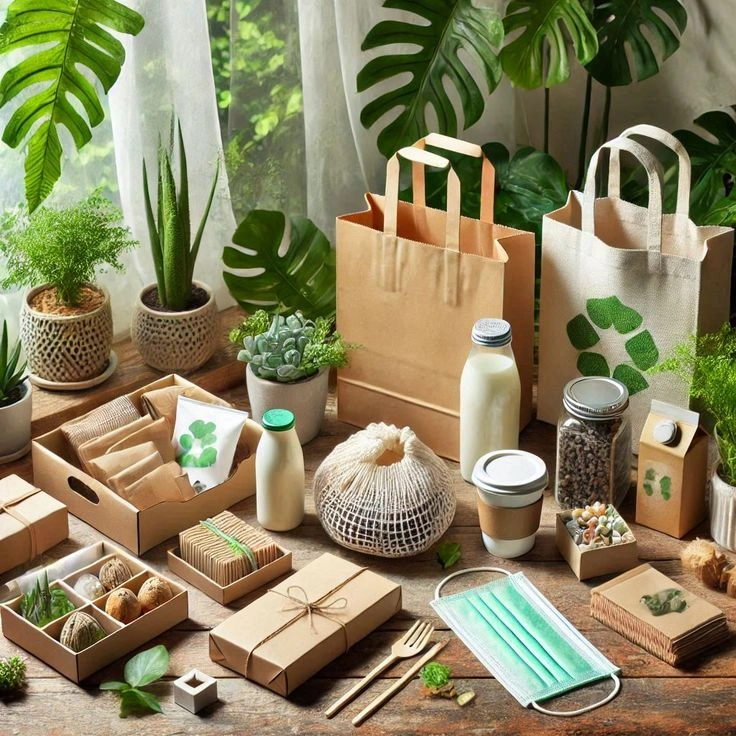
Living sustainably is at the heart of all the changes happening in India’s entrepreneurial sector. As businesses and consumers pay increasing attention to the “orange economy,” a bustling sector that blends creativity, sustainability, and economic innovation, eco-friendly packaging is becoming more and more significant. Companies like Xolopak are leading the way in this movement by making biodegradable items that are superior than ordinary plastics. This move isn’t just a trend; it’s a new area for investment that will make money because of government pressure, consumer demand, and the promise of green solutions that can be scaled up. We talk about why sustainable entrepreneurs in India are revolutionizing the packaging industry and why investors can’t ignore them in this in-depth look.
The Growth of Green Living in India
India has more than 1.4 billion people and is having more and more difficulties with the environment. For example, its rivers and coasts are being choked by plastic waste and landfills that are too full. Since the epidemic, the search for ways to live sustainably has accelerated up, and biodegradable products are becoming more popular as a good answer. Recent numbers from the industry show that India makes an incredible 3.5 million tons of plastic trash per year, most of which originates from packaging that is only used once. Because of this problem, a new generation of companies has formed that focuses on eco-friendly packaging. The UN came up with the term “orange economy” to characterize creative industries that help protect the environment and keep culture alive. This fits in well with that idea.
These new enterprises aren’t just small; they’re transforming marketplaces that are worth billions of dollars. Xolopak is one example of this expansion. The company started up in the last several years and makes plant-based, compostable packaging from of things like sugarcane bagasse and rice husk that come from farms. Their products break down on their own in a few months, thus they are a good choice for polymers that come from oil. major food delivery firms, major e-commerce enterprises, and big FMCG brands can all use Xolopak’s solutions. This shows that packaging that is good for the environment may be cheap without losing quality.
Market Forces and Favorable Regulations
The government’s actions are helping sustainable startups develop faster. The Extended Producer Responsibility (EPR) framework holds brands responsible for the waste that comes from their packaging. This pushes them to use biodegradable products. Maharashtra and Tamil Nadu contribute money to green manufacturing hubs, which makes Pune and Chennai, which are recognized for their creativity, a great place for entrepreneurs.
What actually alters the game is how people behave as customers. According to a Nielsen poll from 2025, 78% of Indian urban millennials would pay 10–15% more for firms that use eco-friendly packaging. E-commerce portals like Flipkart and Amazon are making its sellers offer eco-friendly solutions, and this is having a ripple effect. This high-intent B2B traffic—businesses looking for reliable green suppliers—guarantees sustained demand, which is ideal for investors.
There are still problems, though. There are still challenges with high initial research and development costs and the need to make the supply chain more local. To fight this, new businesses like Xolopak use vertical integration and source their raw materials from farms in the area. The “orange economy” is all about helping rural economies and saving money at the same time.
Why Eco-Friendly Packaging is a Smart Investment: An Economic Necessity
The numbers make sense to people who want to invest. Because it employs fossil fuels, traditional packaging is more likely to face geopolitical threats. On the other hand, sustainable alternatives use renewable agricultural waste, which protects them against these kinds of shocks. The money that comes in from venture capital tells the story. Green packaging companies made $250 million in 2025 alone, which is a lot more than other sub-sectors.
Think about how much money you could make. In five years, a normal investment in a company like Greenpack will pay you back three to five times. This is because there are chances to sell to Europe and the US, where strict rules against plastic make for high-end markets. The “orange economy” makes this even more true: creative branding of biodegradable products—think attractive, personalized designs—makes more money.
Key data highlight the chance: the market size grew from $1.2 billion in 2023 to a projected $4.5 billion by 2030; startup funding is on track to reach $800 million or more; plastic waste could be cut by 2 million tons a year; and consumer preference is climbing to 85%.
Changes are being driven by new ideas.
Big technological improvements are driving this rise. Startups are using nanotechnology to make biodegradable sheets tougher, which can help food remain fresh longer. Xolopak was one of the first companies to deploy enzyme-based degradation technology, which helps packaging break down in home composters. This makes it easier for everyone to be environmentally friendly.
In Pune, which is becoming a bigger city, incubators like the ones at Symbiosis International University enable brilliant people thrive by integrating IIT graduates’ engineering expertise with design thinking. This synergy makes items like spice packing that you can eat after using it. This makes living in a way that is good for the environment a part of everyday life.
People were fascinated by Notpla’s seaweed-based water pods during festivals in the UK. Indian businesspeople are utilizing the same ideas to produce chai cups and blister packs for medicines. What went wrong? A virtuous cycle in which fresh ideas bring in money, boost production, and make green norms the norm.
The rise of eco-friendly enterprises in India: why eco-friendly packaging is the next great chance to invest