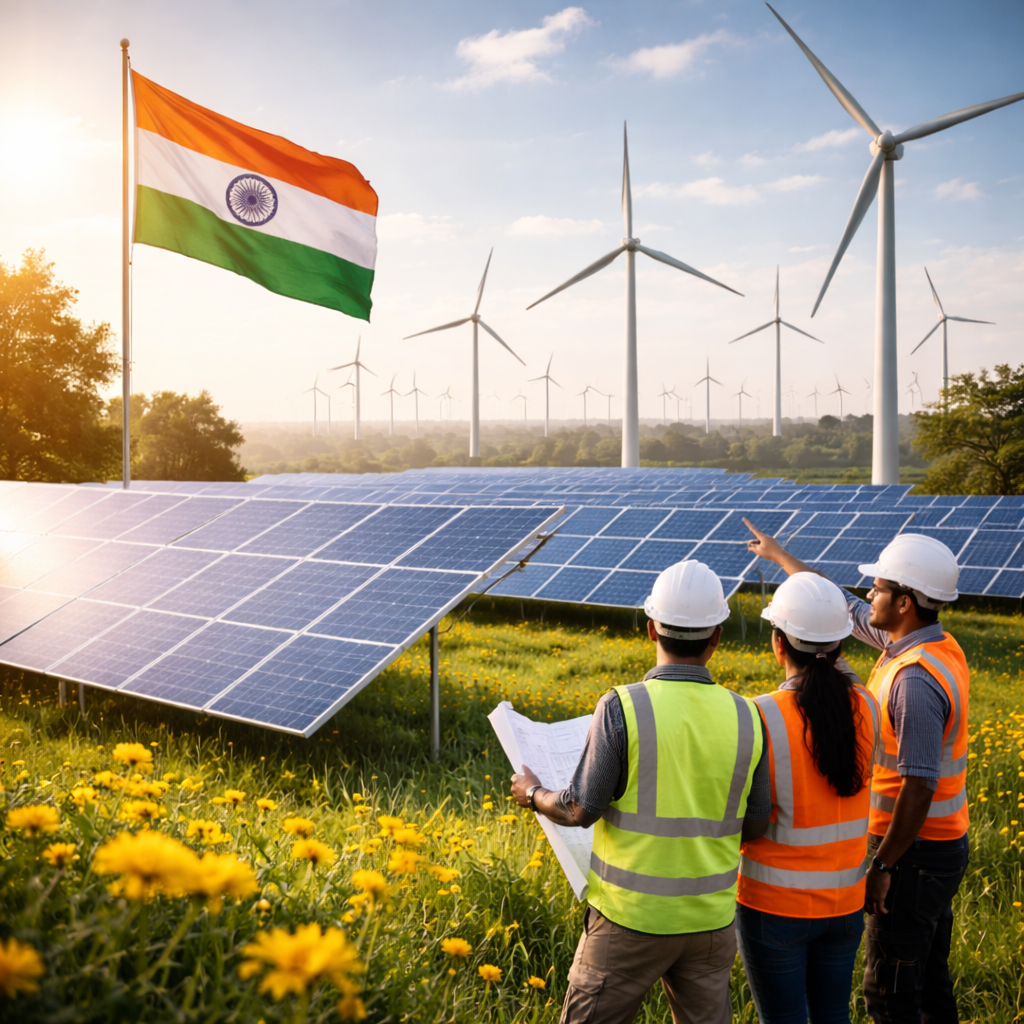
India has quietly set a new record for wind energy capacity. This is a reminder to the world that the energy transition is no longer just a story for rich countries.
On a clear afternoon, the wind on the Deccan plateau tells you something that the electricity grid is only just starting to fully say. It moves through the scrubland with quiet insistence—unhurried, unbranded, and not caring about quarterly goals. But more and more, it is being captured, turned into electricity, and sent humming down transmission lines to power homes, factories, and the future. India has just made a historic increase in its wind energy capacity. While the headlines will focus on the numbers, the more interesting story is what those numbers say about a country that is going through a major change.
This story didn’t start recently. India has been building wind farms since the early 1990s, when small groups of turbines started to show up along the coasts of Tamil Nadu and Gujarat. At first, they looked more like experiments than real infrastructure. What was once a tentative bet has turned into one of the world’s most ambitious renewable energy programs decades later. India is now one of the top three wind energy markets in the world. It got there through a mix of government policies, lower technology costs, and, most importantly, a huge need. With an economy growing at almost 7% a year and a population of 1.4 billion, this country can’t afford to treat clean energy as an option.
The most recent milestone is important for more than just the number of kilowatt-hours. First, it shows that India’s renewable energy industry has moved on from pilot programs and policy promises to real industrial growth. The new capacity being added isn’t because of one big project or a one-time push from the government. It’s because developers, manufacturers, financiers, and grid operators have been working together for years to figure out how to build and run big wind projects. That knowledge that the institution has is very useful, and it grows over time.
“India is showing that the switch to green power doesn’t just belong to rich countries. Any country that wants to build it can do it.”
Second, the growth of wind energy is helping India lower its carbon emissions. India still relies heavily on coal, which is due to its history, geography, and economy rather than its ideology. India’s approach to climate change seeks to reduce its reliance on fossil fuels, all while promoting economic growth.
Every additional gigawatt of wind power directly replaces some of the electricity produced by burning fossil fuels. As a result, we see a decrease in both the pollutants released into the atmosphere and the financial burden of bringing in coal and liquefied natural gas from elsewhere.
In a country where climate goals and energy security are closely linked, wind is doing two jobs at once.
It’s also interesting to note how far this growth has spread. Tamil Nadu and Gujarat are still the most important wind corridors, but states like Rajasthan, Karnataka, Andhra Pradesh, and Maharashtra have all seen a lot of project activity in the last few years. The broader dispersal of wind farms contributes positively to grid stability and regional economic expansion. These installations generate employment opportunities in construction, provide farmers with lease payments, and augment local tax revenues, particularly in areas that have historically experienced limited benefits from concentrated industrial development.
In this way, sustainability isn’t just about the environment. It’s an economic thing.
Even though things have gotten better, the road ahead won’t be easy. India’s goal of 500 GW of renewable energy by 2030 is ambitious by any standard, and wind power alone can’t do it all. The transmission infrastructure that needs to be built to move power from states with lots of wind in the south and west to demand centers in the north and east is still a problem that installing more turbines can’t fix on its own. If this wind build-out is to reach its full potential, grid modernization, energy storage, and cross-state transmission investments will need to happen at the same time as capacity additions.
There is also the issue of how to pay for it. Big developers and state utilities can get money, but smaller project developers, especially those working in newer areas, often have trouble with the cost of debt when interest rates are still high. To keep investing in green power infrastructure, we need more than just policy commitment. We also need creative financing structures, like green bonds, blended finance mechanisms, and international climate funds that can make projects work at the edges.
None of these problems are impossible to solve, and India’s record on renewable energy over the past ten years shows that the country can move faster than most people think. The story of solar energy in India, which went from having almost no solar panels to being one of the world’s largest solar markets in about fifteen years, shows what can happen when you invest a lot of money and make it bigger. Wind, on the other hand, might follow a similar path because it has been around longer and has a more developed supply chain.
The milestone of India’s wind energy is more than just infrastructure. It shows that a country is choosing to build its future on cleaner foundations, and it’s doing so on a large scale. That choice, made not by a small, rich country with easy options, but by a huge, complicated, developing democracy, matters a lot in a world that is still figuring out how to make the switch to cleaner energy. It turns out that the wind has been waiting a long time for this.