
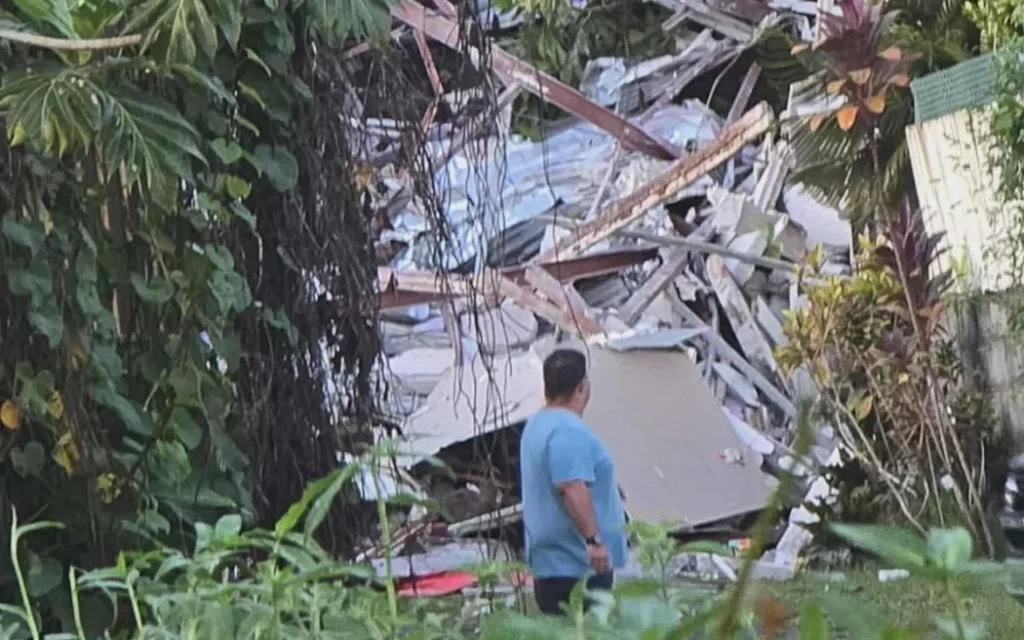
A catastrophic landslide struck the village of Afaahiti in Tahiti in the early hours of Wednesday, burying two homes under tonnes of earth and claiming the lives of eight people — among them a three-year-old girl. The disaster, triggered by several days of torrential rainfall, has once again exposed the lethal risk posed by saturated slopes in vulnerable island regions.
A Deadly Collapse Amid Torrential Rain
At around 5:00 a.m. local time, a massive landslide uprooted part of a steep slope in the Te Honu district of Afaahiti, on the southeastern peninsula of Tahiti. The collapse sent a mass of earth crashing into and engulfing two neighbouring houses. The slide followed a prolonged period of intense rainfall, which meteorological authorities say saturated the volcanic soils on the island, undermining ground stability.
By Thursday afternoon, after continuous rescue and search efforts, authorities confirmed that all eight individuals who had been missing were found dead: four men, three women, and one three-year-old girl. Officials described the landslide as a “30-metre-high collapse” that swept away one home and heavily damaged another.
Rescue Mission Under Extreme Conditions
In the immediate aftermath, nearly 200 emergency personnel were mobilized, including firefighters, gendarmes, civil protection teams, medical staff, and specialized search-and-rescue units using drones, radar equipment, underground cameras, sniffer dogs, and a military helicopter.
Rescue operations were repeatedly disrupted when portions of the already unstable mountainside gave way again. Authorities were forced to suspend operations until geologists and crisis-management teams could secure the terrain. In total, dozens of neighbouring residents were evacuated as a precaution. Nearly 29 houses and around 50 people were relocated to temporary accommodation while experts assessed risks before allowing re-entry.
Vulnerable Terrain — A Recurring Risk
The disaster in Afaahiti underscores the vulnerability inherent to mountainous, volcanic islands such as Tahiti. Many settlements lie at the base of steep slopes, which become highly unstable when prolonged heavy rains saturate the soil. Local geotechnical assessments indicate that rainfall totals exceeding 200 mm over 24 hours can trigger slope failure — thresholds that were exceeded during this recent weather event.
As climate change contributes to more frequent and intense rainfall events, experts warn that such landslides could occur more often. The tragedy may prompt renewed scrutiny on land-use planning, slope stabilization, and early-warning systems in vulnerable zones across Tahiti and similar islands.
Aftermath and Solidarity
In the wake of the disaster, national and local authorities have pledged to support the victims’ families and secure the disaster zone. Experts, including geologists from overseas territories, have been dispatched to conduct in-depth geological and hydrological assessments before any reoccupation is allowed.
Communities in nearby towns and villages have rallied to provide shelter, clothing, and food to displaced families. Associations, churches, and local residents have organized relief efforts, while officials have called for improved disaster preparedness and stricter land-development regulations in high-risk zones.
Broader Implications
The Afaahiti landslide is a tragic convergence of natural hazards, vulnerable geography, and extreme weather. It highlights how susceptible island communities remain to sudden slope failures, particularly where urbanization encroaches on hilly terrain. Without robust measures — including geotechnical zoning, early-warning systems, and climate-adaptive urban planning — such events may become an increasingly frequent threat.
As Tahiti begins the arduous process of recovery, this disaster may serve as a grim but essential wake-up call for policymakers and residents alike: community safety depends not only on emergency response, but on long-term respect for the land’s inherent risks and proactive resilience planning.

