
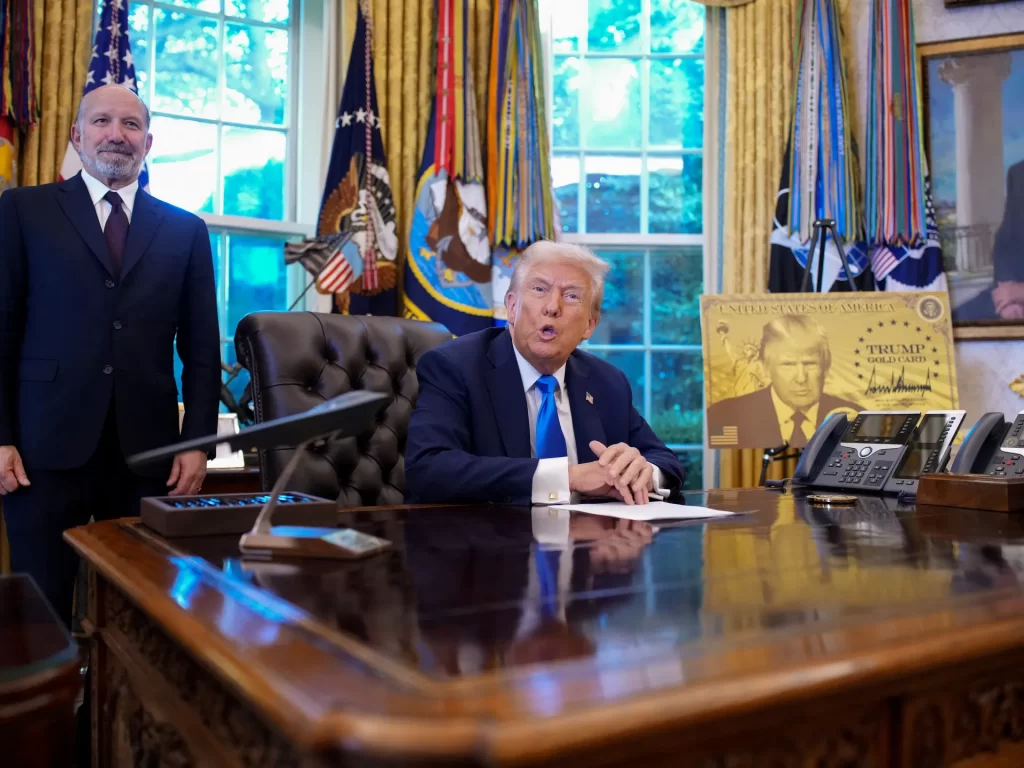
Former President Donald Trump has signed a proclamation imposing a $100,000 annual fee on new H-1B visa applications, a move aimed at discouraging what he describes as the abuse of the H-1B program and prioritizing American workers. The decision represents a dramatic increase from the previous application fee, which has traditionally ranged in the low thousands.
The new policy, set to take effect immediately, has sparked widespread debate among industry leaders, policymakers, and immigration advocates. The H-1B visa program, established in 1990, allows U.S. companies to employ foreign workers in specialty occupations, particularly in technology, engineering, and scientific fields. Major technology firms have voiced concerns over the impact of the fee on their ability to hire international talent, warning that such a substantial cost could hinder innovation, slow growth, and push highly skilled workers to seek employment in other countries. Smaller startups, in particular, may face barriers to entry due to the increased cost of employing foreign specialists.
Supporters of the measure argue that the high fee is necessary to protect American workers and ensure that companies prioritize domestic talent. “The H-1B program has been exploited in ways that undermine American jobs,” a senior administration official stated. “This measure is designed to ensure fairness and accountability in hiring practices.” Economists have suggested that while the fee may incentivize companies to hire more domestic workers, it could also exacerbate skill shortages in high-demand sectors such as software development, artificial intelligence, and advanced engineering. Advocacy groups have called for a balanced approach, emphasizing the importance of investing in domestic STEM education while maintaining access to global talent.
The announcement comes amid broader debates over U.S. immigration policy and the balance between economic competitiveness and workforce protection. Analysts note that while the fee may generate additional federal revenue, it could also lead to a decline in H-1B applications, potentially affecting both the technology sector and the broader economy. The $100,000 H-1B visa fee marks one of the most significant policy shifts in recent decades, reflecting ongoing tensions between immigration control and economic innovation. The coming months will reveal how this measure impacts U.S. employment, the technology industry, and the country’s global competitiveness.

