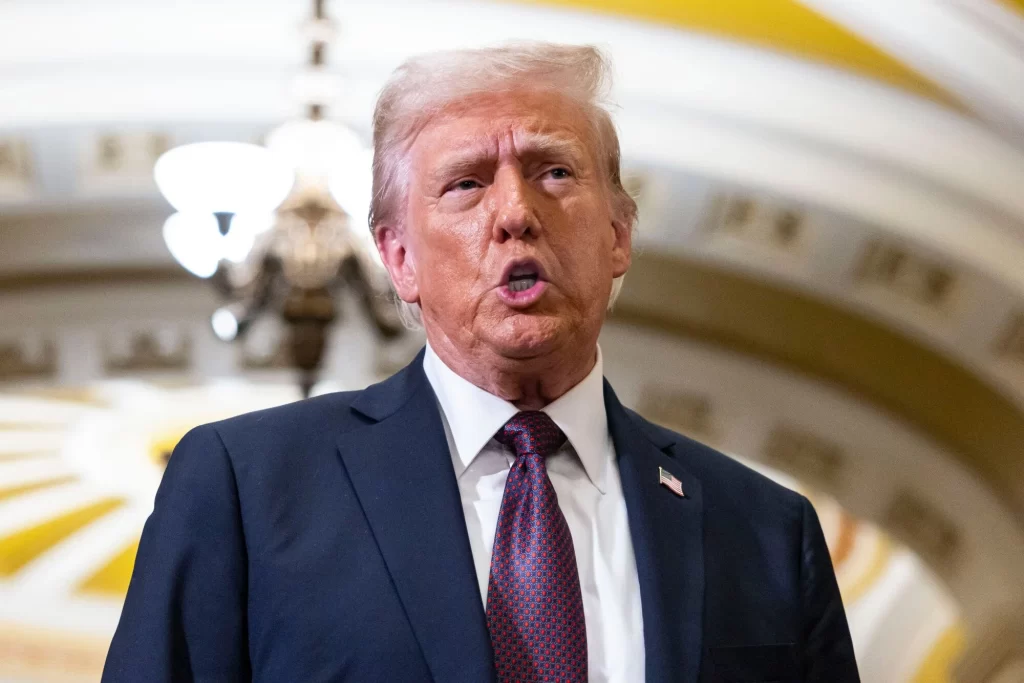
President Donald Trump’s repeated attempts to buy Greenland have sparked a heated international discussion that might end long-standing partnerships and change how countries think about geopolitics. This brave deed illustrates that nationalism in the economy is on the rise. This might change how businesses and safety work all throughout the planet.
Things Are Getting More Stressful in Davos
When President Trump got to the World Economic Forum in Davos on January 21, 2026, there was a lot of noise because his administration wanted to buy or take over Greenland from Denmark. Trump offered a unique speech about U.S. interests in the Arctic, even if his presidential jet had to turn around at first because of a little electrical problem. He stated that Greenland is very important for national security because it possesses a lot of rare earth elements and is on new trade routes that climate change has made available. Officials from Europe, especially Denmark, were very angry and saw the move as a direct attack on NATO’s cohesiveness and rules about sovereignty.
The statement is stronger because of when it was made. Trump won the election again in November 2024 and took office in January 2025. He has spent a lot of time in government establishing a robust foreign policy. If NATO countries don’t want to talk about vital matters like Greenland, one proposal is to charge them tariffs. Experts say that this is a mix of economic nationalism and military posturing, which makes the markets even more unstable because the supply chain is having problems. In 2026, the International Monetary Fund said that these kinds of geopolitical conflicts are one of the major threats to the international economy.
The Greenland Dispute in the Past
Trump has wanted to buy Greenland for a long time. Obama talked of buying the island in public during his first administration. He claimed it was like buying Alaska or Louisiana. At first, people thought the idea was silly, but as competition in the Arctic has grown, it has become more and more popular. Russia and China have been more active in the polar regions, where they claim resources and transportation. Greenland has a lot of rare earth minerals that are particularly significant for electronics, renewable energy technology, and defense systems. This makes it a desirable prize in the battle for mining rights.
Even though Greenland has become significantly more important strategically, Denmark still has it as a distinct territory. Climate change is causing glaciers to melt, which makes it simpler to get from Europe to Asia and shows off resources that haven’t been used yet. Trump’s speech at Davos was mostly about how the U.S. is spending money to improve Greenland’s infrastructure. This made it look like the U.S. was a powerful ally to its foes. Some people don’t like this because they think it doesn’t respect the Inuit’s rights and freedom. Because of this, residents in Nuuk and Copenhagen have begun to protest. Some lawyers maintain that the UN Charter says not to become involved, hence international law doesn’t allow these kinds of land claims.
Rare earths are very important for the economy, thus we need to develop ways to get at them.
The Greenland gambit is an attempt to gain ownership of valuable resources. There is always news about rare earth elements that are particularly vital for missiles, electronics, and electric cars in 2026. Even if China conducts more than 80% of the processing, Trump’s efforts are aimed to make sure that the supply is more varied. Greenland has some of the best undeveloped deposits in the world. This could assist the U.S. not have to depend on rude merchants.
Trump wants to tax goods coming from Europe and Asia unless allies work together to get minerals. This might lead to a trade war. IMF models say that if tensions rise, the world’s GDP might drop by 1–2% and NATO members’ growth could slow down a lot. Businesses in the U.S. seek to work together on projects in Greenland valued $10 billion. These projects would provide jobs, but they would also hurt the environment.
In 2026, this is what geoeconomics will look like. As people get better from the disease and the violence in some places, trade around the world is becoming less stable and more dangerous. If Trump puts tariffs on significant partners, it might break apart ties, which could make Europe look for alternative choices, like mining in Africa or Australia.
Problems with NATO and changes in alliances
The conflict in Greenland is a test of how successfully NATO works as a group. Trump has remarked numerous times that nations should spend more on their militaries. Now he’s arguing that payments are tied to handing up land. The concepts that could influence NATO countries in Greenland are making the Cold War hot again. The U.S. is putting pressure on Denmark, while the EU is working together. European officials are worried that Trump’s “America First” plan, which puts negotiations between two countries ahead of talks between numerous countries, could weaken the alliance.
It has a major impact on the military. The Thule Air Base in Greenland is very important for stopping missiles from hitting the U.S. More control might help keep Russian bases and Chinese research sites out of the Arctic. But being too pushy could make your partner leave. Germany and France have both stated things that show they are on Denmark’s side. This split is similar to “atomized leadership” in 2026, when leaders have to deal with many different national interests and media settings.
Perspectives from Indigenous cultures and the ecosystem
Climate change is making things worse. The melting of Arctic ice shows where resources are, but it also harms ecosystems. The Greenland ice sheet is melting faster than it ever has before. This is making the sea levels go up, which is bad news for towns along the shore. Environmental groups are angry about Trump’s intention to take resources because it goes against global standards for sustainability.
When mining booms start, Inuit people are apprehensive about how their lifestyles will change. Local governments want to be able to breach agreements that countries have made with each other. They think they may do this since the UN says that the rights of native people are highly important. The protests in Nuuk illustrate that pollution might hurt areas where people used to hunt.
People are always fighting about how to strike a balance between safety and growth. Minerals are very important for green technologies, but getting them out of the ground could speed up global warming, which is bad for individuals who care about the environment.
What people from all across the world are saying and how it will change the market
Leaders of the world moved quickly. EU officials in Davos called the action “imperialistic” and said they would challenge it in court at the International Court of Justice. China signed deals with Greenland to explore for resources, which made it seem like it was a neutral investor. Russia made fun of the U.S. for going too far, but at the same time, it made its own claims in the Arctic stronger.
After the speech, the markets fell. People were scared about tariffs, thus European indexes went down. On the other hand, stocks in rare earths went up 15%. The value of the Danish krone fluctuated a lot, which shows how economies are linked.Experts believe that the supply chain will get worse and that there will be a lot of uncertainty for a long time. In 2026, this will be a big deal.
There is a link between all of the major news stories about 2026. In Kamchatka, Russia, record-breaking snowfalls are making it harder to do business, just like in the Arctic. The U.S. becomes less competitive as challenges in the polar areas mount. This is because it’s harder to study climate change when science funding is slashed.
A strategic analysis shows who wins and who loses.
It depends on what Trump does who has the most authority. The U.S. gets more resources and power for defense, which might help it get ahead of its rivals. People are questioning Denmark’s independence, but it might get things like aid packages in return. People talking about things might help Greenland become more free.
The US might be able to achieve more independence in terms of military and resources, but there is a very good risk that promises will be broken and litigation will happen. Denmark and the EU have more power in talks, but they also have to deal with NATO issues and the implications of tariffs.The economy of Greenland might get better, but the rights of people and the environment might get worse. China and Russia are becoming more competitive, yet they may still be able to work together diplomatically.
What this signifies for the world’s order
In 2026, the tale of Greenland will start a new geoeconomic period. Since World War II, the rules have said that being strong is more important than being excellent at making deals. These ideas don’t fit with Trump’s idea of nationalism. The U.S.-led resource alliance might not back a Euro-Asian deal because of trade regulations. This means that businesses can quickly change the way they get their supplies. When things go wrong, people have to pay more.
Experts say that the topic is more essential. The IMF’s economists argue that stability is at risk, while polar experts say that the races on the moon and in Antarctica will get harder by the end of the year. People have a harder time talking to each other online because misleading information spreads more quickly than truthful information. Meta’s admission shows how important the media is in the fight against misleading information.
Trump’s Bold Move in Greenland: Shifting the Balance of Power in 2026