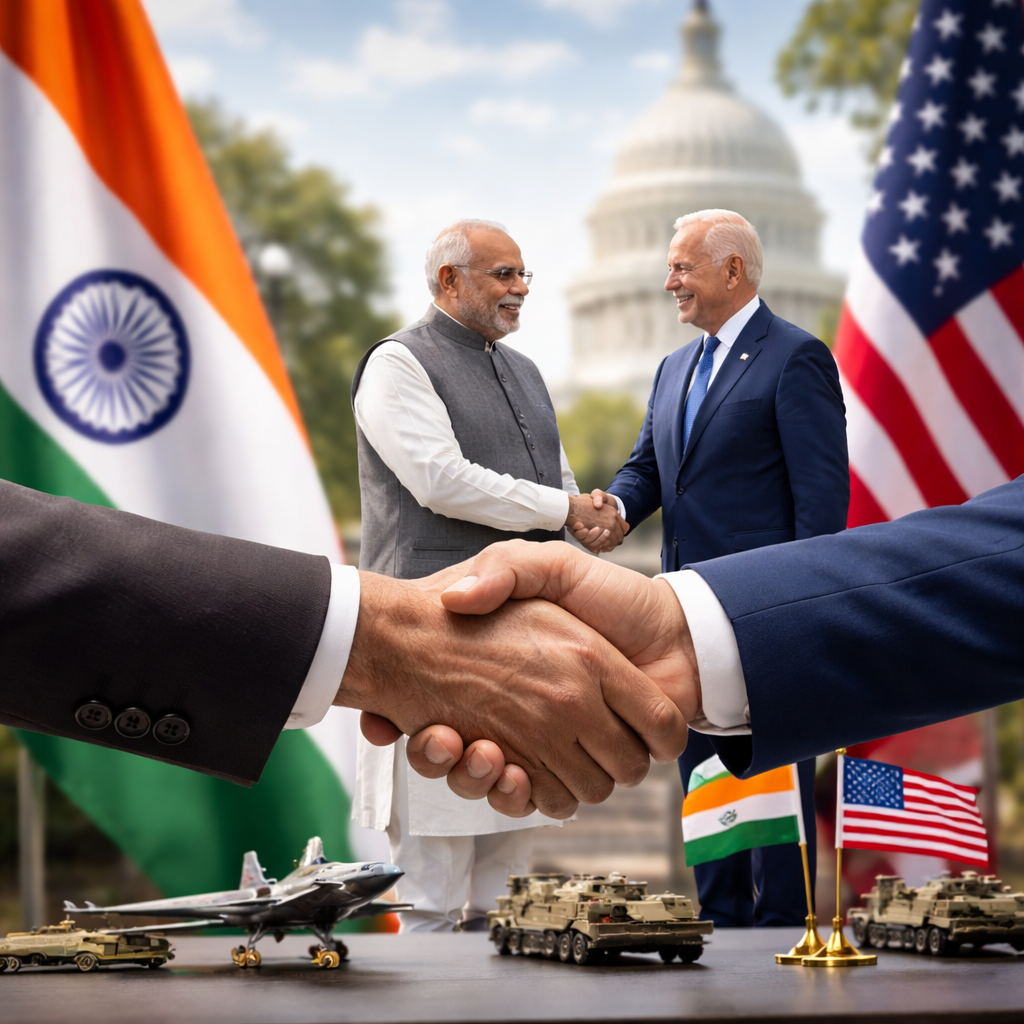
The world’s oldest and largest democracy, India, is finding new reasons—and new urgency—to work together as its Foreign Secretary arrives in Washington for high-level talks.
Diplomats call a meeting “comprehensive” when the agenda is so broad and the stakes are so high that the conversation itself becomes a statement. This week’s visit by India’s Foreign Secretary to Washington is exactly that kind of meeting. The talks between New Delhi and Washington are no longer just a relationship. They cover everything from defense cooperation to technology transfers, trade corridors, and supply chain security. It is becoming more and more of a worldview.
The visit comes at a time when the world’s politics are changing very quickly. Tensions in West Asia are still spreading, causing problems for shipping lanes and energy markets. More and more countries are building up their militaries in the Indo-Pacific. And governments are learning a hard lesson from the last few years: relying on supply chains that only come from one source makes them vulnerable to attacks that are very effective. The answer to this chaos is the same for both India and the US: each other.A partnership of convenience is starting to look a lot more like a partnership of conviction.
A large defense cooperation agenda that has grown a lot over the past ten years is at the center of the strategic talks. India’s stance on strategic autonomy, a position it maintained throughout the Cold War, has gradually shifted. The country, which once prided itself on neutrality, is now moving away from that long-standing approach.
Now, it is more open to shared security frameworks. The two countries now do more joint military exercises than ever before, work together on ways to share intelligence, and are looking into ways to make advanced defense hardware together. These are not just gestures. They show a real agreement on how to see threats, especially when it comes to China’s aggressive behavior at sea and on land.
Along with defense, trade expansion is on the agenda, and here too the goals are high. India and the US already do hundreds of billions of dollars worth of trade with each other every year, but both sides think it could be doing a lot more. American businesses want to get into India’s big consumer market and its growing pool of skilled workers. Indian companies, on the other hand, are looking to the west for money, technology, and brands that appeal to a middle class that wants to be better. The talks in Washington are likely to cover tariff structures, intellectual property frameworks, and ways for Indian professionals to get jobs in the American tech industry. These have always been sources of both problems and opportunities.
Emerging technologies might be the most forward-looking topic of the talks. There are a lot of things that could happen, like AI, making semiconductors, quantum computing, and clean energy. The US has tightened export controls around the world because it is worried that sensitive technologies will end up in enemy states. But India is different from the rest of the world because it has the engineering skills, democratic institutions, and strategic alignment to be a real partner in building next-generation technology ecosystems, not just a user of them. Washington is trying to figure out how to turn that potential into real bilateral frameworks, like joint research programs and co-investing in semiconductor manufacturing plants.
The Indo-Pacific aspect adds a political element to all of this. Both countries are important members of the Quad, which is an informal security group that also includes Japan and Australia. They both want the Indo-Pacific to be a place where rules, not raw power, govern. But that vision needs more than just words. It needs a naval presence, investment in infrastructure, and the kind of long-term, credible engagement that only comes from relationships that have been around for a long time. The strategic partnership between India and the US is becoming more and more like the wall that holds up the whole structure.
However, it would be wrong to say that this relationship is without problems. India still has its own strategic calculus. It keeps its ties with Russia despite pressure from the West, pursues its own energy diplomacy, and fights against any framing that makes it look like a junior partner in an American-led alliance. When quick, coordinated action is needed, American policymakers sometimes get frustrated with India’s tendency to work with others and prefer to reach a consensus. These tensions are real, but experienced diplomats on both sides see them not as problems to be solved, but as the normal way that two powerful countries interact with each other.
The talks in Washington are really a sign of growth. Both countries have moved on from the time when they had to convince skeptics at home that the relationship was good. In both countries, the call for a strong India-US partnership has grown loud and strong in boardrooms, think tanks, military academies, and legislatures. What used to be called a “partnership of convenience” is starting to look more like a “partnership of conviction.”
The world is, in fact, watching. Partnerships between countries based on shared values and mutual interests don’t just affect trade numbers and defense policies between those countries. They also change the shape of the international order itself. This week in Washington, two big democracies are quietly doing the boring but important work of figuring out what that order should look like and what part each of them is willing to play in building it.