
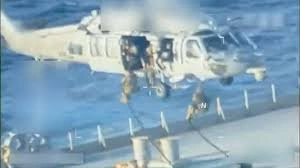
In a significant escalation of sanctions enforcement, the United States carried out a coordinated multi-agency operation on December 10, 2025, seizing the very large crude carrier Skipper off the coast of Venezuela. U.S. Attorney General Pam Bondi confirmed that the tanker was taken into custody under a federal warrant for its alleged involvement in transporting sanctioned oil from Venezuela and Iran. The action has heightened geopolitical tensions across the Caribbean region and spotlighted the increasingly forceful tactics used to disrupt illicit global energy networks.
The dramatic intervention involved the U.S. Coast Guard, FBI, Homeland Security Investigations, and supporting U.S. military forces. Boarding teams executed a high-risk helicopter insertion, fast-roping onto the tanker in international waters. Bondi later released footage of the operation, emphasizing the precision and coordination required in the mission.
Sanctions Enforcement Meets Military Action
The tanker Skipper, previously known as Adisa, has been under U.S. Treasury sanctions since 2022 for its alleged links to an oil trafficking network associated with Iran’s Islamic Revolutionary Guard Corps and Hezbollah. Authorities claim the vessel routinely transported Venezuelan heavy crude and Iranian oil using falsified records and clandestine ship-to-ship transfers to bypass international sanctions.
Maritime tracking data indicates the tanker had recently departed Venezuela’s Jose terminal, loaded with a substantial quantity of crude oil. Analysts believe part of the cargo may have been transferred at sea before U.S. forces intercepted the vessel.
Table 1: Key Operational Facts — Skipper Seizure
| Aspect | Details |
|---|---|
| Date of Seizure | December 10, 2025 |
| Location | Caribbean Sea, off Venezuela |
| Lead Agencies | Coast Guard, FBI, Homeland Security Investigations |
| Supporting Forces | U.S. Military |
| Sanction Basis | Transport of sanctioned oil (Venezuela & Iran) |
| Crew Resistance | None reported |
| Geopolitical Impact | Heightened U.S.–Venezuela tension |
Global Repercussions: Oil Markets and Diplomacy
The seizure of the Skipper sent immediate ripples through global oil markets. Brent crude futures rose, reflecting increased risk premiums due to rising uncertainty in the Caribbean shipping corridor. Industry experts suggest the capture may prompt intermediaries and buyers to distance themselves from Venezuelan crude, which is already traded at discounted rates due to international sanctions.
The operation triggered sharp diplomatic reactions. The Venezuelan government, led by President Nicolás Maduro, condemned the intervention as “international piracy” and accused Washington of violating maritime law and national sovereignty. Venezuela announced it intends to challenge the seizure before international legal bodies.
Key Reaction Highlights:
- Venezuela: Condemned the action as unlawful and politically motivated.
- Iran: Criticized the move as part of a broader pattern of sanctions-driven coercion.
- United States: Defended the operation as a lawful enforcement of sanctions and counterterrorism measures.
Legal and Strategic Implications
Legal scholars note that while the United States relied on federal sanction authority, the use of military assets in international waters raises questions about the reach of domestic legal jurisdiction. Observers warn that if Venezuela pursues legal remedies through international maritime organizations, the case could set a precedent shaping future sanctions enforcement on the high seas.
Strategically, the operation aligns with a broader U.S. posture of increasing naval presence in the Caribbean Sea, reinforcing counter-narcotics operations and regional security missions. The seizure underscores a shift toward integrating economic sanctions, law enforcement, and military power as a unified tool of U.S. foreign policy.

