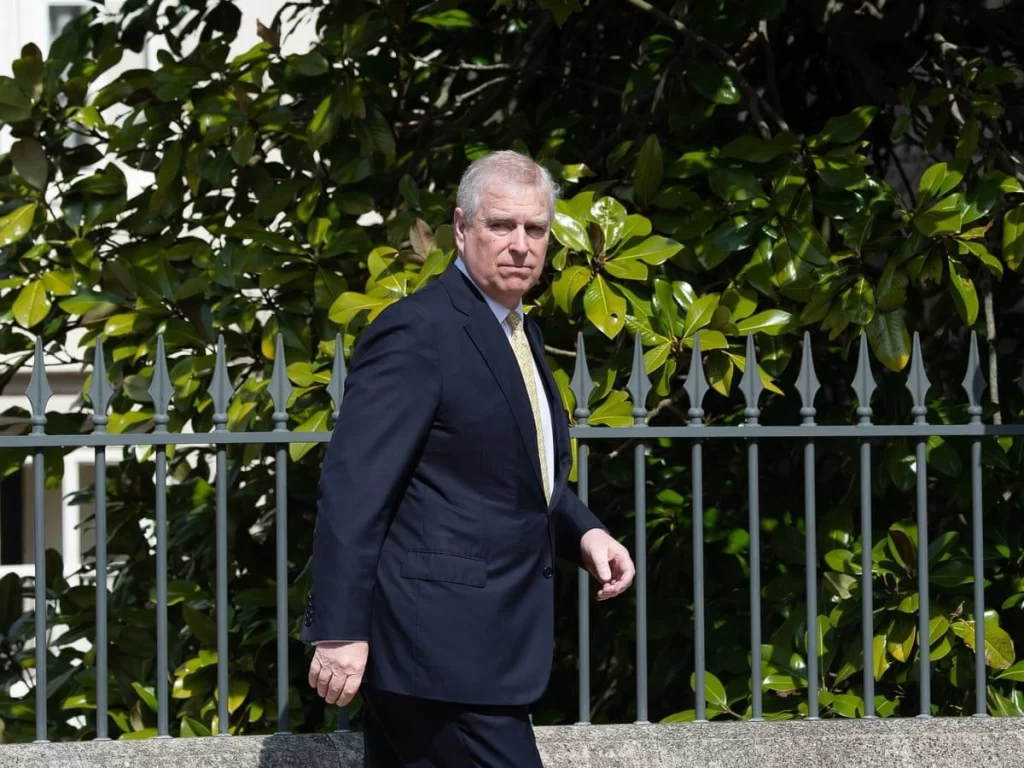
The political scene in the UK is vibrating with calls to remove Prince Andrew, now known as Andrew Mountbatten-Windsor, from the royal line of succession. This is because he was recently arrested on suspicion of misconduct in public service. This new scandal, which has to do with his long-standing ties to Jeffrey Epstein, has made many even angrier and put the monarchy in a dangerous spotlight just a few months after he lost his royal titles. As MPs from all parties think about what to do about the law, the debate shows how important the British monarchy is in today’s world.
The Royal Reckoning’s Roots
Prince Andrew’s collapse started when he got involved with Jeffrey Epstein, a convicted sex offender whose misdeeds have continued to come to light years after his death. Andrew’s terrible BBC interview in 2019, in which he notoriously said he couldn’t sweat and denied seeing Virginia Giuffre, one of Epstein’s accusers, marked the start of his public exile. In October 2025, King Charles III took away his “His Royal Highness” style, military honors, and princely title. This made him leave the luxurious Royal Lodge at Windsor Castle.
The most recent rise in violence happened on February 19, 2026, when Thames Valley Police took the 65-year-old into custody at his temporary home on the King’s Sandringham estate. He was held for 11 hours and questioned about alleged misbehavior while he was the UK’s trade ambassador from 2001 to 2011. During that time, Epstein’s connections allegedly helped him make improper deals. Newly revealed U.S. documents suggest that Epstein used a private jet to take women to Britain, which has led to questions about Andrew’s communications and possible abuse of his position. The arrest, which was the first of a senior royal in almost four hundred years, has sparked calls for him to be completely removed from the throne. He was freed without charge while additional investigations were made.
Andrew’s Dangerous Position in the Line of Succession
Andrew is currently seventh in line to the throne, behind King Charles III, Prince William and his three children—Prince George, Princess Charlotte, and Prince Louis—Prince Harry and his children Archie and Lilibet. The Bill of Rights 1689 and the Act of Settlement 1701 say that Protestant descendants of Sophia of Hanover should be the first in line for succession. This is based on descent, legitimacy, and faith. Royal prerogative can take away titles, like Charles did last year. However, changing the order of the bloodline requires an Act of Parliament and approval from all 14 Commonwealth realms.
Experts on royalty say this is unusual: no monarch has been forced out by law since the 17th century, and it is unlikely that Andrew would give up his throne willingly. King Charles has made it clear that he is not involved. After his detention, he released a statement saying that he would fully cooperate with the police and put his responsibility to the country first. After the probe, the government aims to make laws, and they are talking to places like Canada and Australia about it.
A Firestorm in Parliament
After the arrest, the debate started right away, with MPs from all parties calling for quick action. Sir Ed Davey, the leader of the Liberal Democrats, said that Parliament must act “without fear or favor.” This is similar to the monarchy’s desire to keep Andrew from ever being king. Stephen Flynn, the SNP’s leader in Westminster, said he would support the removal bill. Rachael Maskell, a Labour MP, said she would support taking him out of both his succession and his role as a councillor of state.
Not everyone agrees; some Labour voices doubt the need, pointing to Andrew’s remote position—he has very little chance of becoming king among healthier successors. Historian David Olusoga said that the government needed to act quickly to keep the controversy from affecting the feelings of the general public. Downing Street is now signaling post-probe bills, which is a change from October’s hesitation. Richard Scorer and other legal experts said that prosecutors could go after people if they find evidence that they used their position to have illegal relationships.
Important MP Positions:
Liberal Democrats: They fully support parliamentary intervention.
SNP: Ready to pass a law to get rid of it.
Labour (select): Supportive yet realistic about how soon things need to happen.
Conservatives: Careful and focused on investigation.
This uncommon bipartisan momentum could lead to a change in the Constitution that combines responding to scandals with modernizing the monarchy.
Public Anger Drives Progress
Most Britons are really unhappy. A YouGov poll of 7,200 adults after the arrest indicated that 82% wanted the person to be removed from the line of succession, while only 6% were against it and 12% were uncertain. Younger people were a little less supportive, but still the majority. Earlier Ipsos survey found that 88% supported title stripping, 82% had negative opinions (up from 68%), and 51% wanted parliamentary title revocation.
People are posting memes on social media that compare Andrew’s prior glory to his current shame with the hashtag #RemoveAndrewNow. People who support the monarchy are worried about what this means for the future: if blood links can be broken by scandal, who will be next? But polls show that people still trust Charles’s strong leadership, which helps his approval rating during his illness struggle and other tasks. Virginia Giuffre’s book “Nobody Girl” brought the Epstein case back into the news. Emails from 2011 show Andrew telling Epstein to get in touch after the “severance” in 2010, which he disputes.
The High-Stakes Balancing Act of Monarchy
This is a test for King Charles of brotherly loyalty vs institutional survival. Andrew’s removal from Sandringham and move to Norfolk show that there is no tolerance, with Prince William and Catherine’s support. The arrest at a royal property sent shockwaves through the community, but Charles’s short comment, “the law must take its course,” shows that everyone is responsible and united.
There are bigger problems ahead: Commonwealth realms must agree, and if republics like Australia don’t, it might cause diplomatic problems. There aren’t many examples, but Edward VIII’s abdication in 1936 got around the law by leaving on his own. Andrew keeps denying everything, but not saying anything about new proof hurts his credibility. Chris Bryant, the trade minister, called the loss of the title “delightful” and then looked into the finances.
Prince William is first in line to the throne, followed closely by his children George, Charlotte, and Louis in places two through four. Prince Harry is in fifth place, followed by Archie and Lilibet in sixth and seventh places. Andrew is in eighth place, which makes him susceptible even if he is far from the throne. This lineup shows how dangerous his situation is as the crisis unfolds.
Legal Maze and Historical Echoes
After the Glorious Revolution, British succession changed to Protestant purity, leaving out Catholics until 2015, when changes were made to make it more gender-neutral. There have been scandals that brought down royals previously, such George IV’s excesses and Victoria’s uncles, but none of them faced a legislative purge. Andrew’s case is a mix of a sex scandal, shady finances (like Epstein giving him a Manhattan condo), and abuse of public power.
Democrats in the U.S. want him to testify about the Epstein papers and tell the truth. The Epstein task force in the UK is looking at crimes that happen across the Atlantic, which could lead to charges. If found guilty, the chances of removal go up a lot; even without that, optics demand action while Republicans are happy.
Ripples in the World and Changes in the Royal Family
The story is embarrassing for the Commonwealth around the world. Epstein’s trips to and from Britain raise questions about possible cover-ups, which puts a strain on US-UK relations. The media frenzy, from the BBC to CNN, makes the calls louder, and LBC says the government has plans after the investigation.
More and more people are talking about reforms: make title revocations official, limit the rights of councilors, and make things clearer.Charles’s smaller monarchy changes here, getting rid of things that don’t matter.
UK lawmakers start a heated debate on taking Prince Andrew out of the royal line of succession after his arrest.