
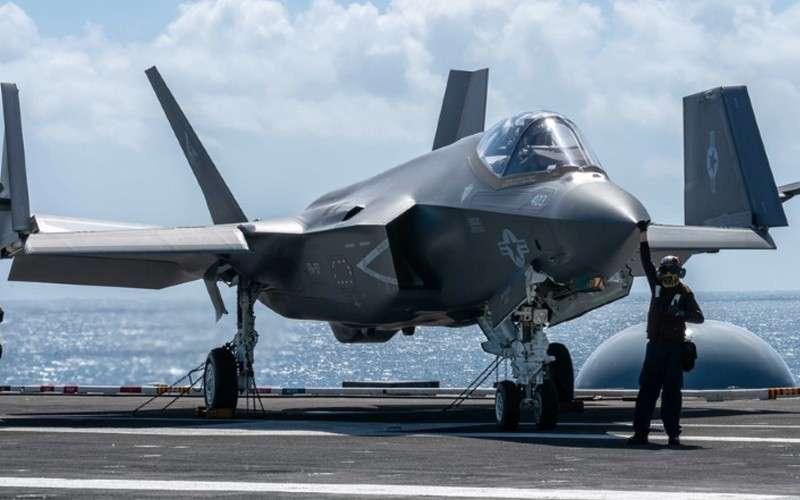
4 July, 2025-A British F-35B Lightning II fighter jet, stranded after an emergency landing during a training exercise, will be dismantled and airlifted by the Royal Navy in a rare and complex recovery operation.
The fifth-generation stealth aircraft was forced to land at a remote location last month following a technical malfunction. Due to the lack of appropriate infrastructure and the sensitive nature of the aircraft, defence officials have decided that airlifting the disassembled jet is the safest and most practical method of recovery.
The Ministry of Defence confirmed that the decision was made after on-site repairs were ruled out. The dismantling will be carried out by specialists from the Royal Air Force and Lockheed Martin, the manufacturer of the F-35B. Key components such as the wings, vertical stabilisers, and engine will be removed and transported using RAF C-17 Globemaster heavy-lift aircraft.
The F-35B is a crucial part of the UK’s air power, operating from the Royal Navy’s Queen Elizabeth-class aircraft carriers. With an estimated cost of around £100 million per unit, the aircraft is among the most advanced in the British arsenal, offering stealth, vertical landing capabilities, and advanced battlefield integration features.
Military sources said the aircraft will be returned to a secure maintenance facility, where it will be reassembled and assessed for serviceability. The operation is being conducted under tight security to protect the aircraft’s sensitive technology and ensure no classified systems are compromised.
The Ministry of Defence has not revealed the exact location of the landing site for operational security reasons. However, it confirmed that the pilot was unharmed and followed standard emergency protocols.
Defence analysts have noted that the incident highlights the logistical challenges involved in operating next-generation military aircraft in unpredictable environments. With a limited number of F-35Bs in service, the temporary unavailability of even one aircraft is seen as a significant concern for overall fleet readiness.
This is not the first time a high-value aircraft has been dismantled for transport, but such operations remain rare due to the risks involved. The ongoing recovery is being closely monitored by defence experts, who view it as a test of the UK’s ability to manage the complexities of modern military aviation logistics.
The operation is expected to be completed in the coming days. Once returned and restored, the aircraft will undergo a full technical evaluation before rejoining active duty.

