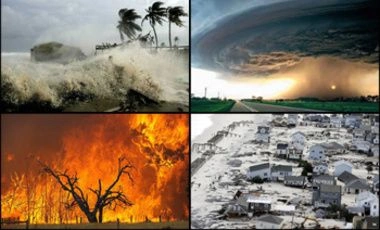
The United Nations has made a significant move in a world where sudden floods can wipe out entire communities and extended droughts can ruin farmland.
On April 10, 2026, UN Secretary-General António Guterres unveiled the Global Climate Adaptation Fund (GCAF). This massive, multibillion-dollar undertaking aims to help developing countries deal with the devastating effects of extreme weather.
This isn’t merely a pledge; it’s a substantial financial commitment, beginning with $10 billion over a five-year period, aimed at supporting those already grappling with the climatic turmoil, particularly nations like India, Bangladesh, and vulnerable island states. As climate adaptation gains prominence in global discussions, this fund arrives at a critical juncture.
The record-breaking heatwaves and floods of 2025 showed how unprepared many countries still are.
Why is this important right now? The damage is worst in developing countries, who are responsible for the least amount of global emissions. The monsoon floods in Assam in 2024 left more than a million people homeless, and the cyclones are destroying the Pacific. The GCAF says it will help with anything from flood barriers to crops that can survive in dry conditions. But can it work, or will it get stuck in red tape like previous attempts? Let’s take it apart.
The onslaught of severe weather isn’t a future threat; it’s here now, and it’s taking a toll.
Last year alone, climate change was responsible for over 200 major disasters globally, encompassing deadly floods in Europe and devastating wildfires in Australia.
The India Meteorological Department said that 2025 was the warmest year on record in India. Heatwaves killed hundreds of people in Rajasthan and Uttar Pradesh. Monsoons used to be dependable, but now they go up and down like crazy: Kerala gets too much rain, and Maharashtra’s farmers don’t get enough.
The UN’s Intergovernmental Panel on Climate Change (IPCC) says that developing countries could lose up to 10% of their GDP by 2050 if they don’t come up with immediate plans to adapt to climate change. Preparing for the inevitable requires strengthening infrastructure, diversifying agricultural practices, and protecting vulnerable communities.
But money has been a problem. At COP15 in 2009, rich countries promised to give $100 billion a year, but by 2024, they were only giving about $80 billion, most of which was in loans instead of grants.
Here comes the GCAF. It gets money from the UN’s Green Climate Fund and voluntary pledges from countries like Germany ($1.2 billion) and Japan ($800 million). Its main goal is to give grants to the countries that need them the most. India, which has a long coastline and 1.4 billion people, will profit a lot. “This fund shows that adaptation is the new front line in the battle against climate change,” Guterres said when it was first announced in New York.
How the Global Climate Adaptation Fund Works: The Basics
The GCAF is meant to be quick and adaptable at its heart. It has a fast review process that lets projects be checked out in less than six months, unlike big programs that get stuck in red tape. Developing countries that are dealing with extreme weather are given priority. This is measured by things like vulnerability indexes from the UN’s Least Developed Countries group.
Some of the most important things are:
40% of the money will go to infrastructure projects like sea walls and early-warning systems; 30% will go to agriculture projects like seeds that can survive drought; 20% will go to health and disaster response projects; and 10% will go to restoring ecosystems.
Funding model: Mostly grants, but mid-tier economies can also get low-interest loans. Small donations under $5 million don’t have to go through complete reviews to save time.
Governance: A board with equal seats for donor and recipient countries, as well as representatives from civil society to avoid problems that come from the top down.
Bangladesh is one example. Rising seas put 20 million people at risk. The fund may pay for mangrove barriers and higher dwellings, building on the success of plans like the Delta Plan 2100. Kenya’s dry north might obtain solar-powered irrigation, which would lower the danger of famine in Africa.
India is already starting to get more specific. The government has put projects on hold in the Sundarbans, where storms like Amphan in 2020 killed 100 people and caused $13 billion in damage. An official from the Ministry of the Environment says, “We’re talking about crop insurance and homes that can withstand storms.” The fund is looking at small island states around the world, such the Maldives, where king tides are making freshwater sources salty.
But there are still questions: Will the money be fairly distributed? In the past, money went to bigger groups, leaving micro-nations out in the cold.
India in the Spotlight: From Heatwaves to Monsoon Madness
India’s climate story is a very sad one, which makes it a good choice for the GCAF. The Global Climate Risk Index puts the country in seventh place, and since 2000, it has lost more than $100 billion in economic activity. In 2025, strange hailstorms in Pune, Maharashtra, destroyed crops worth crores. Every July, floods in Mumbai’s cities convert streets into rivers.
The investment might speed up India’s National Adaptation Plan. Just think:
Coastal defenses: In Odisha, cyclone shelters were improved using AI-powered alarms.
Support for farmers: In Bihar, there are incentives for climate-smart rice cultivars that can grow with 40% less water.
Urban resilience: Delhi’s heat response plans, more cool roofs, and green corridors.
Real-world triumphs are already showing what could happen. Gujarat’s solar irrigation projects, which were partly sponsored by the UN, increased yields by 25% in areas that were experiencing drought. The fund fits with PM Modi’s LiFE mission, which stands for “Lifestyle for Environment,” and promotes living in a way that is good for the environment.
There are still problems, though. Some green projects have been hurt by corruption scandals, and getting people in the area to support them is very important. How can you get a fisherman in Tamil Nadu to trust mangrove restoration when it could cost him his job?
Stories of success and lessons learned from the past
The GCAF doesn’t start over from the beginning. It relies on successful programs like the Adaptation Fund, which has given $1 billion to 130 projects since 2008. It paid for floating fields that do well in floods in Vietnam, which helped 50,000 farmers. Ethiopia’s sponge cities, designed to soak up rainwater, have managed to reduce flood damage by a significant 30%.
On the other hand, difficulties often provide valuable lessons.
The slow implementation of the Green Climate Fund sparked frustration; by 2025, only 40% of the allocated funds had been disbursed. Consequently, the GCAF has implemented digital dashboards. These allow for the real-time monitoring of all spending, with the financial information now available to the public.
India’s National Adaptation Fund for Climate Change (NAFCC) serves as a positive illustration.
It played a role in a hundred different projects, among them the flood-resistant embankments built in Assam.
Scaling that up with GCAF money might make a big difference.
Problems Ahead: Money Shortages, Politics, and Fairness
There is no one-size-fits-all fund. The $10 billion pot sounds big, but the UN says that developing countries need $300 billion a year to adapt. China’s and the UAE’s pledges of $500 million are good, but the US and EU need to do more—right now, their pledges only cover 3%.
Politics are a big deal. Trade tensions could make donors less happy, and people in rich countries who don’t want to pay for it ask why taxpayers have to pay for it. Nicholas Stern, a climate economist, says, “It’s not charity; it’s self-interest.” Uncontrolled warming entails waves of refugees and a broken supply chain.
Equity is another issue of contention. Extreme weather hurts women and indigenous people the most. For example, women have to go get water in dry areas in Rajasthan. The GCAF says that 25% of its money must go to projects that help women, which is a nod to justice.
There are a lot of risks when it comes to implementation. In Pakistan’s floods of 2022, aid got stuck in logistics, which made help take longer. The fund’s concentration on technology—drones for monitoring and blockchain for clear payouts—should help with that.
What if the fund leads to new ideas that we haven’t even thought of yet? might bio-engineered corals save Pacific atolls, or might AI models predict Indian monsoons with perfect accuracy?
UN Launches Global Climate Adaptation Fund: A Crucial Support for Vulnerable Nations Facing Extreme Weather