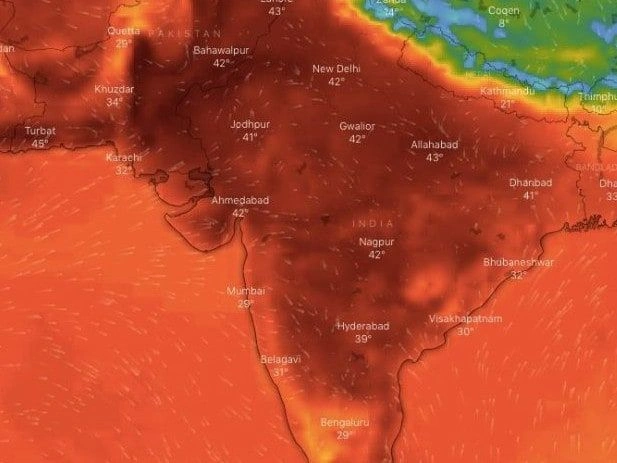
In March 2026, India saw weather patterns that had never been witnessed before. This was not normal for the seasons. The weather in the country was rather odd. Showers, heat waves, thunderstorms, and hailstorms all produced a lot of problems around the country, making life and business harder.
The weather in India was particularly odd in March 2026. For instance, temperatures in Delhi went beyond 38°C, while rain poured in the northern regions when it wasn’t forecast. This shows that the weather is getting less and less predictable. Experts suggest that these bizarre phenomena could have a huge impact on farming, city infrastructure, and public health as the country deals with them.
All around the country, there is very bad weather.
A very powerful heat wave affected a lot of India at the start of the month, notably in the north and central sections. The temperatures were 4 to 8 degrees Celsius higher than usual. Delhi was exceedingly hot by the middle of March, with temperatures reaching 38 degrees Celsius. Himachal Pradesh, which is generally colder, was also feeling the stress. This sudden heat wave put a lot of strain on the power infrastructure and drained the water reserves, which made things tense until the rain came out of nowhere.
A strong storm from the west hit northern India between March 15 and 20. It brought a lot of rain, thunderstorms, and snow to the Himalayas, as well as winds that blew at speeds of 40 to 60 km/h. Heavy rain and hailstorms hit Punjab, Haryana, Uttar Pradesh, Himachal Pradesh, Uttarakhand, Jammu & Kashmir, and parts of Rajasthan, Gujarat, and Odisha. Farmers in Rayalaseema and the coastal districts of Andhra Pradesh had to deal with thunderstorms, and Gujarat experienced rain that wasn’t normal for this time of year, mostly on March 19. There were forecasts of heavy rain and lightning in the southern and eastern parts of the country, namely Assam and Sub-Himalayan West Bengal.
Those factors were game-changers. The northern plains enjoyed a brief respite from the sweltering temperatures, yet the abrupt shift from warmth to hail underscored the volatility of India’s weather in March 2026. The India Meteorological Department (IMD) issued yellow advisories across numerous regions, urging the public to remain indoors during the height of the storm.
The reasons for the strange things
This March, the troubles in the north were caused by storms that start in the Mediterranean and are pushed by the subtropical westerly jet stream. These systems are most active in the winter (from December to March) and bring 5–15% of the rain that falls in northwest India each year. They also provide Rabi crops like wheat and mustard the water they need to grow. But their remarkable potency and ability to last until late March, which is called a “long, linear trough,” have made things worse by bringing thunderstorms and hail.
These patterns get worse because of climate change. The average temperature over the planet has gone risen by 0.7°C since 1901. The weather has become less stable because of this. For example, northern and central India have had more rain than usual. Industrialization and urbanization generate greenhouse gasses that hold more moisture in the air, which causes powerful events that happen outside of their normal season. The height of the Himalayas impacts western storms and snowfall, while urban heat islands make problems in cities worse. Researchers say that these kinds of changes are becoming more and more widespread. For instance, India’s average yearly rainfall is becoming less and less even, with more and more short, powerful bursts.
The several stages of ENSO help us see the world in a bigger way. As La Niña got weaker over time until early 2026, it made the weather cooler and affected the way it rained. The chances of the weather stabilizing by April were pegged at about 60 to 75 percent. However, the emergence of El Niño conditions in mid-2026 could further disrupt established patterns, even if some details remain murky. Compounding the difficulty of making predictions were weak troughs over the Bay of Bengal and cyclones in the south.
The financial toll on agriculture and the economy was substantial.
March 2026 brought unusual weather to India, damaging the crucial Rabi crops, which are vital for the upcoming harvest. Reports from the north indicate losses exceeding 400,000 hectares, with Uttar Pradesh bearing the brunt. Hail and lodging devastated wheat and mustard fields in Haryana, Punjab, and Uttar Pradesh, causing damage estimates of 60–70%.
In some regions, 90% of the vegetable and potato crops were lost.
Key crops that were hurt include wheat in Punjab, Haryana, and Uttar Pradesh, where hail cut yields by 50–60% in areas that were already weak; mustard across the north Indian plains, where yields fell by up to 70%; banana and mango in Andhra Pradesh and Gujarat, which are very sensitive to wind and heavy rain; and maize and chili in Rayalaseema and coastal Andhra, which led to urgent harvest advisories to stop total loss. Agriculture ministers in states like Andhra Pradesh have promptly looked over the damage and promised to pay farmers back for any losses. They have also told farmers to select their ripe crops and keep their tools safe. This could lead to higher food prices and a greater use of fertilizer across the country, especially during the rainy season when things are less predictable.
The economy’s influence goes beyond specific sectors, also affecting the infrastructure.
On March 15, strong winds and a tornado hit Odisha, making the wind more worse. Storms near Karachi, Pakistan, showed how awful things were in the area. In Delhi and Chandigarh, India, living was challenging because of power shortages, flooded roads, and dangerous structures. Small businesses in rural areas that were affected said it was hard for them to get to the market, which made matters much worse for millions of individuals who were already having trouble with money.
Stress on health and society
These extremes are bad for public health in two ways. The heat waves that arrived early Wednesday made a lot of people unwell, and hospitals in Delhi-NCR and Rajasthan were packed of individuals who were dehydrated or had heat stroke. On the other side, rapid rain makes vector-borne diseases like dengue worse because mosquitoes breed in water that is warm and still. Cities have reported that the number of people going to the doctor for breathing problems caused by dust and unexpected changes in humidity has gone up by 20 to 30 percent.
In northern India, where the air was dirty, it improved better for a short time because the rain washed away the dirt. But in certain spots, the heat kept bringing up dust storms. IMD yellow alerts are largely about keeping people safe from lightning and taking care of things inside. This is especially important for people who are more likely to get wounded, like farm workers, the elderly, and poor people who live in cities. Community reactions, such as local NGOs giving out tarps and other help, have been very crucial in filling in the gaps right away.
Advice and recommendations from experts on how to limit harm
Meteorologists at IMD said that problems with the jet stream are to blame for the “rare” western disturbance. They believe that everything will calm down after March 20–22 and that the weather will get warmer again. Skymet Weather and other climate scientists say that El Niño could make the monsoon in 2026 worse than usual. They say that people should be ready for a time when it doesn’t rain. A study of warming that depends on elevation says, “Unseasonal events are the new normal under climate change.” This shows how important it is to be able to modify your mind.
Farmers should rapidly pick their crops and cover the ones that are still growing with tarps. To assist decrease the effects of climate change, they should also plant a lot of different crops, such wheat that can survive dry spells. They should also seek crop insurance to safeguard them from adverse weather. At the same time, local and federal government agencies are trying to figure out how bad the damage is, make early warning systems better, and make infrastructure stronger so that it can better handle future storms.
This includes things like buildings that can handle poor weather and superior drainage systems. The idea is to decrease the consequences of shifting weather patterns in the future by adopting methods like micro-irrigation and boosting agroforestry.
Unseasonal Weather Across India in March 2026: Causes, Devastating Impacts, and Uncertain Future Ahead