
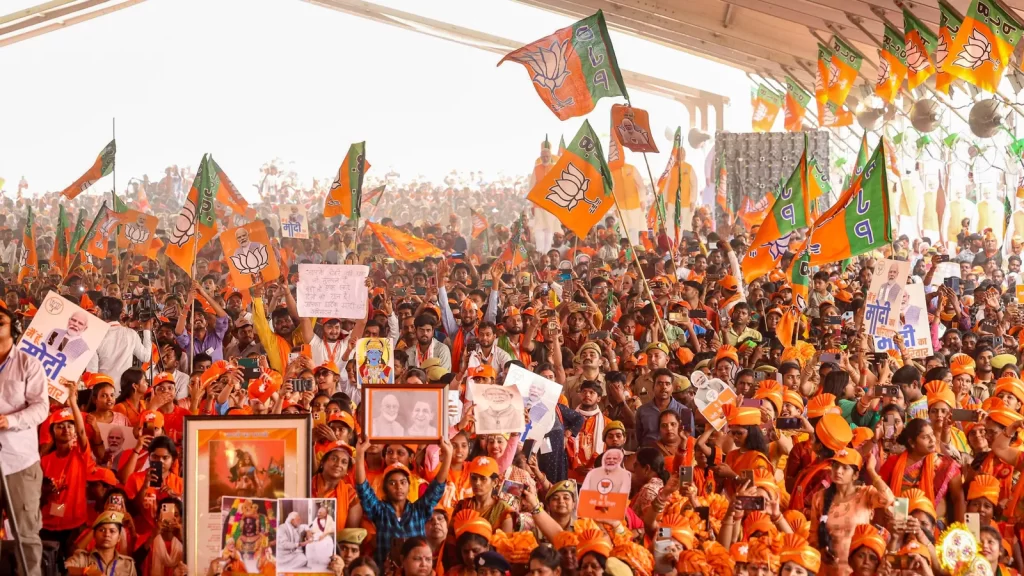
The Uttar Pradesh government has announced a ban on caste-based political rallies and public displays of caste identity, acting on the directions of the Allahabad High Court. The decision, issued on Monday, comes just days after the Court’s September 16 order, which termed caste glorification as “anti-national” and harmful to constitutional values of equality and fraternity.
The directive prohibits political gatherings organized on the basis of caste and disallows the use of caste markers on vehicles, signboards, and digital platforms. Authorities have been instructed to ensure strict enforcement, with penalties to be imposed under the Motor Vehicles Act and other relevant laws for violations. Caste slogans, stickers on vehicles, and signboards that highlight or glorify caste identity are to be removed immediately.
The order also extends to the digital sphere, with police and cyber units tasked to monitor social media platforms for content that promotes caste pride or incites social division. The government has emphasized that such steps are necessary to maintain public order and promote social harmony in the run-up to the 2027 Uttar Pradesh assembly elections.
The Allahabad High Court had earlier directed the state government to eliminate caste references from police records, including First Information Reports, arrest documents, and investigation reports. The Court observed that with modern identification methods like Aadhaar, biometrics, and digital databases now available, recording caste in official documents was unnecessary and perpetuated division. However, the Court clarified that caste details would still be required in cases where the law specifically mandates it, such as under the Scheduled Castes and Scheduled Tribes (Prevention of Atrocities) Act.
In its observations, the Court underlined that caste-based mobilization and identity-driven rallies have often disrupted peace and gone against the constitutional principle of fraternity. It called for a decisive move away from caste divisions in order to build a more unified and equal society.
The timing of the directive is seen as politically significant. Uttar Pradesh has long been shaped by caste-driven electoral strategies, with identity politics playing a decisive role in elections. By enforcing a ban on caste-centric rallies and public displays, the Yogi Adityanath-led government is signaling a shift in approach, aligning itself with the judiciary’s push for reform while also attempting to minimize potential caste polarization ahead of the polls.
Political analysts note that while the move has been widely welcomed as a progressive step, questions remain about its practical implementation. Caste identity is deeply entrenched in the state’s social and political fabric, and observers point out that eliminating visible symbols may not be enough to erase its influence in political mobilization. Critics have also suggested that enforcement could become selective or politically motivated, depending on how the rules are applied in practice.
The Uttar Pradesh government has described the measure as a step toward safeguarding constitutional morality and ensuring equality. Officials have said that by curbing caste-based discrimination and identity politics, the state hopes to create a more inclusive social environment. Whether the ban will fundamentally alter political dynamics or face challenges in execution will become clearer as the state approaches the 2027 elections.

