
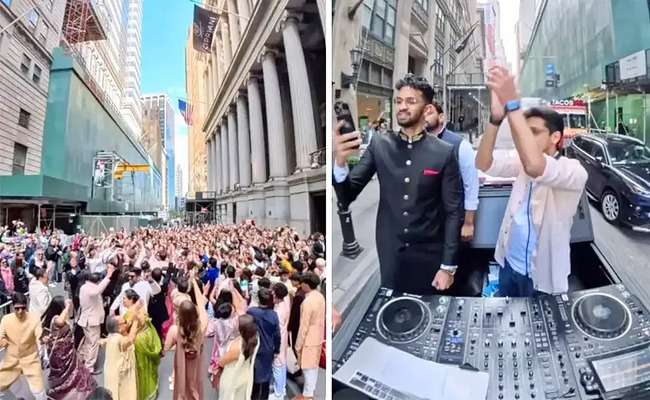
In an extraordinary display of cultural celebration, Wall Street was temporarily closed yesterday as a vibrant procession of 400 baraatis—traditional Indian wedding participants—danced their way through the heart of New York City. This unusual yet joyous occasion brought a burst of color and rhythm to the financial district, captivating the attention of residents, workers, and visitors alike. The event not only spotlighted Indian customs but also celebrated the multicultural fabric that defines New York.
The unexpected halt of activity on Wall Street took place during the day’s busiest hours, halting the typical financial transactions and business operations momentarily. The baraatis, clad in vivid traditional attire, complete with embroidered turbans, flowing garments, and ceremonial accessories, performed spirited dances accompanied by the booming sound of dhol drums and traditional wind instruments. This procession, commonly seen during Indian wedding ceremonies to celebrate the groom’s arrival, offered a striking contrast to the typically austere business environment.
Beginning at Bowling Green, the procession slowly made its way past landmarks such as the New York Stock Exchange, with dancers engaging the crowd and encouraging onlookers to join their rhythmic steps. Passersby, financial professionals, and tourists were drawn into the celebration, many taking out their phones to capture the vibrant spectacle.
City authorities coordinated closely with event organizers to facilitate the shutdown, ensuring that safety measures were in place and traffic flow was managed efficiently. A spokesperson from the Mayor’s office remarked, “New York City thrives on its diversity, and it is important that we create space for cultural expressions that enrich our community.” The NYPD provided support by controlling crowds and rerouting traffic, allowing the festivities to continue smoothly without disruptions.
Experts in cultural studies emphasized the significance of such events in promoting understanding and appreciation of different traditions within urban spaces. Dr. Anjali Mehta, a scholar specializing in South Asian culture, noted, “This baraat procession on Wall Street serves as a beautiful example of how traditional customs can find new life in a modern metropolis, bridging cultural divides.”
The event rapidly gained attention online, with social media users sharing images and videos under hashtags like #WallStreetBaraat and #NYCFestival. This viral response underscores the growing recognition and celebration of Indian culture in major global cities.
Conclusion:
The brief closure of Wall Street to accommodate the energetic baraati procession stands as a testament to New York City’s embracing of cultural diversity. This momentary transformation of a world-renowned financial hub into a lively festival venue highlights the city’s unique ability to harmonize tradition with modernity. Such celebrations not only enrich the public’s cultural experience but also foster community unity, reminding all that even the busiest streets can be filled with music, dance, and joy.

