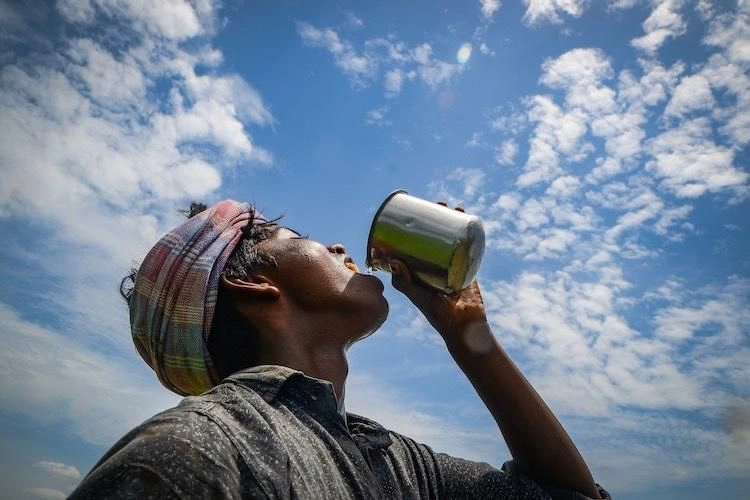
India’s weather is in the news, but not for the right reasons. The India Meteorological Department (IMD) issued additional warnings on April 10, 2026, concerning severe storms in the Northeast and a heatwave getting worse in other parts of the country. Parts of the country are already getting ready for problems, even though the monsoon season is still a long way off. Imagine cyclonic winds ripping through Assam, bringing heavy rains that flood the streets. At the same time, Delhi and most of the rest of the country are sweltering in rising temperatures.
What does this mean now? As summer reaches its peak, these warnings impact farmers, daily commuters, and city inhabitants hard. This is especially true in a country where severe weather may disrupt lives and economy without any notice.
The alerts come at a time when things are heated. While the rest of the country contends with heat and humidity spikes, India’s Northeast is getting hit the worst by cyclones. The IMD’s advisory says that thunderstorms with lightning and winds up to 60 km/h will hit states like Arunachal Pradesh, Assam, Meghalaya, Nagaland, and Manipur in the next 24 to 48 hours. In the meantime, temperatures in Rajasthan, Madhya Pradesh, and even Maharashtra’s Vidarbha area are rising, with some places reaching over 42°C. The humidity is the deceptive cause, making it feel even worse, like breathing through a damp blanket. This mix of storm and heat alerts shows how unpredictable the weather is becoming our new normal for a country that is already dealing with climate change.
Northeast on Edge: Cyclonic Storms Put Lives and Livelihoods at Risk
Imagine this: heavy clouds rolling over the green hills of Guwahati, winds screaming over tea gardens, and floods that come out of nowhere and convert roads into rivers. That’s what IMD thinks will happen in Northeast India starting late April 10. The department’s color-coded warnings, with orange being the most serious, show that there is a chance of severe thunderstorms with hail in some areas. Assam, the region’s gateway, might get more than 64.5 mm of rain in a single day, which would be too much for drainage systems that are still recuperating from last year’s floods.
Local governments are not wasting time. Assam’s crisis management teams are ready to help, and district collectors in Kamrup and Dibrugarh have told fishermen to stay away from rivers like the Brahmaputra. “We’ve seen this before—quick storms that uproot trees and disrupt power for days,” says a senior IMD officer in Guwahati, who asked not to be named. Power outages are a serious problem; the last time this happened in March, more than 50,000 homes in Nagaland and Manipur lost power.
What is causing these storms? Warm air from the Bay of Bengal is colliding with cooler winds over the Eastern Himalayas. It’s a classic scenario for cyclonic circulations, and satellite photographs from IMD’s INSAT-3D reveal that moisture is building up and ready to cause problems. People in Manipur’s Imphal valley, which is already flooded from early rains, are getting ready for the worst. A store owner in Imphal told the news, “Every storm feels greater now.” Last time, we lost crops. This time, we’re praying it doesn’t happen to us.
Storm warnings in the Northeast have some big risks:
Winds that blow at 50 to 60 km/h might damage weak buildings and electricity lines.
Heavy rain: 7 to 11 cm in 3 hours, which caused flash floods in low-lying areas.
Lightning strikes: A big risk for people who work outside and animals.
These events had a big effect on a region where more than 70% of the people work in agriculture. If hail damages tender leaves, tea estates in Assam, which grow about half of India’s tea, could lose money. Do you ever wonder how one storm might affect supply chains all over the world? India’s tea exports, which are valued billions, are often hurt by these kinds of problems.
Heatwave Builds Steam: From the Deserts of Rajasthan to the Sweltering City of Mumbai
In the heart of India, it’s a very different story—unending heat. The IMD’s heatwave warning covers all of Northwest and Central India, including red flags for the Barmer and Jaisalmer districts in Rajasthan. The weather here has already reached 43.5°C, and by the end of the weekend, it is expected to reach 45°C. For plains, heatwaves are when the highs are at least 4.5°C above usual. We’re right there.
Rajasthan isn’t the only one. The Gwalior-Chambal region of Madhya Pradesh has very high humidity, which makes the heat index, or how hot it really feels, go above 50°C. Nagpur in Vidarbha, Maharashtra, is no stranger to this; the brutal summer of 2024 took scores of lives there. This time, the IMD says that “extreme heatwave” conditions will last until April 13, and there isn’t much rain in sight to help.
People in cities in India feel it the most. The humidity in Mumbai is sometimes over 70%, which makes midday commutes hard. People who work in Bengaluru, who ordinarily don’t have to deal with the heat, are suddenly avoiding the midday sun as temperatures rise to 38°C. Doctors say there has been an increase in ailments caused by heat, such as dehydration, heatstroke, and even renal strain from sweating all the time. The IMD says in its public advisory, “Stay inside between 12 and 4 pm and drink water if your life depends on it.”
The weather people are painting a grim picture: Barmer in Rajasthan might reach 45.2°C with 25–35% humidity, which would make the heat index 48°C; Nagpur’s 42.8°C with 50–60% humidity feels like 52°C; Gwalior’s 43.5°C with 40–50% moisture pushes 50°C; even Delhi’s 41°C with a 49°C feel. Demand for power is also rising. Northern networks are seeing peaks of 65,000 MW as air conditioners run nonstop, putting even more strain on coal facilities that are already at full capacity. Last year’s blackouts in Delhi during the heat wave left millions of people in the dark and hot. Is this history repeating itself?
The Bigger Climate Puzzle: What’s Wrong with India’s Weather
These notifications are not one-time events. According to government data, India has seen a 20% surge in extreme weather occurrences in the past ten years. The storms in the Northeast are connected to the Bay of Bengal’s changing dynamics, which are affected by a La Niña that is getting weaker and moving to neutral. What about heat waves? Blame urban heat islands; cities like Delhi trap heat from concrete jungles and car pollution, raising temperatures by 2 to 3 degrees Celsius.
It’s linked to climate change all across the world. The IPCC says that cyclones in the Indian Ocean are getting stronger and heatwaves are happening twice as often. This year, 24 people died from the heat in India in March alone. Most of them were workers in fields without air conditioning. Farmers in Punjab’s wheat belt are harvesting today, but their crops are drying up. Early estimates say that losses might be as high as 5–7% if the heat keeps up.
What about answers? IMD’s nowcasting, which sends hourly updates through apps like “Umang,” is helpful, but preparation on the ground is slow. Inspired by Odisha’s success with cyclones, states in the Northeast are pushing for better early warning systems. Rajasthan tries out cool roofing and public spaces that are shaded. But there are still questions: Can India’s infrastructure keep up with these changes? How long until yearly heat waves become monthly threats?
Voices from the Ground: Human Stories in the Middle of the Chaos
Until they reach home, weather alerts are just numbers on a screen. In Jorhat, Assam, tea worker Rina Begum remembers how bad the last storm was: “The roof was gone in minutes, and the kids were afraid all night.” Now we ask for clear skies. Her tale is like thousands of others—more than 1.2 million people are forced to leave their homes every year because of floods in the Northeast.
Rajesh Sharma, a cab driver in Jodhpur, Rajasthan, skips peak hours because “AC taxi wastes petrol, yet people tip less when they’re melting.” We have vacant highways because to the heat wave. These stories make the statistics more relatable by highlighting how IMD’s storm and heat alerts affect everyday life.
Women and kids are the most affected. In humid parts of Bihar, girls leave school in the middle of the day to get water. This happens more often when it’s hot. NGOs like Goonj give out cooling kits, but the problem is that they don’t have enough of them.
Warnings from IMD: Storms are coming to Northeast India as a heat wave sweeps the country.