Pakistan’s quiet diplomacy between Iran and the West signals a new era of regional engagement
There is a particular kind of tension that settles over a city when history is being made inside it.
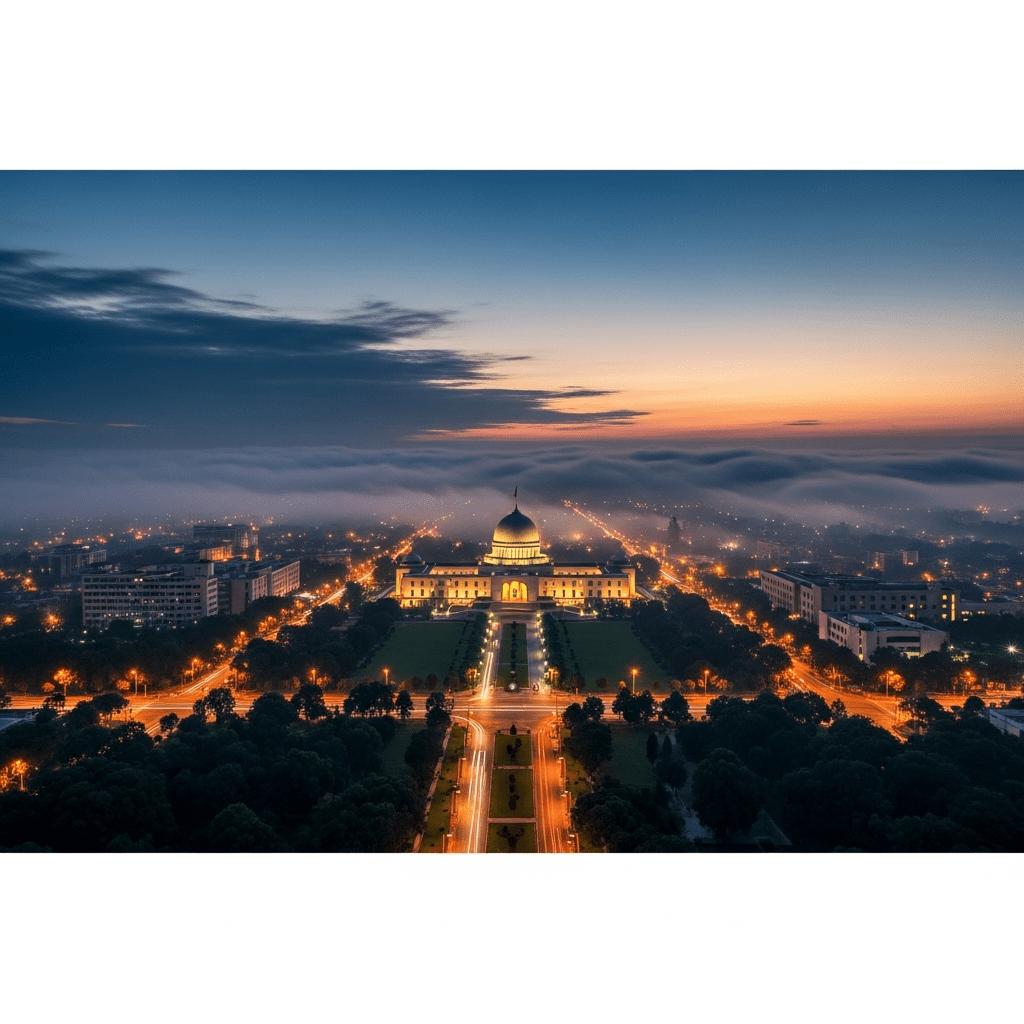
Islamabad felt exactly that in recent weeks — roads sealed off, checkpoints multiplying overnight, and more than 10,000 security personnel deployed Al Jazeera before some of the most consequential talks the region has seen in decades. The world was watching, and Pakistan — a country more often discussed for its internal turbulence than its diplomatic finesse — was at the center of it all.
What unfolded in Islamabad wasn’t just a bilateral exchange between Pakistan and Iran. It was something much larger: a signal that the map of regional diplomacy is being quietly redrawn, and that Islamabad intends to hold the pen.
A Neighbor, Not Just an Ally
Pakistan and Iran share more than a border. They share water, trade routes, sectarian sensitivities, and decades of complicated history. Their relationship has never been easy. Pakistan is mostly Sunni, while Iran is mostly Shia, and they have often had to deal with different regional loyalties. However, geography has always made it necessary for them to work together. Pakistan shares a long and sensitive border with Iran, and its ports sit close to one of the world’s most critical energy chokepoints — the Strait of Hormuz.
That proximity, which has at times been a source of friction — particularly around border security and cross-border militancy — has now become a diplomatic asset. In a region where most players are too entangled in one alliance or another to speak freely to all sides, Pakistan’s position is rare: it maintains ties with the Gulf states, holds a Major Non-NATO Ally designation from Washington, has deep economic links with China, and shares a faith and a border with Tehran.
Unlike several other mediators in the region, Pakistan does not host US military bases. Yet its powerful army chief Asim Munir is Donald Trump’s “favourite field marshal.” Taken together, these factors placed Islamabad in a position few others could claim — able to speak to all sides, without formally belonging to any. Al Jazeera
The Talks That Shook the Room
The lead-up to the Islamabad negotiations was anything but smooth. The war, which began on February 28 when the US and Israel launched coordinated strikes that killed Supreme Leader Ali Khamenei and struck Iran’s military and nuclear infrastructure, killed more than 2,000 people in Iran in five weeks, disrupted roughly a fifth of the world’s oil supplies and threatened to draw in regional powers.
Pakistan’s diplomatic engagement began almost immediately after those first strikes. Behind closed doors, officials in Islamabad were already moving — drafting proposals, exchanging messages, and keeping lines open that most of the world assumed were severed.
On March 26, Deputy Prime Minister Ishaq Dar confirmed that the US had shared a 15-point proposal with Iran via Pakistan, Al Jazeera covering nuclear commitments, missile limits, and the reopening of the Strait of Hormuz. Tehran rejected it and countered with its own 10-point plan. The positions were far apart, but the channel itself — running through Islamabad — remained alive.
That channel ultimately produced a ceasefire. Trump announced the pause with just under 90 minutes remaining before his own deadline to destroy Iran’s “civilisation,” and Iranian Foreign Minister Abbas Araghchi confirmed it shortly after. Oil prices dropped by 16 percent. The Strait of Hormuz was set to reopen for the first time in five weeks. Al Jazeera
Inches Away, Then Apart
The formal Islamabad talks in April brought US and Iranian delegations face to face — the highest-level direct engagement between Washington and Tehran in decades. More than 12 hours of face-to-face negotiations ended without agreement, leaving a fragile two-week ceasefire as the only barrier between diplomacy and a return to war.
The sticking points were fundamental: Iran’s nuclear program, control of the Strait of Hormuz, frozen Iranian assets, and the question of regional influence. Iran’s Foreign Minister Araghchi, after returning to Tehran, said his country had engaged in “good faith” only to face shifting demands, writing: “When just inches away from an Islamabad MoU, we encountered maximalism, shifting goalposts, and blockade.” Al Jazeera The reference to a near-agreement — a memorandum of understanding — was striking. It suggested the two sides had come closer than either had publicly admitted.
Pakistan, for its part, did not treat the breakdown as a failure. Ishtiaq Ahmad, professor emeritus of international relations at Quaid-i-Azam University, put it plainly: “The talks did not collapse; they concluded without agreement but with a defined US offer on the table and the channel still intact. Pakistan’s role was to move the crisis from escalation to structured engagement, which it achieved.”
Still in the Room
Even after the talks stalled, Pakistan didn’t step back. Iranian Foreign Minister Araghchi met with Pakistan’s army chief Asim Munir and expressed being “very pleased” to welcome him, affirming Iran’s commitment to “promoting peace and stability in the region.” CNN Pakistan’s army chief’s visit to Tehran came as mediators sought a new round of talks before the ceasefire expired, with regional officials reporting an “in principle agreement” to extend it and allow more diplomacy.
Mediators are pushing for compromise on three main sticking points — Iran’s nuclear program, the Strait of Hormuz, and compensation for wartime damages. PBS The gaps remain wide, but the conversation continues, and it continues through Islamabad.
What This Means for the Region
Pakistan’s emergence as a central diplomatic player carries implications beyond any single negotiation. For South Asia and the broader Muslim world, it offers a model: that a country can choose engagement over alignment, and that geography paired with credibility can carve out an irreplaceable role.
Analysts who had long dismissed Pakistan as too internally divided to project meaningful diplomatic weight are watching Islamabad punch well above its weight class. Pakistan’s foreign ministry has said it “has consistently advocated for dialogue and diplomacy to promote peace and stability in the region” Al Jazeera — and for once, that statement is backed by tangible results.
The talks between Pakistan and Iran, and Pakistan’s role as the conduit for one of the most sensitive negotiations on earth, are not merely a diplomatic episode. They are the opening chapter of a different kind of regional story — one where Islamabad is no longer just a place the world passes through, but a place the world comes to.
When Islamabad Became the World’s Most Important Room.